Extreme Heat Warning
until SUN 9:00 PM CDT, Carlton/South St. Louis Counties, Pine County, North Cass County, North Itasca County, South Aitkin County, South Cass County, Northern Aitkin County, South Itasca County, Crow Wing County, Hubbard County, West Otter Tail County, Wadena County, Grant County, East Becker County, West Polk County, Mahnomen County, Clay County, West Becker County, East Otter Tail County, Norman County, Wilkin County, Wabasha County, Fillmore County, Mower County, Dodge County, Winona County, Olmsted County, Rock County, Nobles County, Cottonwood County, Lincoln County, Murray County, Jackson County, Pipestone County, Lyon County, Freeborn County, Renville County, Chisago County, Scott County, Faribault County, Waseca County, Meeker County, Douglas County, Goodhue County, Sherburne County, Ramsey County, Wright County, Martin County, Dakota County, Kandiyohi County, Watonwan County, Yellow Medicine County, Lac Qui Parle County, Hennepin County, Le Sueur County, Mille Lacs County, Washington County, Redwood County, Steele County, Benton County, Nicollet County, McLeod County, Stearns County, Blue Earth County, Morrison County, Todd County, Stevens County, Anoka County, Pope County, Swift County, Kanabec County, Sibley County, Isanti County, Rice County, Brown County, Big Stone County, Traverse County, Douglas County, Washburn County, Burnett County, Buffalo County, Chippewa County, Barron County, Polk County, Dunn County, Eau Claire County, Pierce County, Pepin County

Northern lights could be visible across all of Minnesota Thursday
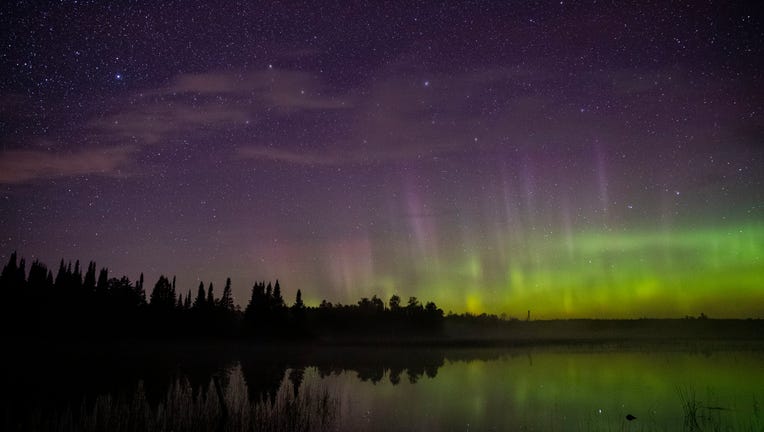
CLOQUET, MN - SEPT. 28: The aurora borealis could be seen on the North horizon in the night sky over Wolf Lake in the Cloquet State Forest in Minnesota around midnight on Saturday morning. The KP index was high in the early morning hours of Saturday (Alex Kormann/Star Tribune via Getty Images / Getty Images)

The northern lights may be visible to the northern tier of the United States Thursday night. But unfortunately for Minnesotans, it will likely be too cloudy to see them.

The aurora borealis, also known as the northern lights, appears when large amounts of solar particles come in contact with the Earth’s invisible magnetic field. These solar storms are produced by the sun all the time, but don’t always head toward Earth. They vary in intensity and don’t always lead to the visibility of the aurora this far south. 

The sun goes through cycles of activity that are roughly 11 years in length. And we are headed into the more active period of its 11-year cycle. This means that if we don’t see them this time around, there will quite likely be more opportunities in the near future.

If you want to try to see them Thursday night anyway, best viewing will be well away from city lights looking to the north anywhere from around midnight to the very early morning hours. But, timing can certainly vary depending on when the solar storm arrives.

WeatherMinnesotaAir and Space