

Health leaders launch ‘Minnesota Revalidate’ to combat Medicaid fraud
Minnesota Medicaid fraud crackdown underway
Minnesota will now be taking more steps to crackdown on widespread Medicaid fraud. FOX 9’s Mike Manzoni explains the changed ahead.
ST. PAUL, Minn. (FOX 9) - State health leaders announced Monday they’re launching "Minnesota Revalidate" in an effort to combat ongoing Medicaid fraud involving thousands of providers that’s impacting patient care.
What is Minnesota Revalidate?
What we know:
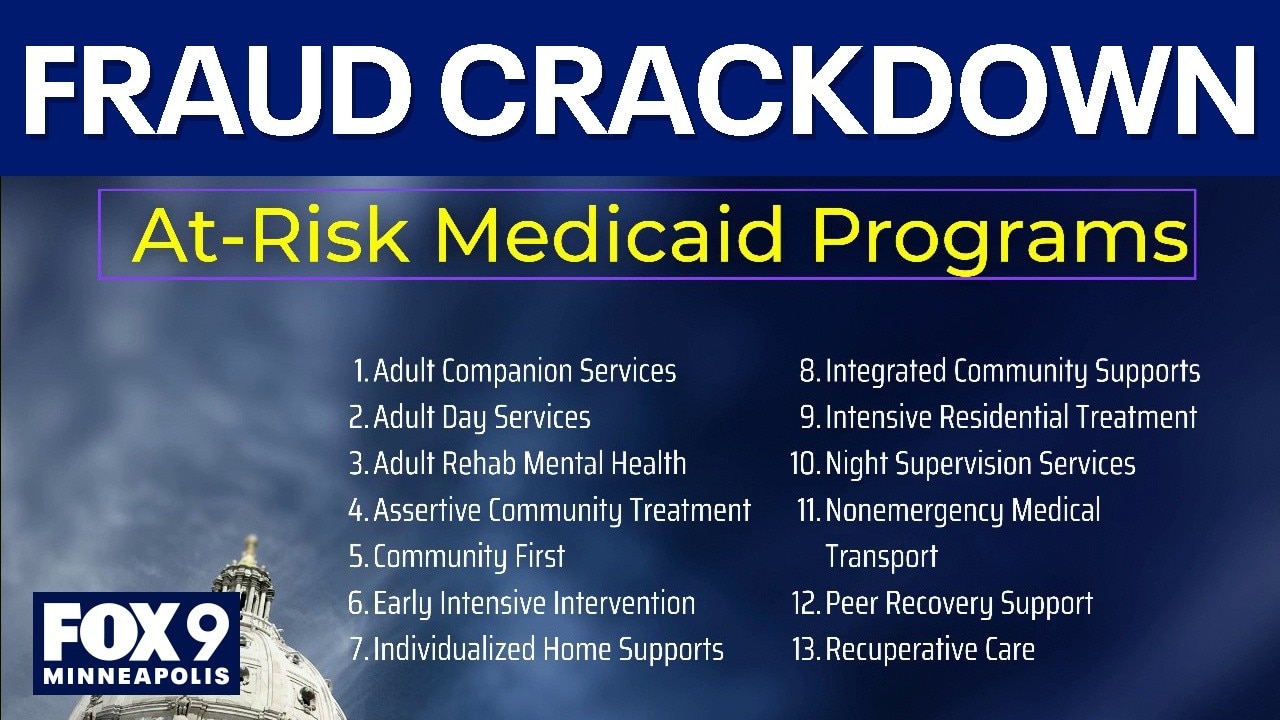
John Connolly with the Minnesota Department of Human Services (DHS) detailed the plan on Monday in a Microsoft Teams meeting. The overall goal is to revalidate all the 5,813 Medicaid providers in 87 counties in the state throughout 13 high-risk programs by the end of May.
Health leaders launch 'Minnesota Revalidate' to combat Medicaid fraud
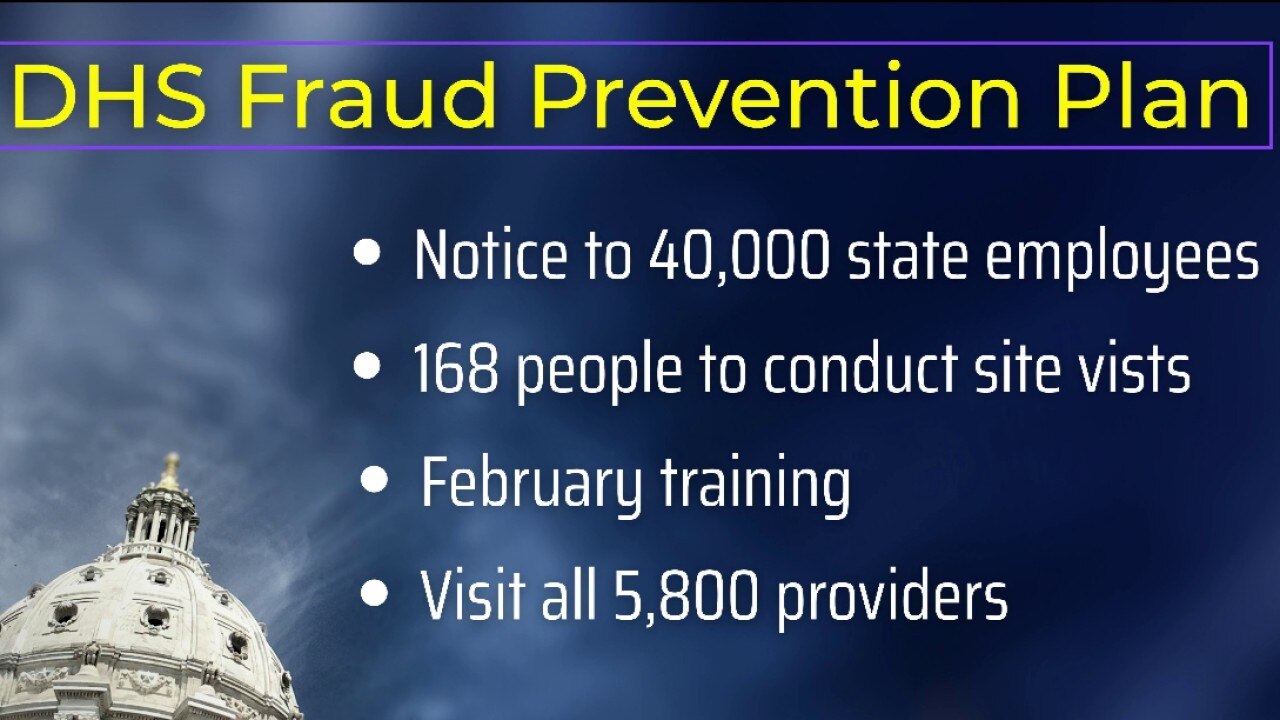
The Department of Human Services on Monday launched "Minnesota Revalidate" to combat Medicaid fraud in the state. Officials are calling for 168 state employees to perform unannounced site visits to more than 5,800 providers in Minnesota as a step to avoid losing up to $2 billion in federal Medicaid funding.
Here is how it will work:
- DHS is asking 168 of 40,000 state employees to come to them to perform unannounced site visits across Medicaid providers. Training will start this month, with site visits soon to follow.
- The site visits will include a review of the provider’s documentation. There will be a review of owners’ background studies, and visiting providers for on-site screenings.
- Inspections will include conducting screen reviews both before and after visiting providers.
"One of the things that is really important to me is to rebuild the trust that was destroyed by bad actors making fraudulent Medicaid claims," Connolly said. "This is an unprecedented effort. We’ve never done anything on this scale before with provider revalidations. The people of Minnesota deserve this so they can be confident in the programming we offer. Minnesota Revalidate is a cornerstone of the work we’re doing to combat fraud."
Minnesota health leaders announce new Medicaid fraud prevention plan
State leaders have launched a new program "Minnesota Revalidate" as part of a corrective action plan to prevent Medicaid fraud. The plan was sent to the federal government, which threatened to withhold $2 billion in funding to Minnesota. FOX 9's Tim Blotz has more.
Federal Medicaid funding cuts coming?
Why you should care:
The federal government sent a letter to Minnesota Gov. Tim Walz on Dec. 5, 2025, requesting an action plan to combat Medicaid fraud, or risk having up to $2 billion cut. State leaders submitted that plan on Dec. 31, with items requested by the Centers for Medicare and Medicaid Services, as well as additional items.
The federal government then responded by saying the plan was not detailed enough. State health officials appealed and issued a rebuttal last Friday, which takes up to 60 days to process.
During that appeals process, Minnesota will not have federal Medicaid funding cut.
Connolly estimates Minnesota gets north of $10 billion in federal Medicaid funding. State officials say the fraud is largely happening in fees for service, and in managed care.
Dig deeper:
State health officials say they’re already taking steps to prevent fraud, with Minnesota’s Housing Stabilization Services program shutting down.
The state has also disenrolled non-active providers from 13 high-risk categories. They’re also disenrolling providers who haven’t submitted billing in the last 12 months.