

Hennepin Co. paramedics warn ‘chronic’ under-staffing creating crisis
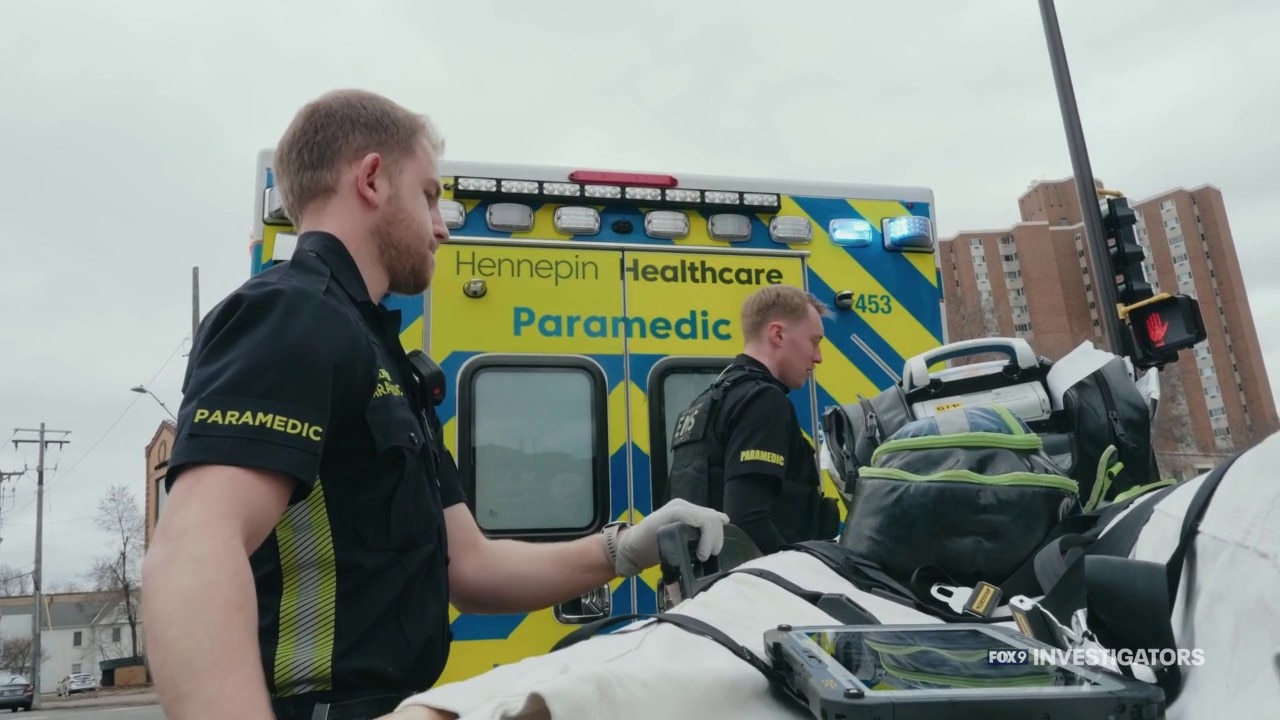
EMS consistently below staffing minimums
Records show Hennepin County paramedics are consistently operating below staffing minimums as emergency call volumes increase, leading to union concerns about mental health and burnout.
MINNEAPOLIS (FOX 9) - Records show Hennepin County paramedics are consistently operating below staffing minimums as emergency call volumes increase, leading to union concerns about mental health and burnout.
'Paramedics describe increasing strain and mental health challenges'
What we know:
Chronic under-staffing of daily shifts has become a major issue for Hennepin County’s paramedics and EMTs.
"What we're dealing with is chronic under-staffing, which is creating a snowball effect within our system," said Shane Hallow, President of the Hennepin County Association of Paramedics and EMTs (HCAPE).
The union represents approximately 200 paramedics, EMTs and emergency dispatchers.
A union survey conducted last year found 75% of its members classified their work-related stress as either ‘high’ or ‘very high.’
Michelle Schneider, who joined the agency in 2023, said her team is tired and overworked.
"It's untenable and overwhelming," Schneider said.
More than half of survey respondents said they are actively considering leaving the field.
"The system's broken, the system needs help," said Hallow, who was negotiating a new union contract with the county before financial woes struck the Hennepin County Medical Center (HCMC).
Hennepin EMS Chief Marty Scheerer minimized the survey results in an interview with the FOX 9 Investigators.
"I mean, that's a survey, but I look at the reality," Sheerer said. "So, turnover, that is what I look at. We have the lowest turnover [8%] in the organization."
Sheerer also said staffing levels have increased more than 34% over the last five years, and they have a waiting list of people wanting to work as paramedics in Hennepin County.
Yet daily staffing reports provided by the union show Scheerer’s department has consistently failed to meet minimum staffing levels over the past several months.
‘Unsafe’ staffing ratios
Dig deeper:
The daily reports are broken down by 30-minute intervals and detail how many paramedics should be staffed compared to how many are actually available.
On a Friday morning in January, fewer than nine paramedics were ready to respond when there should have been more than two dozen.
A month later, on Feb. 13, the reports show Hennepin EMS operated at less than half-staff for several hours.
Scheerer acknowledged that was the agency’s "lowest staffed" day of the year.
"There was never a point where any patient did not receive a timely ambulance response," he said. "The system performed as intended, even on what was our most challenged staffing day of the year."
But reports provided by the union show those staffing challenges are occurring regularly.
Nearly every shift on March 30 was highlighted in red — indicating they were short-staffed almost the entire day.
"These staffing ratios are unsafe, they are unpractical, and they are unsustainable," said Hallow.
When staffing gets that low for that long, Hallow says EMS may only have four ambulances available to cover 14 cities across the county.
"And what that's doing is it is further impacting those providers, it is forcing people out of the job, it's overworking people, and it's creating a mental health crisis within our field," said Hallow.
Sheerer acknowledged the agency falls below "minimum" staffing levels at certain times but said its part of being the busiest 911 emergency service in the state.
"There are certain days where we go below minimum, absolutely and there are certain days when we could double our staffing and still won't be able to go on all the calls," said Hallow.
911 calls up 26%
By the numbers:
Emergency 911 calls jumped more than 26% over the past five years, according to Scheerer.
"So, some days it is more challenging to staff the way we'd like it to be, but we schedule a solid number of people for staffing," said Scheerer.
The county is now handling nearly 100,000 calls annually.
Scheerer explained that the increase in demand as well as injuries, sick calls and employee leave benefits make it difficult to plan for staffing shortfalls.
But the county offers more overtime to fill the gaps and a recent increase in hiring will bring the agency up to its fully authorized staffing level later this month, according to Sheerer. The county also relies on mutual aid from other ambulance services, including Allina and North Memorial, to cover shifts and alleviate pressure on individual crews.
"The system is built, designed to have the ups and downs of staffing and surging," said Scheerer. "We have a priority system of calls, so we are always going to send an ambulance to the high acuity calls."
Providing ‘great service’
Big picture view:
Hennepin County Commissioner Jeff Lunde said EMS is providing "great service" in meeting mandated call response times while remaining on budget, which is vital for a hospital system reporting record losses.
Lunde, who has oversight responsibilities for HCMC, acknowledged the union’s concerns about staffing and burnout must be addressed with mental health support.
"It is almost like trauma," explained Lunde. "They are seeing it first and foremost."
Scheerer praised the agency’s response to the Annunciation shooting last summer when EMS triaged, treated and transported victims in less than 12 minutes.
"The number of resources deployed, the speed of care, and most importantly, the patient outcomes, reflect a system that is prepared, coordinated, and focused on saving lives in even the most challenging circumstances," he said.
But those types of trauma responses increase the stress and burnout, according to Schneider.
Schneider described responding to the fatal shooting of Minneapolis Police Officer Jamal Mitchell in May 2024.
"We were one of the first three people there… so we actually pulled over so that all the squads could get by us," she said.
Schneider sees a therapist every week but says it is now harder to maintain her mental health.
"A lot of us are used to working hard, and so it's not that," Schneider said.
For her, it’s the "mental load" of bearing every single call until you go home.
Schneider said she’s "tolerating it, but unwillingly."