

A rare ‘Black Moon’ set to rise this week: What to know
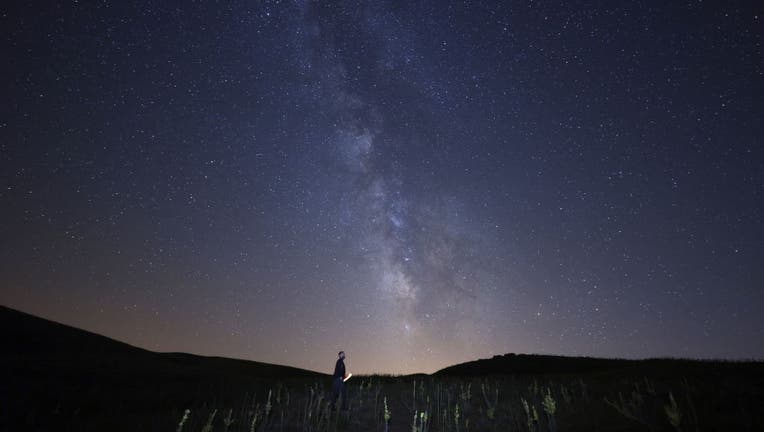
A long exposure photo shows a man stands as a night sky full of stars and Milky Way in the 2,200-altitude Serafettin Plateau in Solhan district, Bingol, Turkiye on July 13, 2024. (Photo by Ridvan Korkulutas/Anadolu via Getty Images)
Stargazers will get to observe a rare lunar event later this week.
According to Space.com, a rare Black Moon will rise on August 23, although you won't be able to see it.
Dig deeper:
At 2:06 a.m. EDT (06:06 GMT) — which is 11:06 p.m. PDT on Friday (Aug. 22) — the moon will officially pass through its new moon phase, according to the website.

Duffy announces plans for nuclear reactor on the moon
Transportation Secretary Sean Duffy will reportedly announce plans to build a nuclear reactor on the moon. Duffy also serves as the interim administrator of NASA. LiveNOW’s Andrew Craft is finding out what future impacts of the idea could look like with Patrick McClure, Chief Operations Officer (COO) for Space Nuclear Power Corporation (Spacenukes).
What is a Black Moon?
A Black Moon is the term used to describe the second new Moon in the same calendar month, according to TimeAndDate.com.
RELATED: Potential asteroid impact on Moon in 2032 could trigger massive meteor shower on Earth
According to NASA, a new Moon is the lunar phase when the illuminated side of the Moon faces the Sun and the night side faces Earth.
During a new Moon, the dark side faces Earth because the Moon is positioned between Earth and the Sun. Another example would be during a solar eclipse when a new Moon crosses the face of the sun. During this process, the Moon's shadow is cast over the Earth.
Big picture view:
Nights with a New Moon are ideal for astronomers, as the absence of moonlight makes faint celestial objects much easier to see.
Why you should care:
The event offers stargazers a clear view of stars, constellations, and bright planets, including Venus, Saturn, Jupiter, and Mercury.
The Source: FOX Weather contributed to this report. This story was reported from Los Angeles.