

Partial solar eclipse may be visible in the Midwest Wednesday
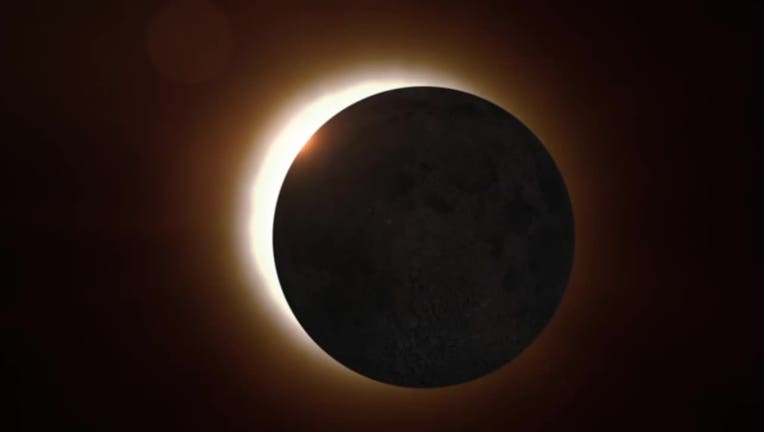
Partial eclipse seen from Milwaukee in 2024 (Fox 6)
MILWAUKEE, Wis. (FOX 6) - Much of the Midwest may be able to see a partial solar eclipse Wednesday, as the skies across other countries are darkened by a total eclipse.
Eclipse may be visible Wednesday
Big picture view:
Many countries across the Northern Hemisphere, spanning from Iceland to Spain, will get the opportunity to see the rare spectacle of a total solar eclipse Wednesday, according to NASA. While the total eclipse will not be visible in the U.S., some areas of the country may be able to catch glimpses of the partial eclipse, including in the Midwest.
Local perspective:
Here is some partial eclipse information for some parts of the Midwest, according to Time and Date.
- Milwaukee, Wis., 0.84% obscured, from 12:04 to 12:47 p.m., peak time 12:26 p.m.
- Green Bay, Wis., 2.42% obscured, from 11:53 a.m. to 12:54 p.m., peak time 12:23 p.m.
- Minneapolis, 0.49% obstructed, from 11:55 a.m. to 12:31 p.m., peak time 12:13 p.m.
- International Falls, Minnesota, 5.19% obstructed, from 11:31 a.m. to 12:47 p.m., peak time 12:09 p.m.
- Chicago, 0.13% obstructed, from 12:16 p.m. to 12:40 p.m., peak time 12:28 p.m.
- Evanston, Illinois, 0.20 obstructed, from 12:14 p.m. to 12:41 p.m., peak time 12:28 p.m.
- Detroit, 2.98% obstructed, from 1:03 p.m. EDT to 2:08 p.m. EDT, peak time 1:36 p.m. EDT.
- Flint, Michigan, 3.37% obstructed, from 12:59 p.m. EDT to 2:07 p.m. EDT, peak time 1:33 p.m. EDT.
Timeline:
The partial eclipse will begin around 11:50 a.m. CDT/12:50 p.m. EDT for the Midwest area and wrap up around 1:10 p.m. CDT/2:10 p.m. EDT.
What you can do:
It is not safe to view the eclipse directly. It is only safe to do so using eclipse glasses or a handheld solar viewer. There are no regular sunglasses that offer enough protection to safely view the eclipse.
"Viewing any part of the bright sun through a camera lens, binoculars or a telescope without a special-purpose solar filter secured over the front of the optics will instantly cause severe eye injury," NASA said.
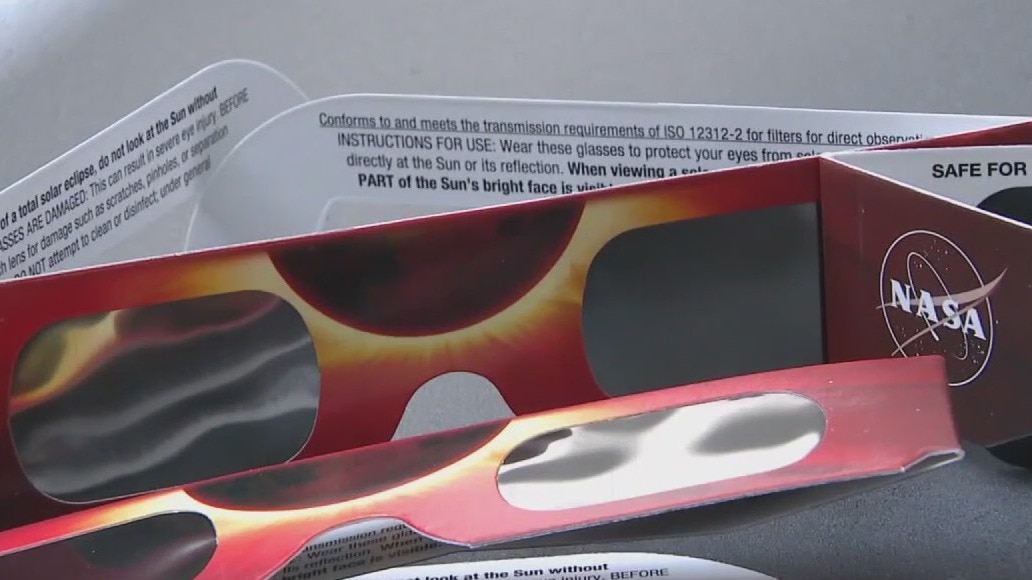
Eclipse eye safety
Dr. Laura Kopplin with UW Health joins FOX6 WakeUp with some important details when it comes to eye safey.
About solar eclipses
Dig deeper:
According to NASA, solar eclipses occur when the Moon passes between the Sun and Earth, casting a shadow on Earth that either fully or partially blocks the Sun's light in some areas.
Perseid Meteor Shower
What's next:
The Perseid Meteor Shower will be peaking at the same time as the solar eclipse, between Wednesday and Thursday. This meteor shower happens annually between late July and late August, peaking in mid-August, according to Time and Date.
According to NASA, "The Perseids are best viewed in the Northern Hemisphere during the pre-dawn hours, though at times it is possible to view meteors from this shower as early as 10 p.m."
The best viewing opportunities to see the meteor shower will be during the early morning hours of Aug. 12, 13 and 14, before sunrise, according to Michigan State University.
The Source: Information for this article was sourced from NASA, Time and Date, Fox Weather, and Michigan State University. This article was reported from Eden Prairie, Minnesota.