

Edmund Fitzgerald mystery lingers 51 years later
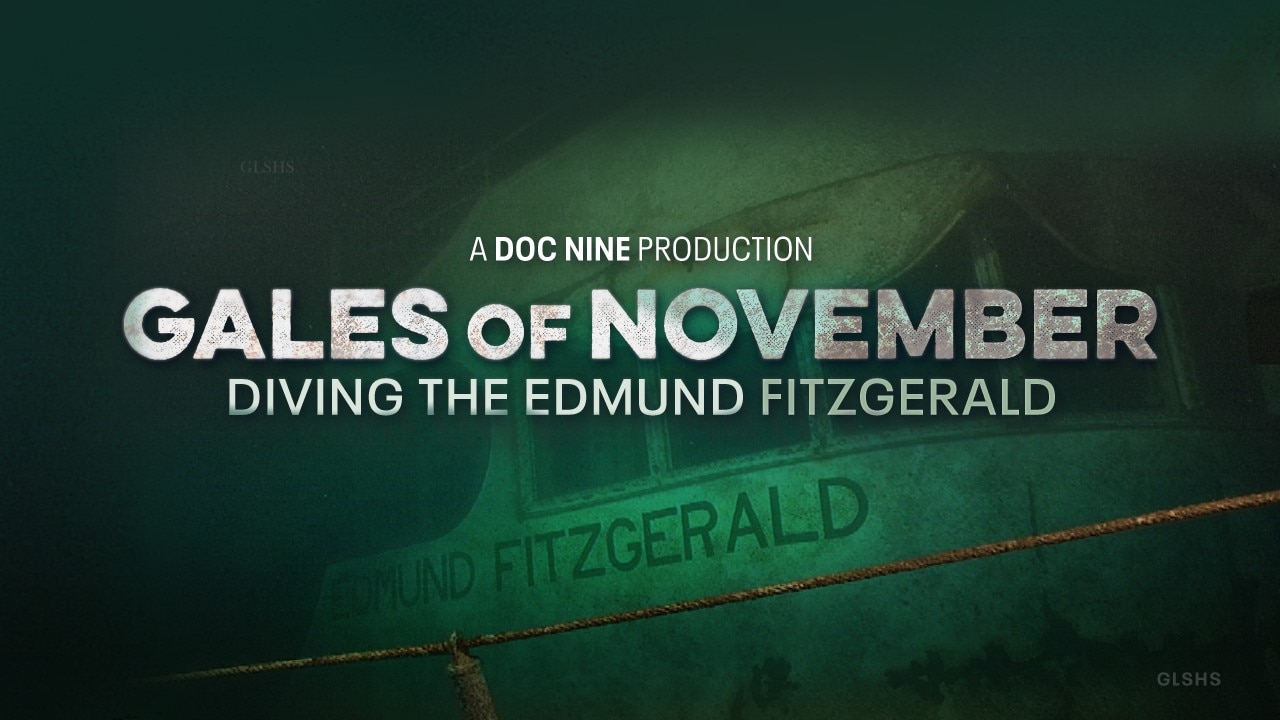
Gales of November: Diving the Edmund Fitzgerald
In this news documentary, you will hear from the few people who have seen the Edmund Fitzgerald since the ship sank in Lake Superior 50 years ago. As historians and experts continue to debate why the ship sank, the answers could still be found in the wreckage…but there likely will never be another dive.
MINNEAPOLIS (FOX 9) - A FOX 9 documentary detailed the diving expeditions to explore the wreckage of the Edmund Fitzgerald.
What they're saying:
The Edmund Fitzgerald has rested on the floor of Lake Superior for 51 years.
No one has seen the ship in more than 30 years.
And yet the debate over how it sank so quickly on Nov. 10, 1975 resurfaces every year.
"Did it go down nose dive as we've seen in so many paintings? Absolutely not," said Ric Mixter, who explored the wreck site from a submarine in 1994.
Larry Elliott and Jene Quirin, who were part of the last expedition in 1995, are convinced the ship only broke apart after hitting the lake bottom.
"The Fitzgerald was basically sailing toward the bottom," said Quirin.
What we know:
Historians believe the Edmund Fitzgerald is still well-preserved more than a half-a-century later.
At 535 feet, the cold, fresh water of Lake Superior has likely protected the Fitzgerald from sealife and other corrosive materials.
"The condition of the ship is really amazing," said Elliott, who was part of two expeditions of the Edmund Fitzgerald.
Elliott recorded video of the ship from submarine expeditions in the 1990s.
His footage guided viewers to the Edmund Fitzgerald wreckage in a FOX 9 documentary released last year in honor of the 50th anniversary of the ship's sinking.
Dig deeper:
Elliott, Mixter and Quirin explained how complicated and dangerous it was to explore a wreck at those depths.
"All of us were lost down there," Mixter said. "We didn't have any way of triangulating locations or distances."
Mixter said the submarine he was on accidentally ventured into the ship during the 1994 expedition.
"We're going across and all of a sudden I see bottom, bottom, bottom and a giant crack in the ground," Mixter said. " We were actually on the Edmund Fitzgerald and didn't realize it."
Quirin, who explored the wreckage on a separate expedition, described a similar experience while trying to explore the infamous hatch covers.
"The pilot said ‘I think we're in the ship’ and the sonar on the side turned bright red," Quirin said.
The backstory:
The Canadian government has not approved another expedition since the ship's bell was recovered in 1995 to honor the 29 lost crew members.
Elliott does not believe the families of the lost crew members or the Canadian government will approve another dive.
"In our lifetimes, we won't see another expedition to the Fitzgerald," Elliott said.
What we don't know:
The U.S. Coast Guard conducted the first dives in 1976 as part of its investigation into the ship’s sinking and later concluded "the most probable cause of the sinking was the loss of buoyancy resulting from massive flooding of the cargo hold" which was caused by "ineffective hatch closures."
However, the Coast Guard did not conclude how or when the ship broke apart.
Over the next several decades, experts and historians offered competing theories.
There is not even consensus among the few who have gone to the bottom of Lake Superior to study the ship’s wreckage.
Elliott and Quirin are convinced the ship only broke apart after hitting the lake bottom.
Mixter, who dove as part of a separate, independently financed expedition in 1994, believes the ship broke apart on the surface because of open hatches and vents.
The Source: FOX 9 conducted interviews with three divers who explored the Edmund Fitzgerald in the 1990's, reviewed hours of footage from the expeditions and records from the U.S. Coast Guard.