

More than 80 rescued after flooding devastates Georgia-Tennessee towns
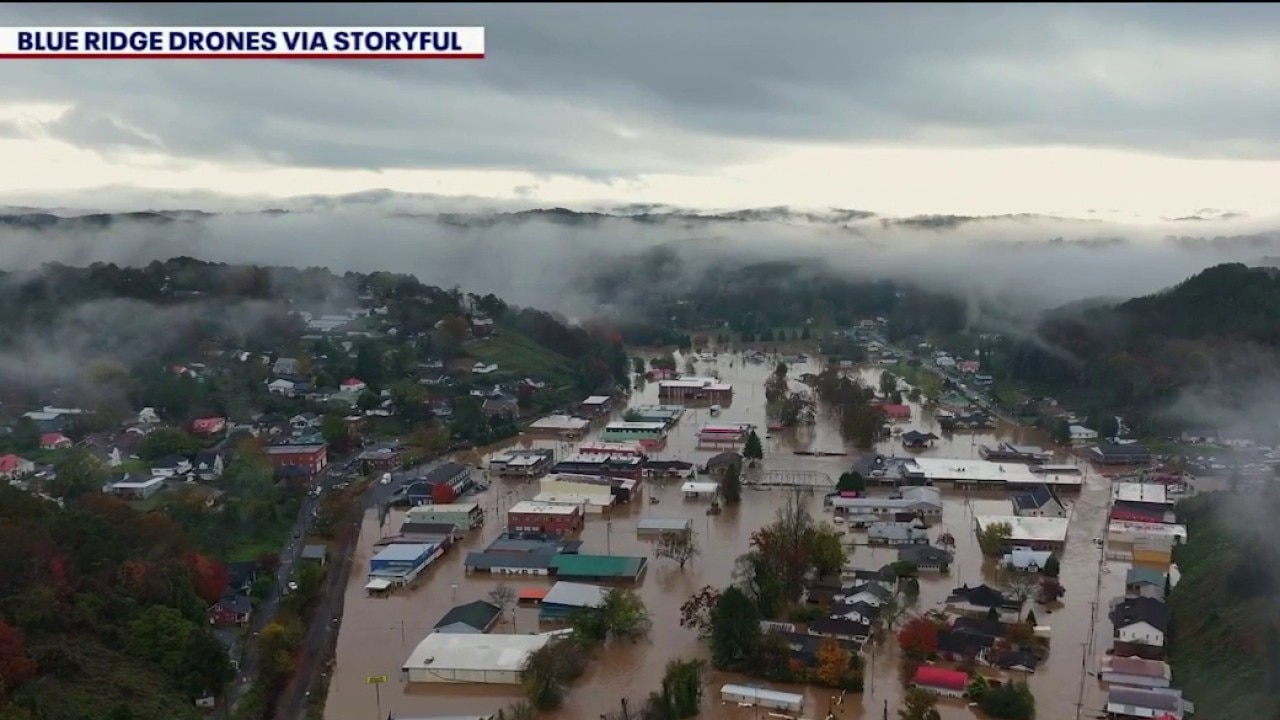
McCaysville flood submerges downtown shops
Severe flooding submerged downtown McCaysville after the Toccoa River crested at a record 18 feet, prompting dozens of emergency rescues and leaving behind extensive property damage.
MCCAYSVILLE, Ga. - Gov. Kemp has declared a state of emergency for several Georgia counties, including Union, Fannin, Gilmer and Murray, after record-breaking flooding swept through early Thursday.
It forced dozens of people from their homes, inundating downtown businesses and sending massive logs, propane tanks and other debris rushing downstream, prompting a mandatory overnight curfew in McCaysville
PREVIOUS STORY: North Georgia flooding: Waters receding in McCaysville area
What we know:
By Thursday afternoon, floodwaters were receding in McCaysville, Georgia, and Copperhill, Tennessee, revealing streets covered in thick mud, damaged buildings and debris piled against bridges. Emergency crews were assessing the destruction as residents began confronting the aftermath of a disaster that unfolded in a matter of hours.
PHOTOS: Record flooding in North Georgia after storm
The flooding followed intense rainfall Wednesday night and early Thursday across the mountains of northern Georgia and southeastern Tennessee. The Toccoa River, which becomes the Ocoee River after crossing into Tennessee, surged out of its banks and spread hundreds of yards beyond its normal channel in some locations.
FOX 5 Storm Team meteorologist Alex Forbes reported that the river rose approximately 16 feet in 12 hours, with much of that increase occurring during a three-hour period. The river reached a reported record crest of about 18 feet.
The speed of the flooding left some residents with little time to escape. In Copperhill, a retired couple woke in the middle of the night to find their belongings floating through their living room. Elsewhere, emergency crews rescued residents from flooded homes as roads and downtown businesses disappeared beneath the water.
The disaster struck a region still recovering from significant flooding just three months earlier.
Mandatory curfew in McCaysville due to widespread damage
McCaysville officials instituted a mandatory curfew taking effect Thursday night at 6:00 p.m.The curfew will be enforced daily from 6:00 p.m. until 6:00 a.m. and will remain in effect until further notice.Public Safety Director and Police Chief Michael O. Earley said access will be strictly restricted across designated zones, including:
- The entire Downtown McCaysville Business District
- East Tennessee Avenue, including residential properties
- West Tennessee Avenue, including residential properties
- Toccoa Avenue, including residential properties
Checkpoints have been set up at access points where law enforcement officers will verify residency or business ownership before granting entry. Chief Earley said the restrictions are aimed at protecting public safety, safeguarding damaged properties, preventing unauthorized access and allowing emergency and recovery teams to work safely.
Why did the flooding happen?
The backstory:
The geography of McCaysville and Copperhill played a major role in the severity of the flooding.
Both towns sit in a relatively narrow valley surrounded by steep mountain terrain. Heavy rain falling on the surrounding mountains drains into streams and rivers that converge in the lower elevations, where homes, businesses and roads have been built.
Forbes explained that much of the rain responsible for the flooding did not necessarily fall directly over downtown McCaysville. Instead, it fell across the surrounding mountains before flowing downhill into the Toccoa River and its tributaries.
That concentration of runoff caused the river to rise rapidly, leaving little time for the water to drain downstream before additional water arrived.
The result was an unusually fast and extensive flood.
The water was powerful enough to carry large trees and other heavy objects downstream. At one bridge in McCaysville, massive logs, some estimated at 3½ to 4 feet in diameter, were piled against the structure alongside other debris.
Floodwaters also overtopped a bridge and covered an intersection roughly a football field's length away. Forbes estimated that the river had spread several hundred yards beyond its banks.
The rapid rise raises questions about how communities built in mountain valleys can protect themselves from extreme flooding. However, no determination has been made that inadequate drainage or infrastructure contributed to the disaster.
Residents describe terrifying escapes
What they're saying:
In Copperhill, just across the Tennessee state line, Tommy and Sandra Edwards narrowly escaped their home along Fightingtown Creek after floodwaters rose approximately 6 feet inside.
The retired couple had lived there for more than a decade and said they had never experienced anything like Thursday's flooding.
Sandra Edwards said rain had fallen throughout Wednesday, with thunderstorms continuing into the evening. Although she received weather alerts, she believed the warnings were primarily for nearby Blue Ridge, Georgia.
The couple went to bed around 11:30 p.m.
Around 2 a.m., Tommy Edwards got up to use the bathroom and discovered their home was flooding.
Sandra rushed into the living room and found their belongings floating in the water.
"I jumped up and I come out into the living room and seeing stuff floating," she said.
When she looked outside, water had already risen above their deck.
"I said, we got to get out now," she recalled.
The couple grabbed their dog, Willow, and escaped. Sandra said Tommy nearly became trapped inside the house.
ORIGINAL STORY: Copperhill couple escapes home as 6 feet of floodwater rushes inside
By Thursday afternoon, their home had suffered extensive damage. Mud and silt covered the floors, several inches of water remained inside, and three motorcycles had been destroyed.
The Edwardses were unable to return home until the floodwaters had dropped enough to allow them inside.
Elsewhere in McCaysville, another resident described waking around 3 a.m. to discover his church underwater. He said motorcycles, cars and businesses throughout the downtown area had been submerged.
He praised local police and firefighters for their quick response to residents needing assistance.
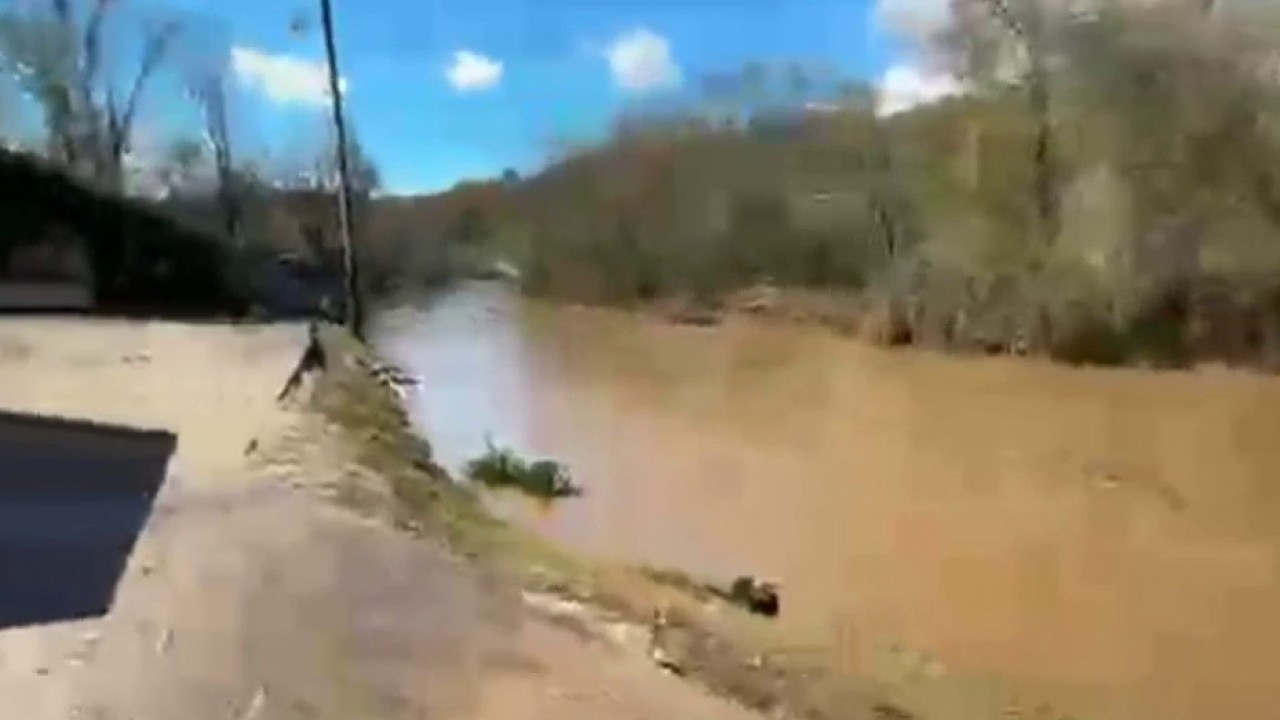
Couple describes escaping Copperhill flooding
Floodwaters are slowly receding in Copperhill, Tennessee, just across the state line from McCaysville, Georgia, but residents are discovering extensive damage. Tommy and Sandra Edwards, a retired couple who have lived along the creek for more than a decade, said they had never experienced flooding this severe. Their home took on approximately 6 feet of water, destroying belongings and three motorcycles. FOX 5 Atlanta' Elijah Jordan reporting.
More than 80 rescued as Army Rangers join emergency response
What they did:
Emergency management officials reported that more than 80 people were rescued from floodwaters throughout Fannin County overnight. Officials initially reported 57 rescues before mutual aid partners submitted updated reports.
Local police, firefighters and swift-water rescue teams responded to calls for help as roads became impassable and residents were trapped by rising water.
U.S. Army Rangers from Camp Merrill in Lumpkin County, Georgia, also assisted with rescue operations.
A military helicopter was spotted flying over the flooded area with a Ranger positioned outside, searching for anyone who might need assistance.
McCaysville Police Chief Michael Earley said he was unsure who had requested the military assistance.
Despite the widespread destruction, Fannin County Fire Rescue confirmed there was no loss of life, and Earley said no major injuries had been reported as of Thursday afternoon
Some residents were taken to hospitals for hypothermia. A female firefighter was also evaluated for leg pain but was expected to recover.
Authorities have not released a final accounting of the number of people displaced or the total number of properties damaged.

57 rescued as Fannin County crews battle floods and fires
Fannin County Emergency Management spokesperson Robert Poole says 57 people were rescued overnight by 13 swift-water rescue teams operating nine boats as catastrophic flooding swept through McCaysville and surrounding communities.
Major fire extinguished, explosion prevented amid cleanup
Emergency crews responded to multiple blazes during the flood, first extinguishing fires at a church and a business.
Firefighters then handled a separate, high-risk incident in McCaysville involving a burning vehicle and a propane tank. Fannin County Fire Rescue reported crews focused on containing the vehicle fire while strategically cooling the propane tank to prevent a catastrophic explosion.
As floodwaters began to recede, loose propane tanks and heavy debris floating through waterways created additional hazards across both towns.
In McCaysville, propane tanks became lodged beneath bridges along the Toccoa River. As water levels fell, debris piled against bridge pilings broke loose and drifted downstream.
Across the state line in Copperhill, large tanks were spotted floating down the swollen Ocoee River and Fightingtown Creek, with others washing against hillsides or tangling in debris piles. The tanks are widely used throughout rural mountain communities where homes rely on propane rather than municipal natural gas.
The rush of water also washed out a culvert along West Tennessee Avenue in Copperhill near Fightingtown Creek, coating the roadway in thick silt. Patios, lawn furniture, loose lumber, and household belongings were scattered across town as emergency crews continued neighborhood welfare checks Thursday afternoon.
School, government impacts and closures
Gilmer County Schools announced the district will operate on a normal schedule on Friday, Nov. 6. While Gov. Kemp included Gilmer in the state of emergency declaration, the catastrophic flooding was primarily concentrated to the north in Fannin County and neighboring Copperhill, Tennessee.
In Fannin County, services are seeing disruptions. The City of Blue Ridge announced that City Hall will be closed on Friday, as recovery and cleanup efforts continue across the area. The Fannin County Emergency Management Agency has announced that all Fannin County Schools and the Fannin County Courthouse will be closed on Friday.
Two mountain towns connected by tourism and a scenic railway
Dig deeper:
The disaster struck two communities that have become popular destinations for visitors to the southern Appalachian Mountains.
McCaysville is located in Fannin County in northern Georgia, roughly 100 miles north of Atlanta. Copperhill sits immediately across the state line in southeastern Tennessee.
Although they are separate municipalities in different states, the communities share a downtown area, with visitors able to walk from one state to the other in a matter of steps.
The Toccoa River flows through McCaysville before becoming the Ocoee River in Tennessee.
The towns are known for their mountain scenery, riverfront restaurants, locally owned shops and outdoor recreation.
Visitors come throughout the year for fishing, hiking, tubing and rafting. The nearby Ocoee River is particularly famous for its whitewater rapids and hosted the canoe and kayak slalom competitions during the 1996 Atlanta Olympics.
One of the area's best-known attractions is the Blue Ridge Scenic Railway.
The tourist train departs from downtown Blue Ridge, Georgia, and follows the Toccoa River through the mountains to McCaysville. The traditional excursion covers approximately 26 miles round trip and includes a stop that allows passengers to explore both McCaysville and Copperhill.
The railway began offering tourist excursions in 1998 and has helped bring visitors and economic activity to the former railroad and mining communities.
Fall is an especially popular season, when passengers travel to see the changing leaves in the Blue Ridge Mountains.
The latest flooding comes during that important tourism season and raises concerns for businesses that depend on visitors arriving by train and car.
A history of devastating floods
Thursday's flooding is not the first major disaster to strike the communities.
In February 1990, the Ocoee River flooded Copperhill's business district, leaving some areas under approximately 8 feet of water.
According to a United Press International report from that time, the flooding damaged 34 homes and 50 businesses, representing about 90% of the town's commercial district.
Water reached the second floors of some buildings, and damage was estimated at $1.25 million.
The flooding also damaged U.S. Highway 64, disrupted wastewater treatment operations and prompted officials to impose a nighttime curfew.
The river reached approximately 17.8 feet during that flood, establishing a record that stood for more than three decades.
More recently, the McCaysville area experienced significant flooding in early August 2026.
PREVIOUS STORY: McCaysville declares state of emergency after downtown flooding
That disaster damaged homes, businesses and public buildings, including the police department and post office. A boil-water advisory was issued, and residents in surrounding communities required rescue.
The latest flooding comes approximately three months after that event, leaving some residents and business owners facing another recovery before the previous one was complete.
The approximately 18-foot crest reported Thursday appears to have surpassed the February 1990 record. Final river measurements and historical rankings remain subject to confirmation by the agencies maintaining the gauge records.
How to report flood damage
What you can do:
Fannin County Emergency Management is urging residents who experienced flooding or storm-related property damage to submit a report online.
Officials said the data is essential for assessing the full scope of destruction across the county and directing relief resources to hard-hit areas.
Residents can report property damage directly through the Fannin County self-reporting portal.
What happens next?
What's next:
By midday Thursday, rain was subsiding and patches of blue sky were beginning to appear across North Georgia and southeastern Tennessee.
Street sweepers were already working to remove mud and silt from roads in McCaysville, while dumpsters had been positioned to collect flood-damaged materials.
Emergency management officials continued assessing damage, and swift-water rescue crews were checking areas where residents might still need assistance.
The weather forecast offers some relief.
Sunshine is expected Friday and through much of the weekend as a cold front moves away from the region. Temperatures will turn cooler, with daytime highs falling into the 60s by Saturday and overnight lows reaching the 30s in some mountain communities by Sunday.
The drier conditions should help cleanup crews, although falling temperatures could create additional difficulties for residents whose homes have been damaged.
Several major questions remain unanswered, including the total number of damaged homes and businesses, the estimated cost of the destruction, the number of people displaced and how long repairs to roads, bridges and public infrastructure will take.
For McCaysville and Copperhill, the latest disaster also raises a longer-term question: how can communities built along mountain rivers better prepare for increasingly destructive flooding?
For now, residents are confronting the immediate aftermath of another devastating flood, just months after the last one.