

Lyft settles MN complaint over denied rides for blind woman with service dog

Lyft settles after blind woman denied rides
Lyft has agreed to a settlement with Minnesota after a blind woman accused the company's drivers of repeatedly denying her rides due to her service animal.
ST. PAUL, Minn. (FOX 9) - Ride-hailing service Lyft has agreed to a settlement with the Minnesota Department of Human Rights in a complaint over a blind woman who said the company's drivers repeatedly denied her rides due to her service dog.
Rides denied
The backstory:
The Mid-Minnesota Legal Aid brought the case on behalf of their client, Tori Andres, who reported being repeatedly stranded by Lyft drivers. The Minnesota Department of Human Rights say Andres is just one of the riders with disabilities who have reported issues with Lyft.
An investigation by the Minnesota Department of Human Rights found multiple instances of Andres and her service dog Alfred being stranded by Lyft while on their way to medical appointments between 2021 and 2023.
The Department of Human Rights said in one instance a driver hung up on Andres' mother and canceled the ride immediately after being informed about Alfred. In another, two drivers canceled within minutes of each other after seeing the service animal.
"When Lyft drivers deny you a ride, you end up missing appointments, being late, or just not going at all," Andres said. "And that's what I have dealt with seven times over the last four years. It's been very frustrating, and I'm very thankful that the Department of Human Rights has actually listened to this case, because Lyft didn't want to go anywhere with it."
Local perspective:
The Minnesota Department of Human Rights found that Lyft had violated the state's Human Rights Act, which prohibits places, including ride-hailing vehicles, from denying access to people with disabilities.
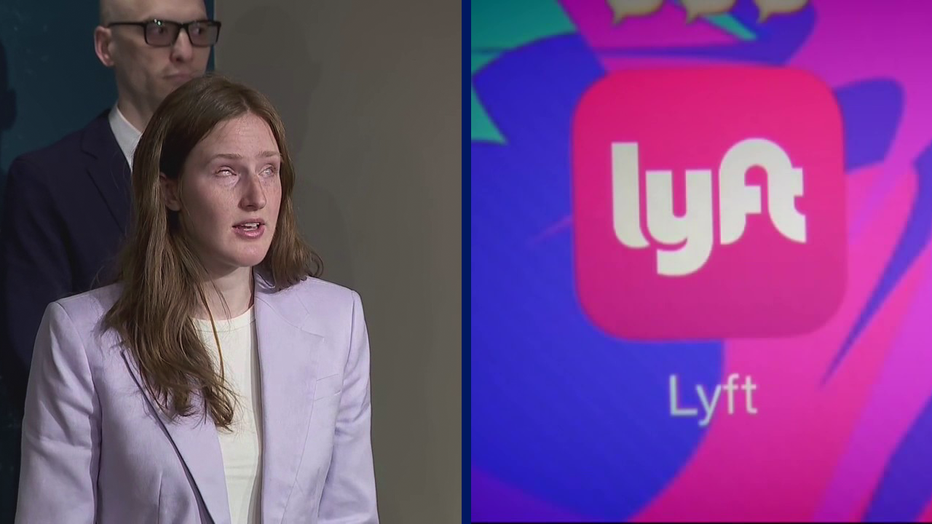
Tori Andres (left) says Lyft driver repeatedly canceled rides on her due to her service dog. (FOX 9)
The settlement
Local perspective:
The Minnesota Department of Human Rights says it reached a settlement with Lyft that strengthens policies, driver education, and brings updates to the Lyft app.
Lyft is also promising to increase punishment for drivers who violate the policy, making it clear that drivers who violate the policies will be deactivated and thus unable to drive for the company.
Lyft will also pay a $63,000 settlement to Andres as part of the case. The Department of Human Rights will monitor Lyft's compliance under the deal over the next three years.
Big picture view:
MDHR says the settlement will have a national impact.
"[The settlement] has benefits that will impact people across the country because Lyft has made several changes to its policies across the board, and its training," explained Department of Human Rights Commissioner Rebecca Lucero. "And then they've updated their app pretty substantially… It teaches drivers what they, the questions they can and cannot ask to identify service animals. And every driver across the country are going through these updated training, so the impact is felt nationally."
While the settlement only applies to Lyft, Lucero points out the state's Human Rights Act applies to all ride-hailing companies.
Lyft says it has longstanding policies to protect disabled riders
The other side:
In a statement, Lyft responded to the settlement said:
"Discrimination has no place in the Lyft community. Lyft has maintained a strict service animal policy for nearly a decade, and independent drivers who violate that policy face serious consequences, including permanent deactivation. The commitments reflected in this agreement reaffirm the robust practices Lyft has already had in place to help ensure that riders who rely on service animals are treated with the respect they deserve. We remain committed to building a platform that is accessible, inclusive, and welcoming for every rider."
Lyft points out that, as part of the settlement, there was no finding of liability and the agreement makes it clear that Lyft disputes any violation occurred. While independent drivers were alleged to have canceled rides, there was no evidence that Lyft itself canceled rides.
Lyft also points out that the policy changes were put in place prior to the agreement and Lyft did not agree to any changes by virtue of the agreement. And the company states it has long had a policy against denying rides to riders with service animals that dates back at least ten years.
However, Lucero claims many of the policies weren't in place when Minnesota began its investigation. She believes Lyft made changes as a result of the Minnesota case and other complaints across the country.