

Bloomington PD chief on MOA terror plot, Somali gang violence
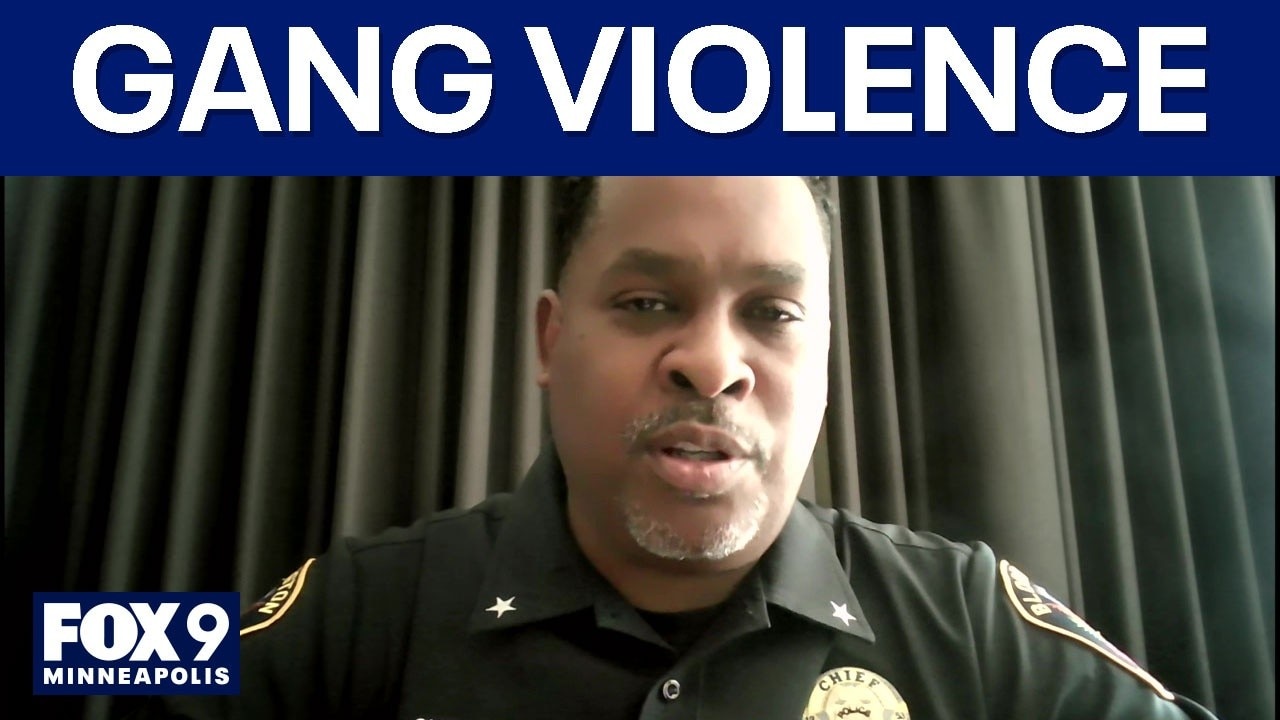
Bloomington PD chief on Somali gang violence
Bloomington Police Chief Booker Hodges joins FOX 9 All Day to discuss his department’s role in the investigation of an alleged plot to attack the Mall of America and why he says "the system worked" to thwart it. Hodges also addresses recent Somali American gang violence, including a shooting involving more than 100 rounds, the role of social media disputes and efforts by law enforcement agencies to respond to the violence.
BLOOMINGTON, Minn. (FOX 9) - Bloomington Police Chief Booker Hodges joined FOX 9 All Day to discuss the recently thwarted terror plot targeting the Mall of America, as well as a string of violent incidents police say are connected to Somali-American gangs in the Twin Cities suburbs.
Hodges says the Mall of America remains safe
Big picture view:
Federal prosecutors have charged an 18-year-old man accused of plotting an attack at the Mall of America in support of ISIS. Authorities say the suspect was arrested after buying an AK-47 as part of an investigation that had been underway for months.
Despite the plot, Chief Hodges assured mallgoers that there is no reason to feel unsafe at the mall.
"The mall is safe. I still take my most valuable assets there – my family," said Chief Hodges. "And I would not do that if I didn't believe it was safe. I only got two kids, and they got one life, and I got one wife, and she has a life, and I'm not going to put them in danger if I thought it was that type of situation. So the mall is safe. The security measures that we're putting in place with partnership with them, I believe, are effective."
Hodges said the case demonstrated that the law enforcement system worked as intended.
"I think the most important thing for people to realize here is the system worked, right?" said the chief. "Like, as horrific as this was, and what this individual wanted to do at [age] 18 still just blows my mind. The system worked here and, thank God, we were able to thwart this and avoid what they wanted to do."
Chief Hodges on 100 rounds fired
Local perspective:
Bloomington police said more than 100 shots were fired during an incident on Harriet Avenue, leaving one minor injured. Police have connected the shooting to Somali-American gang activity.
"To be honest, I was mad. I mean, it's like, what the hell are these people thinking about coming here, trying this here?" said Chief Hodges. "Ultimately, for me, yeah, I was pissed, and I just think and sad for the people that live over there that have nothing to do with this. And these clowns show up and blast off all these rounds. And for what? Right. And then that's what it comes back to. For what? Because someone talked about you on social media, and now you want to come out and blast off a hundred rounds in the street, like this is Grand Theft Auto or something, man. I mean, it's just ridiculous. So I can't wait until we lock these people up and that's coming."
Hodges said investigators know who they are looking for in many of the cases and are working to find them.
"A lot of these, we do. You know, I'm not going to get into how we know, but we do. So it's just a matter of tracking them down, and we will. And once that happens, we'll be sure to let people know who these folks are."
Big picture view:
Hodges also discussed the prevalence of devices commonly known as switches, which can convert some semiautomatic firearms to fire automatically. He said law enforcement is encountering them far too frequently.
"Way too often and I think that's a significant issue when you look at a lot of these shootings where you're looking not just here. But when you're looking at a lot of these rounds that are dumped off, they're using these switches. And unfortunately, I think they can print them on 3D printers now. So that's even making this more complicated."
Hodges on Somali gang activity
Local perspective:
"I pride myself on telling the truth. I'm not going to sugarcoat it. We're dealing with Somali American gangs right now. Throughout my life, we've dealt with Hmong American gangs, African American gangs, Italian gangs. We've dealt with different groups throughout history in this country who are, unfortunately, being involved in gang activity."
Hodges stressed that the vast majority of Somali Americans are not involved in the violence.
"By no means does this mean that every member of the Somali community, Somali American community, is involved in these activities because they're not. The vast majority of Somalis, just like the rest of us, Somali Americans go to work every single day busting their butt, trying to make a living."
Hodges said he believes accurately identifying who is involved is necessary to address the problem.
"Ultimately, if you don't identify a problem, it's not where you're going to fix it. And, you know, it's just people are worried about calling something racist more than they are fixing the problem. And it's just ridiculous to me."
Why Somali gangs are different
Dig deeper:
Hodges said investigators are seeing an unusual dynamic in the recent cases. Unlike traditional gangs centered around drugs, money or territory, he said the disputes appear largely driven by conflicts on social media.
"These kids have money. They, I mean, they're driving Teslas and BMW and Mercedes and even Subarus, right?" said Hodges. "So, I mean, they have money. When we do warrants on these houses, you're not getting troves of cash or drugs. So the only thing that they're fighting over is social media beef."
Hodges contrasted the cases with gangs he encountered earlier in his law enforcement career.
"I worked gangs earlier in my career. And I can tell you, every single gang warrant that I've ever done from motorcycle gangs to African-American street gangs, everybody has dope and money. And that's the difference. These Somali American gangs, we've not seen that."
"I've been thinking about this for a while, and I think this would be a longer conversation, but I think those of us that are older might not be able to understand the young people in these cases, because when I talk to them, my life isn't centered around social media. Theirs is. So when you take that, you take a brain where, you know, people insult you, and now you want to just go out and shoot each other. And everything in your life revolves around social media and that's what we're dealing with here. It's a generational thing."
Hodges unsure about task force
What they're saying:
Hodges said he planned to discuss the issue with other law enforcement leaders, but wasn't yet convinced that creating another task force was the answer.
"A regional task force … I'm not necessarily sold on that yet, but I'll have those discussions with those law enforcement leaders tomorrow," said Hodges. "We have a lot of task forces right now. Think we have a lot of groups. I don't want to reinvent the wheel. I think, quite frankly, we got enough resources and realigning and changing up some of the things we do that we could do to address this."
"I think we can improve communication to go after some of the stuff a little bit, but, yeah, I'm going to keep my thoughts for the meeting, and then I'll tell you everything I'm thinking."
Hodges on stereotyping Somalis
The other side:
Hodges ended the interview by again stressing that the people involved in gang activity should not be viewed as representative of the larger Somali-American community.
"Right now, yes, we have issues with Somali Americans participating in gang activity. But they are not reflective of their community. And I think in 2026, we've created technology to allow me and you to talk across miles with this video camera going here. We've got technology. We got cars that can drive themselves. We should be smarter, hopefully, than to just start pegging people and dumping them into groups based on a few people. And I would just really encourage people not to do that."