

How Minnesota’s Gophers are keeping 89% of game day trash out of landfills
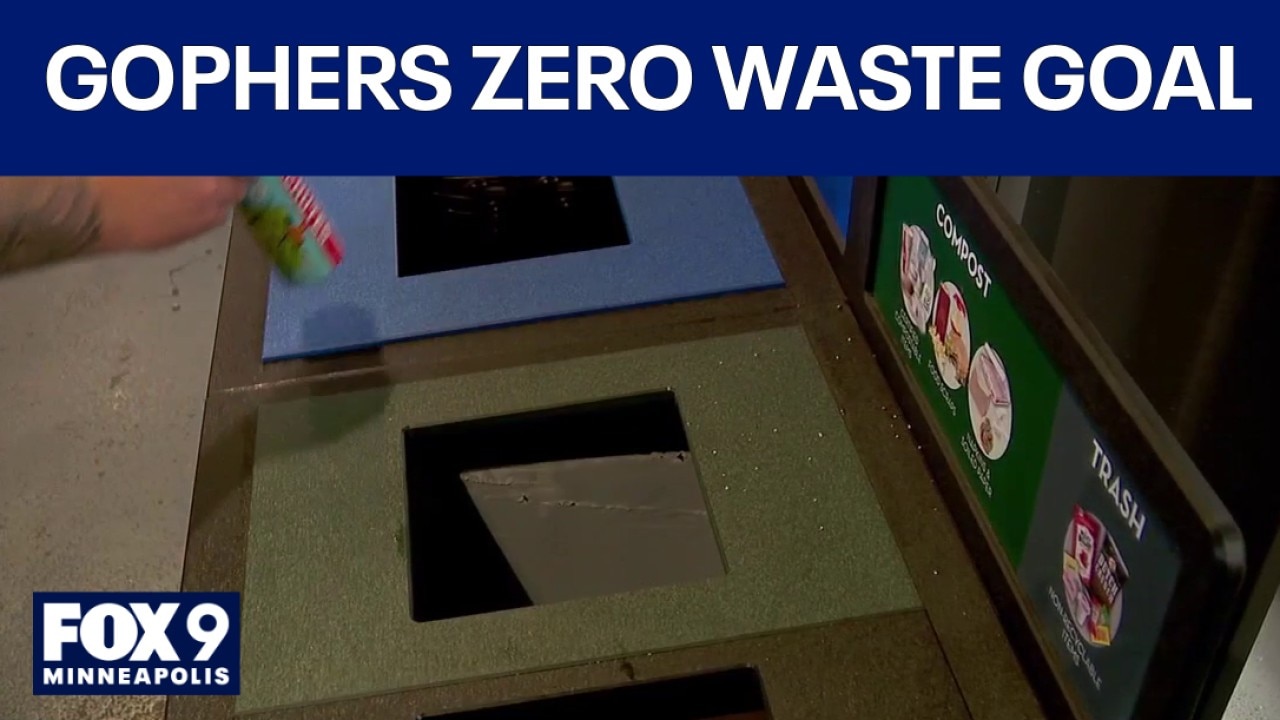
Gophers Zero Waste Goal commits to saving the environment
The University of Minnesota's Zero Waste Goal does its part at Gophers athletic events to commit to saving the environment. FOX 9's Tim Blotz has the story.
MINNEAPOLIS (FOX 9) - At Huntington Bank Stadium, the zero waste effort is a team effort — and it's been building since 2012.
Zero waste, big results
What we know:
Brady Buresh, Senior Director of Facilities and Event Operations at the University of Minnesota Athletics, said the program's zero waste goal has always been 90%.
The effort launched in 2012 with a diversion rate of just 40% and has grown steadily since.
"We worked heavily with our campus partners back in 2012 to bring this zero waste effort to fruition," Buresh told FOX 9.
During the 2025 Gopher football season, the program hit an 88.6% landfill diversion rate, a new record.
The biggest single-game benchmark was the Michigan State game at 91%, and the Farm Aid concert held at the stadium reached 90%.
"So, it's really shown that we can do it and our efforts actually have some juice behind it," Buresh said.
How the sorting works
Dig deeper:
Fans now see three sets of bins throughout the stadium — one for recycling, one for compostables and one for trash.
But the work doesn't stop when the final whistle blows.
"And this process really starts during the game. Once kickoff goes, we start sorting the waste that we currently have in the stadium," Buresh said. "We will sort throughout the game, overnight, and into the next day."
That next day, Sunday, sorting moves outside to the bowl of the stadium itself.
"So, we'll have people going through all the stands, and we'll get the liquid out of all the beer cans and all the beverage cans," said Buresh.
Crews separate organics first, then recyclables, then true trash. Peanut shells, popcorn and other organic material are carefully pulled out and sorted into the right stream.
"Then we'll blow the peanut shells, the popcorn, pick everything out that's not an organic source and put that in," Buresh said. "And then we have our trash dumpsters removed and then we will get a score to see what our diversion rate is for those games."
Getting vendors and fans on board
The backstory:
Reaching those diversion rates has required significant coordination, especially with vendors.
At one point, a single drink at the stadium came with a recyclable cup, a compostable lid and a trash straw.
Now, all three components are compostable, making sorting far easier for stadium crews.
Buresh said the university works closely with food and beverage provider Aramark to source truly compostable products. He pointed to Coca-Cola providing compostable Powerade cups for the sideline as one example of how product availability has improved in recent years, something that wasn't possible until about two years ago.
Buresh also noted that sustainability is a constantly changing environment. Ten to 15 years ago, recycling was the main focus. Now, compostable products have become more widely available over the last five to seven years, opening new waste diversion streams.
What they're saying:
Buresh said fan participation has been a key part of hitting those numbers, and the new three-bin sort system, now common across the Twin Cities, has made it easier for attendees to do their part directly.
"We really love seeing the fans utilize our new bins, and we really hope they have fun with it," Buresh said. "And they can really help us out to our overall goals that we're trying to achieve, not only here at Huntington Bank Stadium, but for Gopher Athletics and the University of Minnesota as a whole."
Placards on each bin show fans exactly which items go where. Buresh said aligning product sourcing with sorting systems, and keeping those products consistent year over year, has been one of the biggest factors in the program's improvement.
Recognition and what's ahead
Big picture view:
The results haven't gone unnoticed.
Gopher Athletics has been recognized by the Green Sports Alliance as a waste leader for the past two years, based on the program's diversion rates.
Buresh said the stadium's sustainability platform extends beyond zero waste and also includes water consumption, energy management, building automation and storm water management, all aligned with the University of Minnesota's broader campus sustainability initiatives.
The Source: FOX 9's Tim Blotz reports. Information and quotes from Brady Buresh, Senior Director of Facilities and Event Operations at the University of Minnesota Athletics.