

Red, white, and blue: How to properly display and honor the American flag
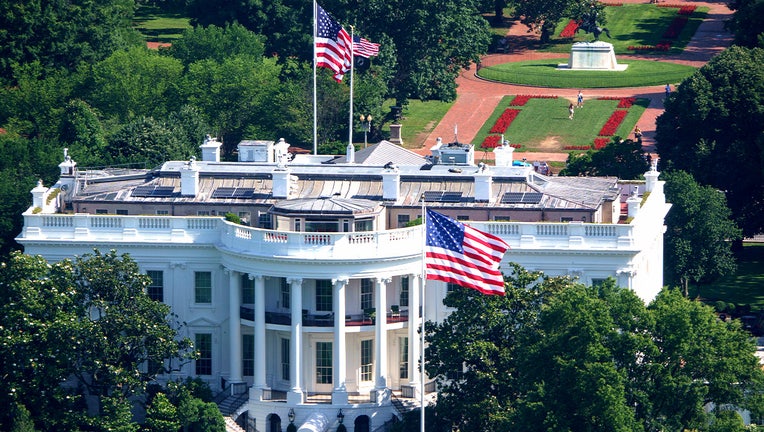
In addition to the American flag that has flown on the White House roof stretching back decades, two 88-foot-tall American flags were installed in June 2025 on either side of the White House. ( FOX News)
As the U.S. prepares to celebrate Flag Day on June 14 and 250 years of Independence on July 4, American flags will be flying prominently throughout the country. Here is the proper way to display Old Glory.
The backstory:
The U.S. National Flag Code was signed into law by President Franklin D. Roosevelt on June 22, 1942, and laid out the ways to display and respect the flag of the United States.
Daily display of the American flag and weather guidelines
Time of Day: Traditional guidelines dictate displaying the flag in public only from sunrise to sunset. However, it may fly 24 hours a day if it is properly illuminated during the night.
Weather Precautions: To prevent damage, the flag should never be flown during rain, snow, or high winds unless it is explicitly manufactured as an all-weather flag.
Where to Fly: The flag should be displayed daily, particularly on national and state holidays. It should be prominent on or near the main buildings of public institutions, at polling places on election days, and at schools during school days.
Handling: Always hoist the flag briskly and lower it with solemn ceremony.
Displaying the American flag in parades, floats, and processions
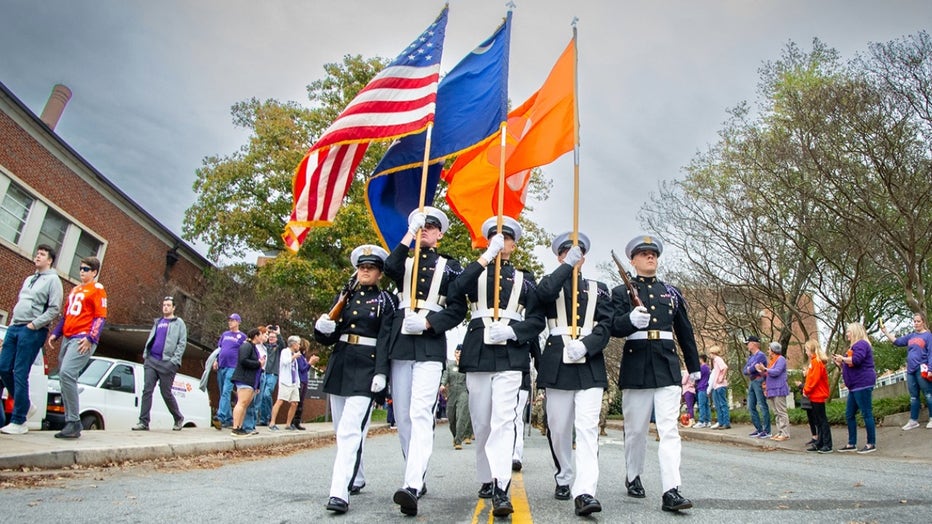
Members of the Clemson University ROTC honor guard, the Pershing Rifles, which includes both Army and Air Force ROTC cadets, lead the parade into Memorial Stadium before the Clemson Tigers’ annual Military Appreciation Game, Nov. 12, 2022. (DVIDS pho
Marching Lines: When carried in a procession alongside other banners, the U.S. flag must sit either on the marching right (the flag’s own right) or out in front and center of the moving flag line.
Vehicles and Floats: In a parade, the flag should either hang freely from a staff or be suspended so its folds fall naturally. It must never be draped over the body of a car, truck, or float.
Displaying with other flags
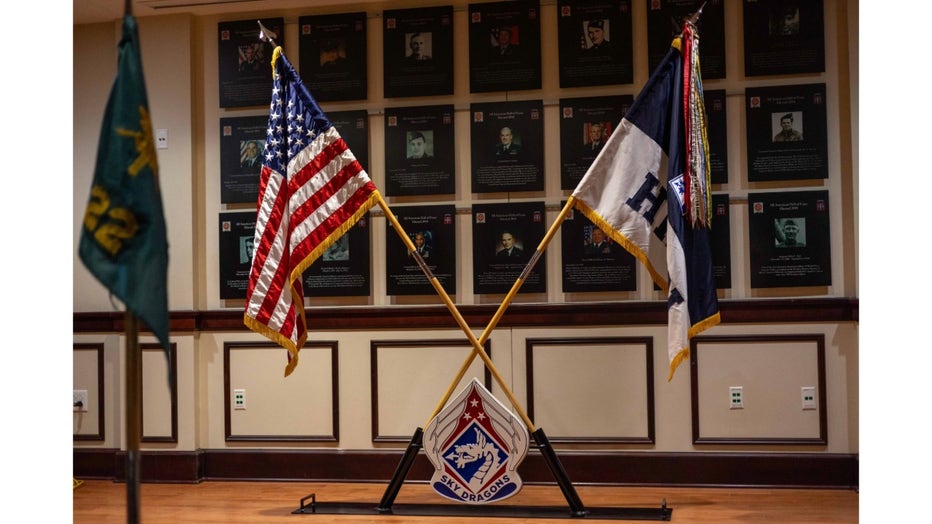
The American and Headquarters and Headquarters Battalion, XVIII Airborne Corps flags stand ready before the 22nd Mobile Public Affairs Detachment change of command ceremony at Fort Bragg, N.C., July 25, 2025. The flags are symbols of national and uni
Crossed staffs against a Wall: When mounted on crossed staffs against a wall, the U.S. flag must be on its own right (which is the viewer’s left). Its staff must also sit in front of the accompanying flag's staff.
Group displays: In a clustered group of varying flagstaffs, the American flag must occupy the center position and sit at the highest point.
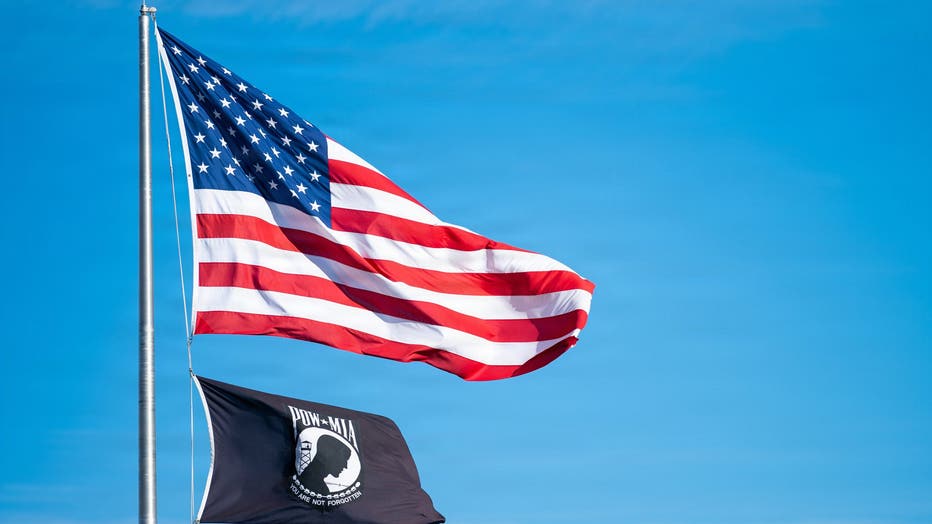
When flags of states, cities or organizations are flown on the same staff, the U.S. flag must be at the top (except during church services conducted at sea by Navy chaplains. (U.S Air Force Photo by Ray Bahner)
Shared staffs: If flown on the same halyard with state, city, or organizational flags, the U.S. flag must always be at the apex. The lone exception is during church services conducted at sea by Navy chaplains.
Hanging the American flag from a building or wall
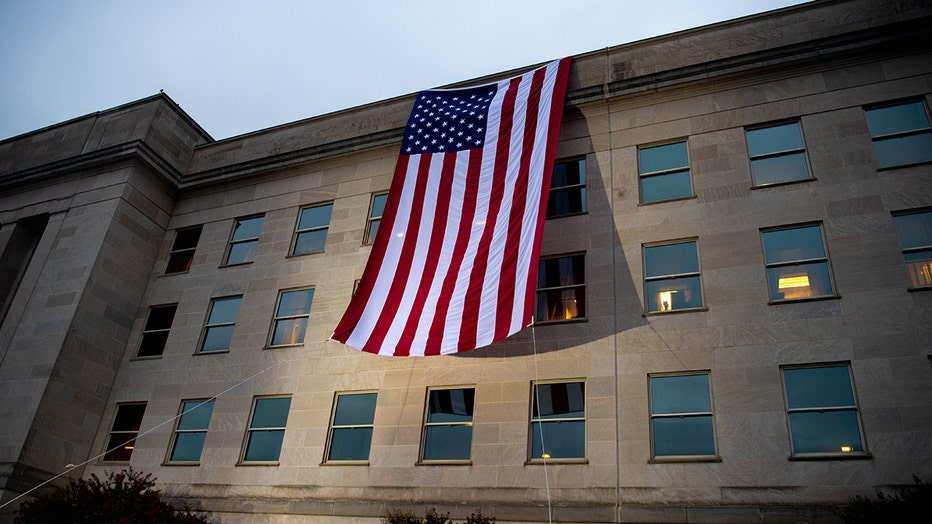
A huge American flag hangs from the top of the Pentagon building to commemorate the 184 lives lost in the 2001 terrorist attack at the Pentagon, during the 2023 National 9/11 Pentagon Memorial Ceremony in Arlington, Virginia, Sept. 11, 2023. (U.S. Ar
Flat or Suspended: When displayed without a staff, the flag must hang perfectly flat or be suspended so that its folds fall entirely free.
Over-the-Street Displays: When hanging the flag horizontally across a street, the union (the blue field of stars) must face north or east, depending on the orientation of the roadway.
Hanging the American flag projected from a building
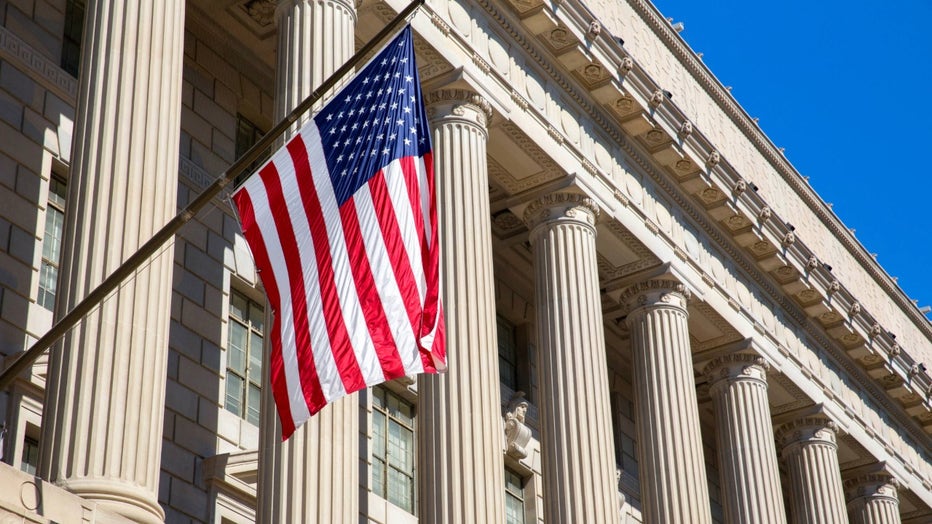
The U.S. flag at the Department of Commerce in Washington D.C. (Adobe)
Window and wall staff: When projecting outward from a building facade, the union should be placed at the peak of the staff—unless the flag is intentionally being flown at half-staff.
Rope and pole suspensions: If the flag is being hoisted out of a building toward a pole via a guide rope, it must always be extended out union-first.
The Source: This story was written with information provided by The United States Flag Code and the Department of Veterans Affairs. This story was reported from Orlando.