

Federal agents used facial recognition tech to compile protestor photos during Operation Metro Surge
ICE used AI to gather U.S. citizen info
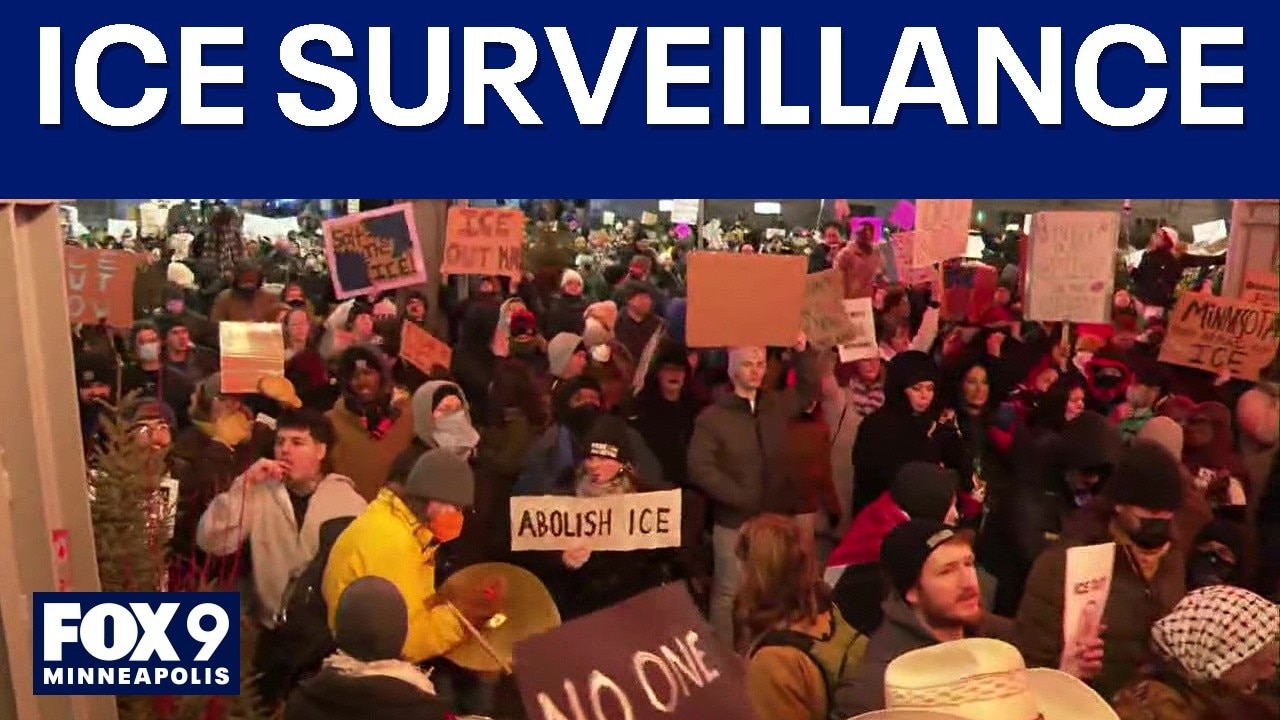
A new court filing says ICE used facial recognition technology to create visual profiles of protesters during Operations Metro Surge. FOX 9’s Emily Pofahl has the details.
MINNEAPOLIS (FOX 9) - New court filings are shedding light on how federal agents used facial recognition technology to create visual files of protestors during Operation Metro Surge.
Federal agents used AI to collect protestor images
What we know:
Court documents filed Thursday in the case of Isaac Sant show undercover federal agents were monitoring churches, unions and activists involved in organizing protests. The filings include Department of Homeland Security reports on investigations called ‘Operation Puppet Master’ and ‘Project Whipple Shield.’
The Department of Homeland Security said the goal was to crack down on "violent opportunists" who "exploited the protests as cover to attempt breaches of federal properties and assaults against federal officers."
Many of those alleged assaults, as the FOX 9 Investigators found, don’t hold up in court.
Attorney Kevin Riach, in a discovery motion for Sant’s case filed Thursday, wrote that the Department of Homeland Security "embarked on an improper investigation of First Amendment protected activity without any suggestion that the investigation’s targets had committed any crime."
Riach’s court filing includes more than 100 pages of reports filed by Homeland Security Investigators during Metro Surge. The reports show the Department of Homeland Security used a tool called Clearview AI to compile photos of Sant dating back more than a decade. Clearview AI’s website claims it has 70 billion images in its database, scraped from anything publicly on the internet, including news sites and social media.
During Operation Metro Surge, reports show federal investigators fed a photo of Sant into the Clearview AI. The tool returned at least a dozen other images, some showing signs and other demonstrators, and one of Sant at a bar.
Riach said some of Clearview AI’s supposed photo matches are not of Sant. Riach, in the court filing, pointed to photos from a stranger’s Facebook, writing, "The Clearview AI results for Mr. Sant contain photos of another man and his family, including the man’s pregnant wife and young daughter." Riach went on to say the photos are "inextricably linked with Mr. Sant" in Homeland Security’s internal databases.
The reports do not say why agents pulled the photos or what they were used for.
The backstory:
The Department of Homeland Security’s use of facial recognition during protests has drawn criticism from attorneys and civil rights groups.
The American Civil Liberties Union of Minnesota said, "These new revelations demonstrate how, once adopted, facial recognition systems allow the federal government to conduct general warrantless surveillance on entire communities."
Riach, as part of his motion, said there are two known instances of AI use during Metro Surge. He is asking the court to force the federal government to reveal how widely facial recognition technology was used during Operation Metro Surge.
Clearview AI and the Department of Homeland Security did not respond to questions Friday night.
What we don't know:
It is still unknown how many people were affected by the use of facial recognition technology during Operation Metro Surge or the full extent of its use.
The purpose behind collecting and storing the photos, and what they were ultimately used for, has not been disclosed.
The Source: Information from court documents filed by attorney Kevin Riach and statements from the American Civil Liberties Union of Minnesota.