

Fall back this weekend: What to know
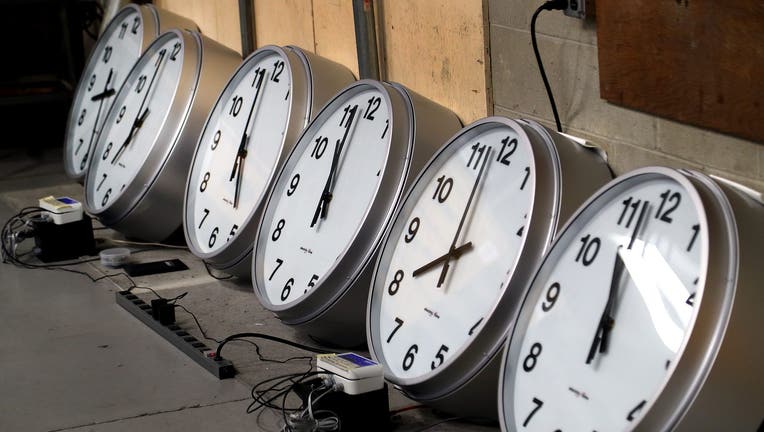
(Photo by John Tlumacki/The Boston Globe via Getty Images)
Reminder: It’s almost time to change your clocks once again as daylight saving time ends this weekend.
Across much of the U.S., the clocks change twice each year. In spring, they move forward an hour to mark the start of daylight saving time, and in fall, they shift back an hour as it ends.
When will the time change this fall?
Why you should care:
Daylight saving time ends for the year at 2 a.m. local time on Sunday, Nov. 2.
What is daylight saving time?
Dig deeper:
According to federal law, it always starts on the second Sunday in March and ends on the first Sunday in November.
The practice of falling back in the U.S. started in 1918 during World War I as a way to conserve fuel. By moving the clocks ahead an hour, backers believed the country could divert a bit of coal-fired electricity to the military instead of using it for an hour of home power. It was reenacted in World War II.
Which states don’t observe daylight saving time?
Big picture view:
The list of states and territories that won’t be changing their clocks on Nov. 2 includes:
- Hawaii
- Arizona
- American Samoa territories
- Guam
- Northern Mariana Islands
- Puerto Rico
- U.S. Virgin Islands
When will daylight saving time start again next year?
What's next:
Daylight saving time will start again on Sunday, March 8, 2026.
Poll finds only 12% of US adults support daylight saving time
Big picture view:
A new AP-NORC poll fond that only 12% of U.S. adults support the current system of daylight saving time, while 47% were opposed and 40% were neutral.
Although about half of U.S. adults are opposed to the switch — including 27% who said they are "strongly" opposed — many don't care one way or another. That's particularly true of adults under 30, with 51% saying they neither favor nor oppose the practice. Those over 30 were more likely to be opposed to it, with about half saying they dislike the twice-a-year switching of clocks.
If forced to choose, most Americans would prefer to keep that extra hour of daylight in the evening, according to the poll, with 56% preferring making daylight saving time permanent, with less light in the morning and more light in the evening. About 4 in 10 prefer standard time, with more light in the morning and less in the evening.
The Source: The Associated Press, Chris Williams and Catherine Park contributed to this story. This story was reported from Los Angeles.