

What to know about the Strait of Hormuz—and why it matters
U.S. President Donald Trump had threatened Tuesday that a "whole civilization will die tonight" if Iran failed to meet his latest deadline to strike a deal that includes reopening the Strait of Hormuz, while the Islamic Republic urged young people to form human chains around power plants and other potential targets.
Iran effectively blocked shipping through the strait after Israel and the U.S. attacked in February. That, and Iran’s attacks on the energy infrastructure of its Gulf Arab neighbors, have sent oil prices skyrocketing, raising the price of gasoline, food and other basics far beyond the Middle East.
On Tuesday, the Iran foreign minister said passage through the Strait of Hormuz will be allowefor the next 2 weeks under Iranian military management as the two sides agreed to a temporary ceasefire.
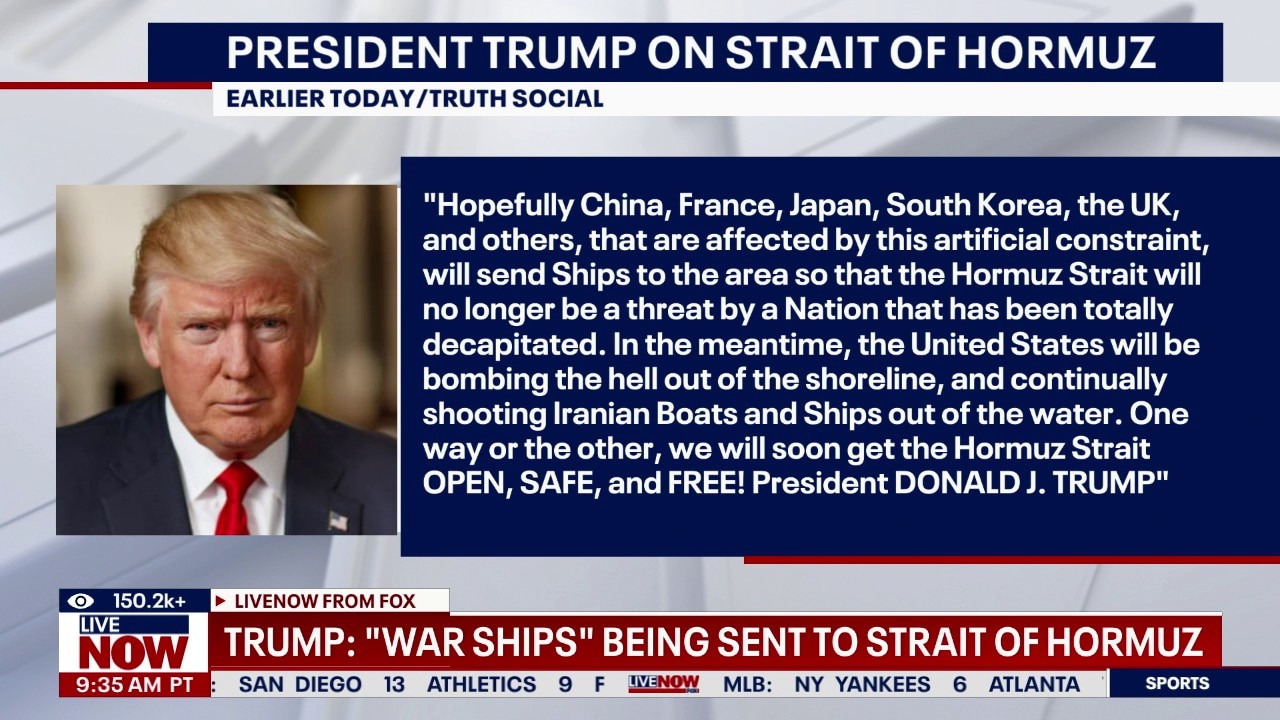
Warships being sent to Strait of Hormuz
President Trump says several countries who are impacted by Iran's attempted closure of the strait of Hormuz will be sending Warships in conjunction with the US.
What is the Strait of Hormuz?
Dig deeper:
The Strait of Hormuz is a bending waterway, about 21 miles wide at its narrowest point. It connects the Persian Gulf to the Gulf of Oman.
From there, ships can then travel to the rest of the world.
RELATED: Trump details daring rescue of downed US airman in Iran
While Iran and Oman have their territorial waters in the strait, it’s viewed as an international waterway all ships can ply. The United Arab Emirates, home to the skyscraper-studded city of Dubai, also sits near the waterway.
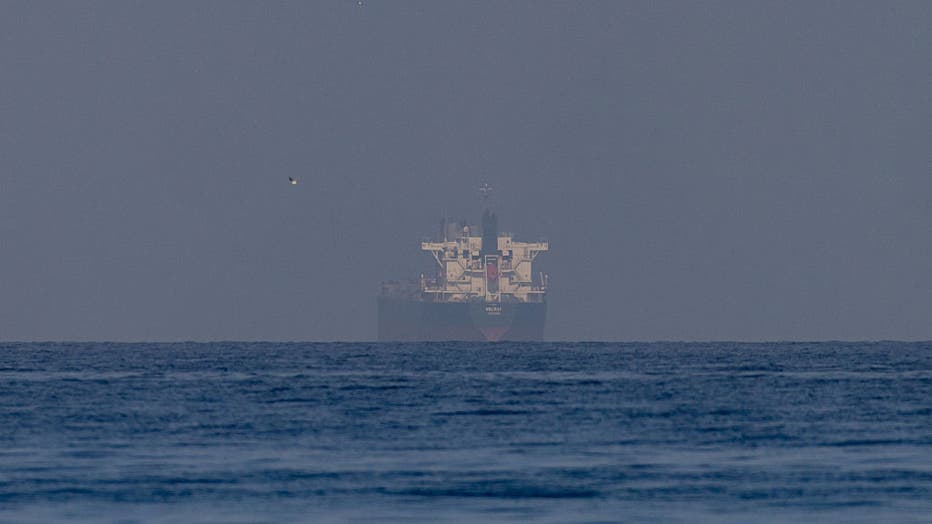
Bulk Carrier, Belray, in the Gulf, near the Strait of Hormuz on March 22, 2026 in northern Ras al Khaimah, United Arab Emirates. (Photo by Getty Images/Getty Images)
Why is the Strait of Hormuz important?
Why you should care:
The Strait of Hormuz through history has been important for trade, with ceramics, ivory, silk and textiles moving from China through the region. In the modern era, it is the route for supertankers carrying oil and gas from Saudi Arabia, Kuwait, Iraq, Qatar, Bahrain, the UAE and Iran. The vast majority of it goes to markets in Asia, including Iran’s only remaining oil customer, China.
While there are pipelines in Saudi Arabia and the UAE that can avoid the passage, the U.S. Energy Information Administration says "most volumes that transit the strait have no alternative means of exiting the region."
Threats to the route have spiked global energy prices in the past, including during the Israel-Iran war in June.
RELATED: What is the 25th Amendment? Trump criticized over Easter Iran message
About 20 million barrels of oil per day, or around 20% of the world’s oil consumption, passed through the strait in 2024. Most of that oil goes to Asia.
U.S. oil customers would feel the impact of the higher prices but would not lose much supply. The U.S. imported only about 7% of its oil from Persian Gulf countries through the strait in 2024, according to the USEIA. That was the lowest level in nearly 40 years.
Iran Strait of Hormuz deadline approaches
President Trump’s deadline for Iran to reopen the Strait of Hormuz is fast approaching. On Monday, the president appeared alongside Defense Secretary Pete Hegseth and General Dan Caine to provide an update on the war. He also took to Truth Social to issue this threat to Iran: "Tuesday will be Power Plant Day, and Bridge Day, all wrapped up in one, in Iran. There will be nothing like it!!! Open the F****g Strait, you crazy bastards, or you’ll be living in Hell - JUST WATCH! Praise be to Allah. President DONALD J. TRUMP"
Previous conflicts involving the Strait of Hormuz
The backstory:
In past times of tension and conflict, Iran has at times harassed shipping though the narrows, and during the 1980s’ Iran-Iraq war, both sides attacked tankers and other vessels, using naval mines to completely shut down traffic at points.
But Iran has not carried out repeated threats to close the waterway altogether since the 1980s, even during last year’s 12-day war when Israel and the U.S. bombarded Iran’s key nuclear and military sites.
The Source: The Associated Press contributed to this report. The information in this story draws on a mix of official statements, historical context, and energy data. This story was reported from Los Angeles.