

Squishy toy warning: Feds warn against viral social media trend
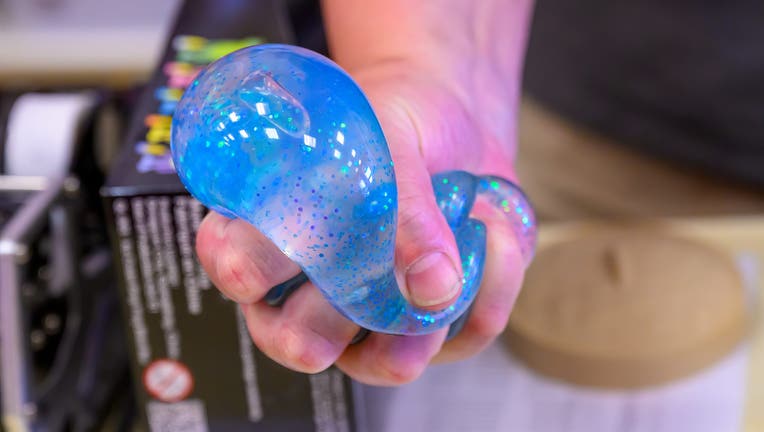
GUILDERLAND, NY - JUNE 11: Mike Richman, owner of the Ta-Da! toy store, squishes a glitter ice cube squishy on Thursday, June 11, 2026, in his shop in Stuyvesant Plaza in Guilderland, NY. (Jim Franco/Albany Times Union via Getty Images)
(FOX 9) - Squishy toys, as well as their counterfeit versions, could pose a danger to children and teens that participate in a viral social media challenge.
The U.S. Consumer Product Safety Commission (CPSC) said heating the toys can make them expand, change texture or burst, but such demonstrations should not be imitated and that doing so could lead to serious burn injuries.
READ MORE: NeeDoh hunting: What is behind the craze?
Counterfeit squishy toys
What they're saying:
The CPSC said some popular squishy toys that are widely sold in various markets are fakes that don't comply with federal safety standards for children's toys.
These counterfeits could contain hazardous substances such as water beads, small parts, lead, phthalates, or other materials such as gels, powders or sand.
Children can be exposed to the contents if the outer covering bursts, leaving them vulnerable to choking hazards or other injuries.
By the numbers:
Authorities say the CPSC has identified 55 shipments of violative squishy toys at U.S. ports and has worked with U.S. Customs and Border Protection to prevent 355,683 units from coming into the country.
Violation notices were reportedly sent to companies that imported or sold the noncompliant products.
Squishy toy social media challenge
Don't try this at home:
Some online videos show the toys expanding, changing texture or bursting whenn heated or placed in a microwave.
The CPSC said squishy toys can burst and release material that can cause severe burns. The filling can also get stuck to the skin and worsen the injury by continuing to transfer heat.
Squishy toy safety
What you can do:
The CPSC shared the following tips to spot a counterfeit squishy toy:
- Purchase toys from a reputable seller.
- Beware of bargains that are priced substantially lower than established retailers.
- Check packaging for misspelled words, poor-quality printing, missing manufacturer or importer information and a lack of safety warning.
- Check the toy regularly for torn, punctured, leaking, sticky, unusually soft discolored or deteriorating material and stop using the toy if it is damaged.
- Keep toys away from heat.
- If a toy bursts, avoid direct skin contact and be cautious when cleaning it up.
The Source: This story uses information from a news release shared by the United States Consumer Product Safety Commission.