

MN Housing Stabilization Services fraud investigation: Feds raid homes, businesses

FBI investigating MN Medicaid housing fraud
Federal investigators served several search warrants in connection with an investigation into alleged fraud from providers claiming to help people find stable housing. FOX 9's Mike Manzoni has the full report.
MINNEAPOLIS (FOX 9) - Federal agents say they raided the homes and businesses of providers accused of defrauding Minnesota's Housing Stabilization Service.
The Minnesota Housing Stabilization Service program was formed in 2020 to help seniors and people with disabilities, including those with mental illnesses and substance abuse issues, find stable housing.
Minnesota is the first state in the country to utilize Medicaid coverage for housing stabilization.
Minnesota Housing Stabilization Services fraud
What they're saying:
A search warrant application shows federal agents believe a "massive scheme to defraud the Housing Stabilization Service Program" preyed on people who needed assistance in finding stable housing.
Companies then stole money from a state program funded through Medicaid under the guise of providing services to their clients, according to investigators.
Authorities believe that once the clients were registered, the companies then fraudulently claimed to provide program services hours for the client, while billing the state's housing stabilization program.
Court documents show "client after client has reported little or no actual services or assistance" from the companies that enrolled in the program.
This scheme allegedly led to millions of dollars being received by companies from Medicaid for services that were never provided.
"Fraud in public programs hurts the people we are working to help," temporary Department of Human Services (DHS) Commissioner Shireen Gandhi said in a written statement. "By coordinating the administrative oversight of DHS with the legal enforcement activity of our law enforcement partners, Minnesota is able to bring those committing Medicaid fraud to justice and, often, able to facilitate monetary recovery."
Law enforcement officials were briefed when "credible signs of fraud were seen" by the providers who were claiming to serve clients struggling to find stable housing, according to DHS officials.
Timeline:
July 2020: Minnesota became the first state in the country to offer Medicaid coverage for Housing Stabilization Services. Search warrants note it’s vulnerable to fraud, which has resulted in a massive increase in claims and payouts.
2021: Program paid out more than $21 million in claims for 8,300 enrolled people. When authorized, estimates were $2.6 million in claims per year.
2022: $42 million in claims for 14,200 people
2023: $74 million in claims for 16,900 people
2024: $104 million in claims for 21,300 people
First six months of 2025: $61 million in claims to over 21,000 enrolled individuals
By the numbers:
Overall funds add up to a total of $302 million over 4.5 years, while the estimated cost of the program over that same time frame was expected to be about $12 million.
By comparison, $250 million was stolen in the Feeding Our Future scheme.
Companies enrolled in the program did not provide any real assistance in helping people find housing or help them negotiate leases, according to court documents. The companies reportedly used information provided by their recruited clients to bill Medicaid for services that were never actually provided.
The search warrant says investigators interviewed many people who say they were offered housing assistance but then receive little to no help or any services.
The complaint also shows just 14 providers raked in $22 million in both state and federal taxpayer money over a 16-month period.
Seven different companies claiming to provide services received $30,000 for services to a single recipient claiming $2,000 per month in services. Another provider billed $40,000 for another individual and another provider, $52,000 for one recipient.
Feds raid multiple locations
Dig deeper:
The locations raided include:
- Brilliant Mind Services in St. Paul, Minnesota
- Leo Human Services in Brooklyn Park, Minnesota
- Liberty Plus LLC in Roseville, Minnesota
- A home on 127th Avenue in Blaine, Minnesota
- Pristine Health LLC in St. Paul, Minnesota
- A home on Stewart Avenue in St. Paul, Minnesota
- A business office of Faladcare Inc. in Little Canada, Minnesota
- A business office of Faladcare Inc. in Woodbury, Minnesota
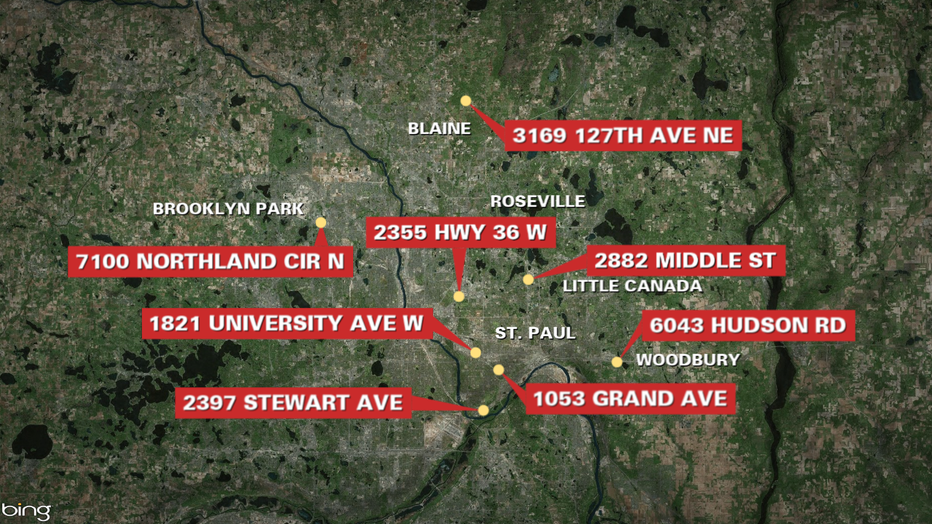
Map showing where federal agents served search warrants connected to a state housing fraud investigation. (FOX 9)
By the numbers:
The search warrant application says there are currently 22 different Health and Human Services providers that claim to provide services at the Griggs Midway Building on University Avenue in St. Paul.
Those providers received more than $8 million from January 2024 through about May 2025 from Medicaid payments for reported housing stabilization services.
The backstory:
In order to be a part of the program, participants must be at least 18 years old and on Medical Assistance. They must also be a person with a documented disability or disabling condition, defined as one of the following:
- A person who is aged, blind or has a disability as described under Title II of the Social Security Act.
- A person with an injury or illness that is expected to cause extended or long-term incapacitation.
- A person with a developmental disability (or related condition) or mental illness.
- A person with a mental health condition, substance-use disorder or physical injury that required a residential level of care and who is now in the process of transitioning to the community.
- A person who is determined to have a learning disability according to policy adopted by Minnesota Department of Human Services (DHS); or
- A person with a substance-use disorder and is enrolled in a treatment program or is on a waiting list for a treatment program.
The search warrant application also says "the state ostensibly designed Housing Stabilization Services to be an easy-to-obtain benefit" for people facing homelessness, at risk of becoming institutionalized or transitioning from a care center or community residential setting.
This is a breaking news story and will be updated as FOX 9 works to learn more.
The Source: This story uses statements from the Minnesota Department of Human Services and federal search warrants released by the U.S. Attorney's Office.