

A Minnesota athlete’s push for rare genetic heart research
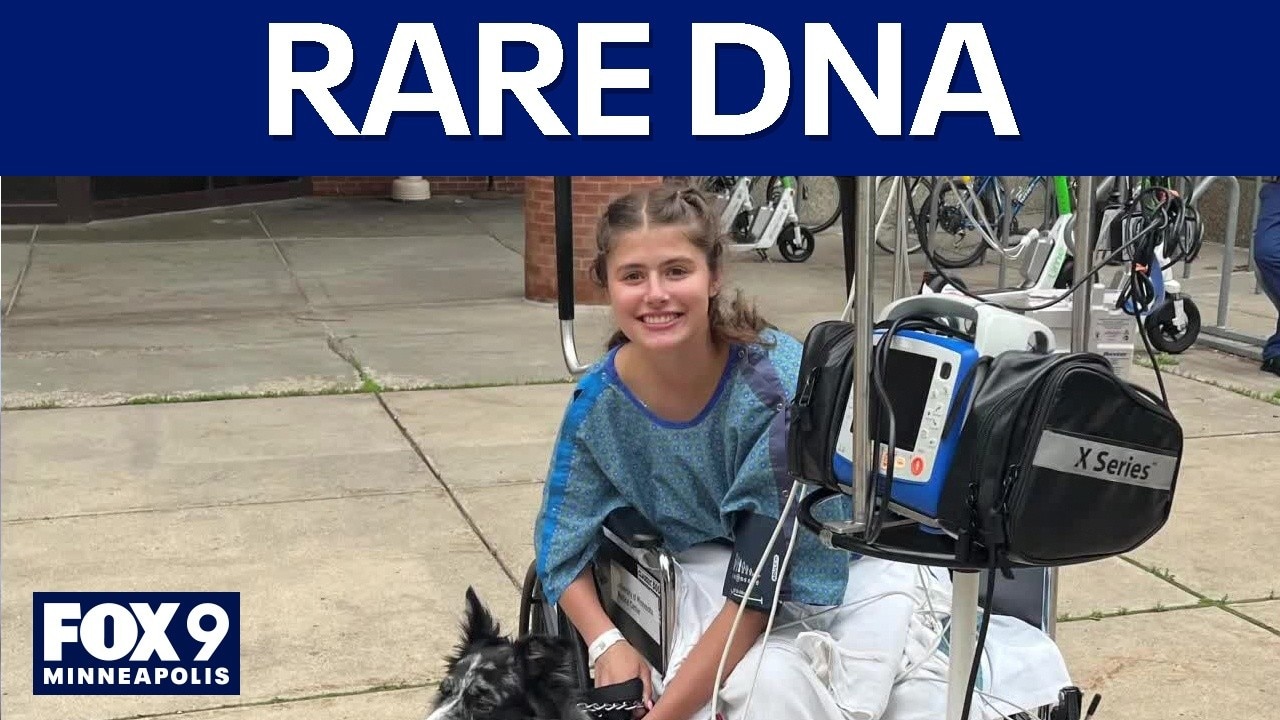
College athlete uses rare DNA to advance heart disease research
A college basketball player is taking on a rare genetic disease and using her DNA to help children facing similar challenges. FOX 9's Soyoung Kim has the details.
A family is turning a terrifying diagnosis into purpose.
The Stern family from Maple Grove is taking on a mission to help advance research for a rare genetic heart disease.
Ultra-rare mutation
The backstory:
Claire Stern and her mom, Sheila Stern, co-founded the RareDNA Foundation after Claire had gone from being a D-1 athlete to having to hang up her basketball shoes.
Last summer, Claire was diagnosed with PPA2 deficiency. It is a rare genetic mitochondrial disease with only roughly 60 known cases of this ultra-rare mutation.
While there is limited insight into this genetic disease, it is known to cause sudden cardiac death in babies and children. That was enough for the Stern family to get involved with the fight for information to help others along the way.
"Claire will tell you God saved me for a reason," said Sheila Stern. "She looked right at me and said we have to save these babies."
What we know:
The nonprofit partnered with physician-scientists at the University of Minnesota to launch research to generate the first patient-derived stem cell model of PPA2 deficiency.
The RareDNA Foundation is raising awareness for this ultra-rare mutation and supporting research. That partnership opportunity came from someone already close by, a member of her care team at the University of Minnesota.
"I’m an advanced heart failure and transplant cardiologist," said Dr. Forum Kamdar, Associate Professor of Cardiology at the University of Minnesota. "We have the set up. We already make heart cells from stem cells from those patients, and we know we can get insights from those specific cell types. Looking at everything from the molecule to the inside of the cell and how this impacts pathways that we might be able to harness as therapies."
Dr. Forum Kamdar’s lab can help understand what is happening in a heart cell with the mutation — the first step to understanding how to treat it.
"We’re going from patient to the bench in the lab back to the patient, and that’s the goal as a physician scientist," said Dr. Kamdar. "We can bring hope by saying there’s something we might be able to do. Let’s try to understand this more."
What you can do:
All the pieces for this ground-breaking research are in place in the Twin Cities. Now, the research needs funding to formally launch.
To support the campaign or learn more, visit: rarednafoundation.org/fundraiser