

Minneapolis launches 'South Side REACT' to shut down open-air drug markets
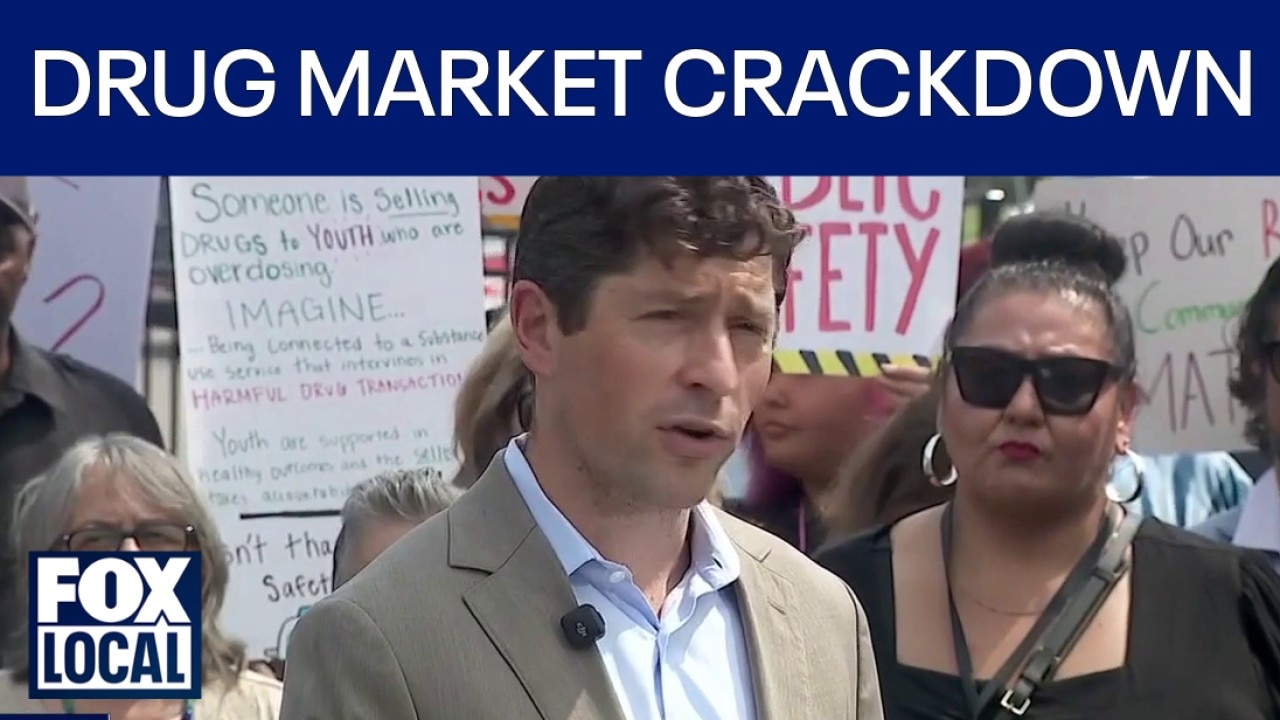
Minneapolis launches 'South Side REACT' to shut down open-air drug markets
A major change is underway in how Minneapolis deals with illegal drug sales and use, with city leaders and community partners rolling out a new strategy aimed at shutting down open-air drug markets. FOX 9's Karen Scullin has the story.
MINNEAPOLIS (FOX 9) - A major change is underway in how Minneapolis deals with illegal drug sales and use, with city leaders and community partners rolling out a new strategy aimed at shutting down open-air drug markets.
A new approach to drug use and sales in Minneapolis
What we know:
City leaders have announced that Minneapolis police are now teaming up with several agencies to address open-air drug markets, moving away from a harm reduction-only model. The new plan, called "South Side REACT," will combine law enforcement, social workers and community organizations to disrupt drug sales and connect people with recovery services.
Previously, the city focused on handing out clean needles and offering recovery support, but officials say that approach alone is no longer enough. "The primary driver here is not homelessness and it is not a lack of shelter. It is deep addiction and pain. It is traffickers that are preying on people that are vulnerable. Uh, and making a whole lot of money off of it and, in the process, it is disastrous to community," said Jacob Frey, Minneapolis mayor.
If people refuse help, they could face citations or arrest. The effort is supported by the American Indian O.I.C. and other local partners who say the community deserves better.
The backstory:
Minneapolis City Council previously passed a "Care Over Criminalization" measure to decriminalize drug paraphernalia, but Mayor Frey vetoed it. Now, he is going further by bringing together police and agencies to address the issue head-on.
Open drug use and dealing have become easy to spot in locations across the city, with visible signs like needles and people slumping on sidewalks. Community leaders say these encampments have led to more violence, including gun violence, and have made neighborhoods feel unsafe.
"Rampant open-air drug use, criminal drug dealing, prostitution. And physical violence, including gun violence, have become increasingly common within these camps on a daily basis, occurring at all hours of the day. As a result, the Minneapolis urban indigenous community now finds itself hostage to these depraved, lawless, and incredibly dangerous encampments," said Joe Hobot, president of the American Indian O.I.C.
A focus on community and accountability
What they're saying:
Leaders emphasize that enforcement alone is not the answer, but it can be a turning point for some people struggling with addiction. "Our communities members have stepped up. There's been a shift of both the mentality and the response over the last several years. And what we're adding today is a very coordinated response. You will see results," said Frey.
Deputy Chief Mark Klukow of the Minneapolis Police Department explained the new approach: "He's gonna use citations, arrests, assistance and diversion when possible. And referrals, have social workers working with them to make sure that they can interrupt the cycle that we're in."
Community organizations are calling for a new mindset. "Our community needs a paradigm shift to address the unrestricted approach to such visible disregard to the greater community needs. The community has voiced this is not acceptable. This behavior occurs or wouldn't occur in any other community. Or any other neighborhood and it shouldn't be tolerated here," said Travis Earthwerner of the American Indian Community Development Corporation.
Jamal Osman, Minneapolis council member, said, "When leaders show up with action, we should support that action, build on it, and make sure that reaches the people who need the most. But this cannot be the end of the work. This has to be the beginning."
Why you should care:
The new strategy could mean more drug dealers are put in jail, but it also aims to give people struggling with addiction a real chance at recovery. Vin Dion of the Indigenous Protector Movement shared, "I wasn't strong enough to say enough's enough and to go into treatment or jump on Suboxone or any of these mat programmings. It was forced upon me. I was arrested. And that was my way into recovery. So also that's why I do support that, because for some of us, that is a way."
There is also a push to get a medication called Brixodi into the city’s mobile medical unit, which can help users avoid withdrawal for about a month and hopefully give them time to accept help.
Consistency is key, according to Hennepin County Sheriff Dawanna Witt. "Just because you see things get better doesn't mean you're done. It means you still have to be on it so it never starts again," said Witt.