

Iran war has military seeking higher funding in 2027 for drones, air defenses
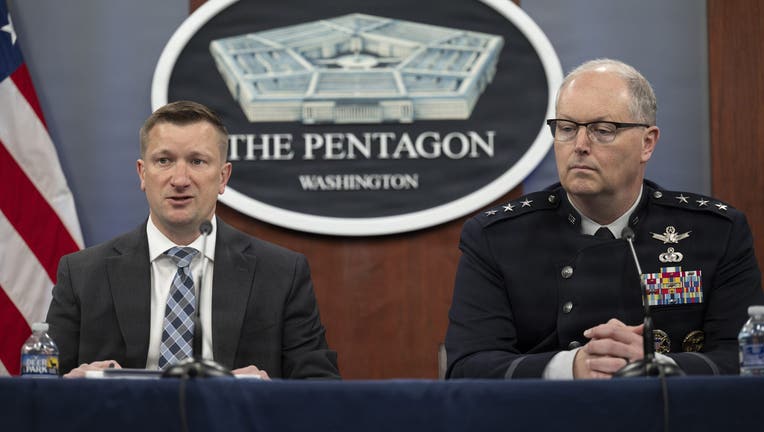
Performing the Duties of the Under Secretary of War (Comptroller)/Chief Financial Officer Jules W. Hurst III and Joint Staff Director of Force Structure, Resources and Assessment U.S. Space Force Lt. Gen Steven P. Whitney conduct a press briefing on
The war with Iran has led the U.S. military looking to increase its spending for next year to billions on drones, air defense systems and fighter jets.
In a media briefing held this week, Pentagon officials said as part of President Trump’s push to increase defense spending, announced earlier this month, the Pentagon wants to spend over $74 billion on drones and related technology and another $30 billion on munitions that have become extremely low during the course of the war in Iran.
Where the money will be spent
Drone warfare
Drones and other unmanned vehicles have become an important part of the United States arsenal in warfare. Usage in recent conflicts in Ukraine and Iran has increased, leading the U.S. to want to increase spending on both drones and counter-drone systems.
Patriot and Terminal High Altitude Area Defense air defense systems have seen the most usage, mainly to shoot down cheap Iranian drones.
By the numbers:
The proposed budget allows for nearly $54 billion for drones and related tech, with an additional $21 billion for weapon systems to take out enemy drones. It costs hundreds of thousands to use a missile to shoot down a drone that only costs $50,000. A new weapon defense system will drastically reduce that cost.
RELATED: Trump says US can't fund Medicare, Medicaid and day care because 'we're fighting wars'
Tomahawk missiles
With the new budget, the Navy intends on increasing the number of Tomahawk cruise missiles. Experts believed that the military were using them faster than they were able to replenish them in Iran.
By the numbers:
Last year, the Department of Defense purchased 55 Tomahawks from Raytheon. This year they are hoping to invest heavily now in order to buy 785 Tomahawks, over a 1,300% increase.
What they're saying:
"The overlap, you’ll see, is the request for munitions, which is something we always need," said acting Undersecretary of Defense Jules Hurst III. "We always need to increase our magazine depth. But outside of that, there aren’t any operational costs here from Iran."
The backstory:
Hurst said the blueprint was developed prior to the U.S. taking action against Iran in February. Officials did not say how much they looked to request in additional funds for the war.
The airstrikes on Iran by U.S. and Israeli forces have raised concerns from American lawmakers about a loss of certain stockpiles of weapons.
The Source: This story was written with information provided by the Associated Press. This story was reported from Orlando.