

University of Minnesota State Fair: Play Tetris, help researchers study how your brain plans
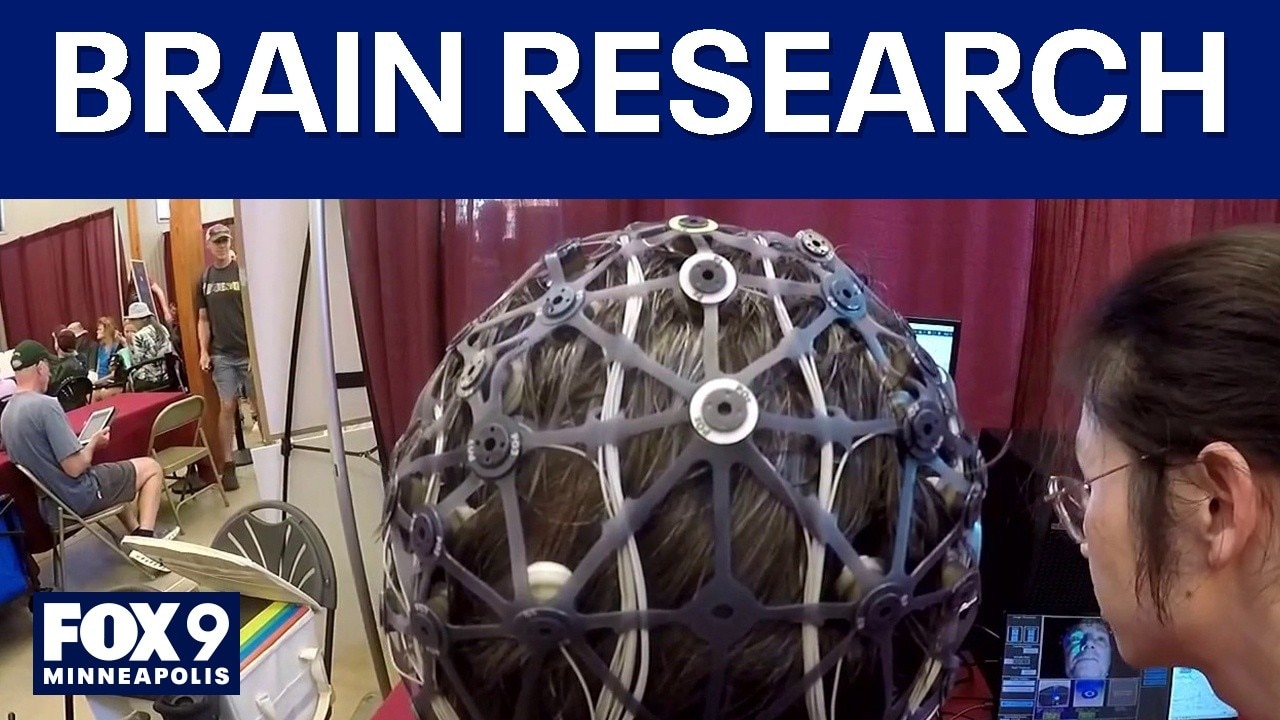
MN State Fair brain research: Play Tetris for a good cause
FOX 9's Tim Blotz was a participant and has more on what the research could mean.
FALCON HEIGHTS, Minn. (FOX 9) - The University of Minnesota's State Fair Research Building is back, and this year it's bringing its biggest lineup of studies yet — including one where your Tetris skills could help scientists understand how the brain makes planning decisions.
The science of playing Tetris
What we know:
Jean-Paul Noel, a neuroscience professor at the University of Minnesota, is running a study that has fairgoers play Tetris while hooked up to a brain-monitoring cap and an eye-tracking system.
The setup measures three things at once: keyboard responses, eye movements and brain wave activity.
Noel is measuring how participants move their eyes across the Tetris board, what keys they press and the tiny electrical signals their brain produces — known as EEG, or electroencephalography.
"So there are responses on a keyboard. Are they choosing to put the piece left or right? We're looking at the piece they have to place as well as the landscape of that exists in the Tetris border," said Jean-Paul Noel, Ph.D., of the University of Minnesota Department of Neuroscience.
"These are tiny fluctuations of voltage on your scalp, and it just happens naturally. And then, we try to relate those three measures to one another," said Noel.
The bigger goal is to understand how the brain doesn't just make one quick decision, but plans several steps ahead — the kind of multi-step thinking that Tetris naturally demands.
"How is it that your eye movements predict the future plans that you make, how it is that your ability to interrogate the state of the world and therefore know what are your options, how does that change over time," said Noel.
Why the State Fair?
Dig deeper:
Noel says most neuroscience research relies heavily on college students, which only represents a small slice of the population. Coming to the fair gives his team access to people of different ages, education levels and backgrounds — making the science more representative of Minnesota as a whole.
This is the research group's first time at the fair, and Noel describes this year as a baseline — a starting point that could eventually lead to following participants over time to track how brain planning changes as people age.
"I hope people find it exciting when they come to the research, and the point for us is do more naturalistic science, both in terms of the question we ask. Playing Tetris in this case, as well as the environment in which we do it in," said Noel.
The study takes about 30 minutes to complete. Noel is aiming to test around 240 participants total and is especially looking for people on both ends of the age range — those closer to 14 and those closer to 80. Anyone between those ages with no history of epilepsy is welcome to participate.
More than Tetris
Big picture view:
The Tetris study is just one piece of a much larger effort happening inside the State Fair Research Building.
"Well, this year is going to be our biggest year yet in terms of the number of studies that we have at the State Fair Research Building," said Ellen Demerath, Ph.D., co-director of the State Fair Research Program.
With more than 60 research projects running across the 12 days of the fair, organizers are hoping as many as 20,000 people volunteer to take part. The studies span all age groups, meaning entire families can participate together.
"So there's kids studies, there's adult studies, there's studies for people who are older. And so when you come to the building, everyone you're with, your whole family, the folks that are with you, your grandparents, your kids, whatever, can all come together and do some research here," said Demerath.
The Source: This story is based on interviews conducted at the University of Minnesota State Fair Research Building with Jean-Paul Noel, Ph.D., of the U of M Department of Neuroscience and Ellen Demerath, Ph.D., co-director of the State Fair Research Program. FOX 9's Tim Blotz reported.