

E15 gas in Minnesota: Is the cheaper fuel actually saving you money?
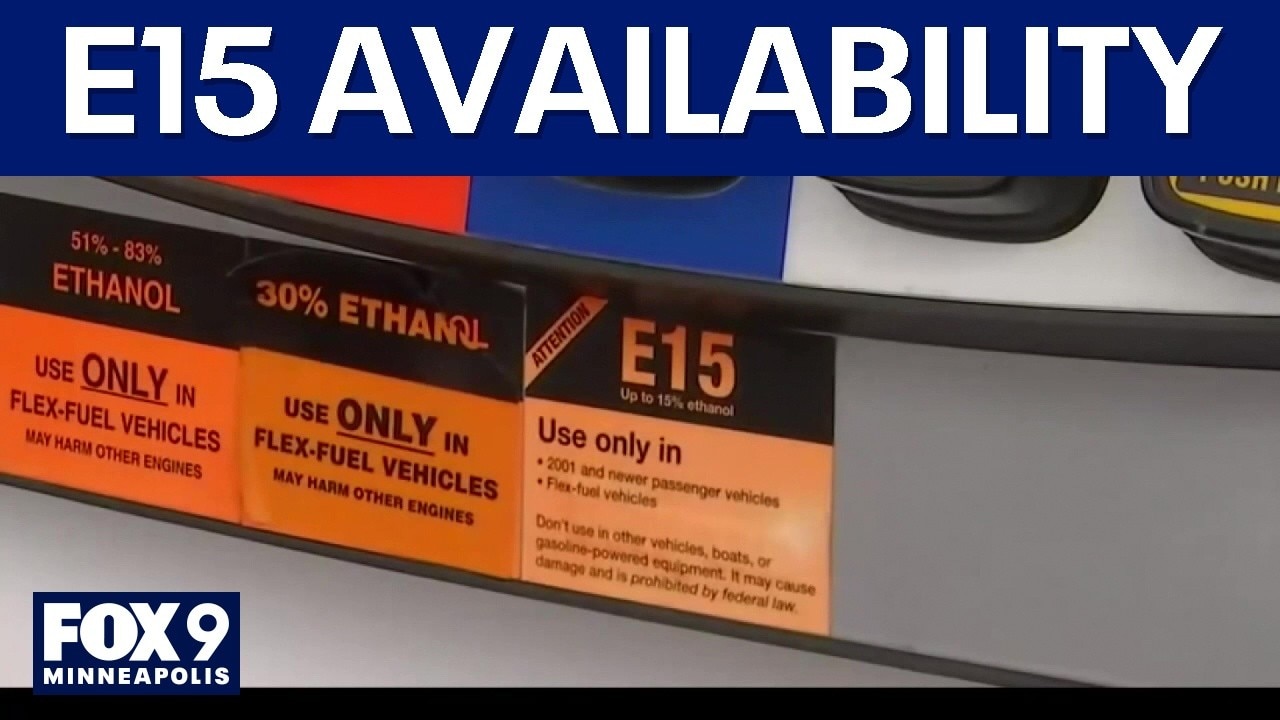
Minnesota vehicles and E15: What you need to know
Minnesota is investing nearly $5 million to expand E15 availability, a blend of gasoline with up to 15% ethanol, while federal rules and carmaker guidance limit its use. FOX 9’s Corin Hoggard details what you need to keep in mind before making the switch.
(FOX 9) - With gas prices near $4 a gallon, drivers are looking for any way to save at the pump.
E15 fuel and how it works
What we know:
E15 gasoline, also called 88 octane fuel, contains up to 15% corn ethanol, about 5% more than the typical E10 blend found in regular unleaded.
E15 is produced mainly in the Midwest, including Minnesota, and is often five to ten cents per gallon cheaper than regular gas.
Drivers may see savings at the pump, but those savings are often offset by slightly lower fuel efficiency, meaning the tank may empty a bit faster.
Brad Brownell, a writer for Jalopnik, said, "Your gas mileage is going to go down. It'll be a tiny amount, like say 3% to 4%."
Dr. Jason Hill, a University of Minnesota bioproducts professor, added, "When you do the math, it really doesn't matter much what you put in your tank at the pump. The retailers have essentially done the math for you, and they've priced your fuel accordingly."
Rules, recommendations and expansion plans
What they're saying:
Brian Werner of the Minnesota Biofuels Association said, "Ongoing global events also highlight another important point: E15 is produced here in Minnesota."
Carmakers like Volvo and Mercedes advise owners not to use E15, while Subaru and some other brands do not recommend it.
For other vehicles, the age of the car matters — modern engines are less likely to have issues with ethanol, but older models may be at risk.
Ethanol can also corrode older engines.
Dr. Hill explained, "If you look at the little sticker that's by the pump, it'll say safer use in vehicles 2001 or new or something similar to that. And that's really true."
Only about a quarter of Minnesota gas stations currently offer E15.
The state is investing almost $5 million, offering up to $199,000 per gas station to add pumps for higher ethanol blends.
The U.S. Senate is considering a bill to allow E15 sales year-round, but some experts warn this could have environmental impacts.
E15 and environmental concerns
Big picture view:
Brad Brownell said, "That ethanol is actually more volatile, and it'll evaporate off much more quickly, and it will cause local issues with emissions. So you'll actually have more creation of smog and more particles in the air."
The Clean Air Act has banned E15 sales during the summer, but the biofuels industry disputes research suggesting ethanol causes more pollution than regular unleaded. EPA waivers have allowed E15 sales during the summer for the past two years.
The debate continues over whether E15 is truly a cleaner or more cost-effective option for drivers, especially as lawmakers and industry groups push for expanded access.