

Will Minnesota have a white Christmas?
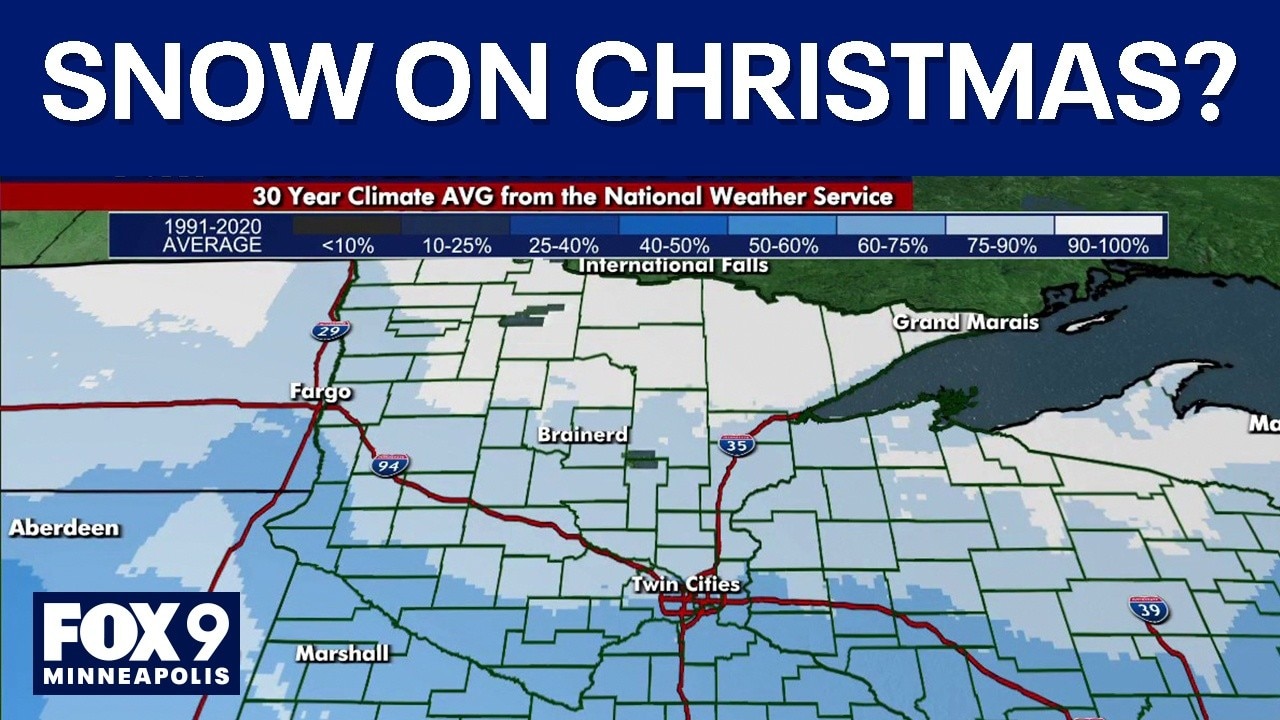
Will we have a white Christmas?
The Old Farmer's Almanac predicts Minnesota will not have a white Christmas this year. FOX 9 meteorologist Cody Matz explains how the almanac makes long-range forecasts and why a 1981 study found its predictions were accurate about 50% of the time.
(FOX 9) - The annual weather question is back: Will there be snow on the ground by Christmas morning?
Twin Cities white Christmas odds explained
Big picture view:
A white Christmas does not mean snow has to fall that day. The National Weather Service definition is at least 1 inch of snow on the ground at 7 a.m. on Christmas Day.
What we know:
Looking at the 30-year climate average from the National Weather Service, the Twin Cities get a white Christmas about 75% of the time. In far northern Minnesota, the odds are close to a guarantee, while parts of southern Minnesota are closer to 55% or 60%.
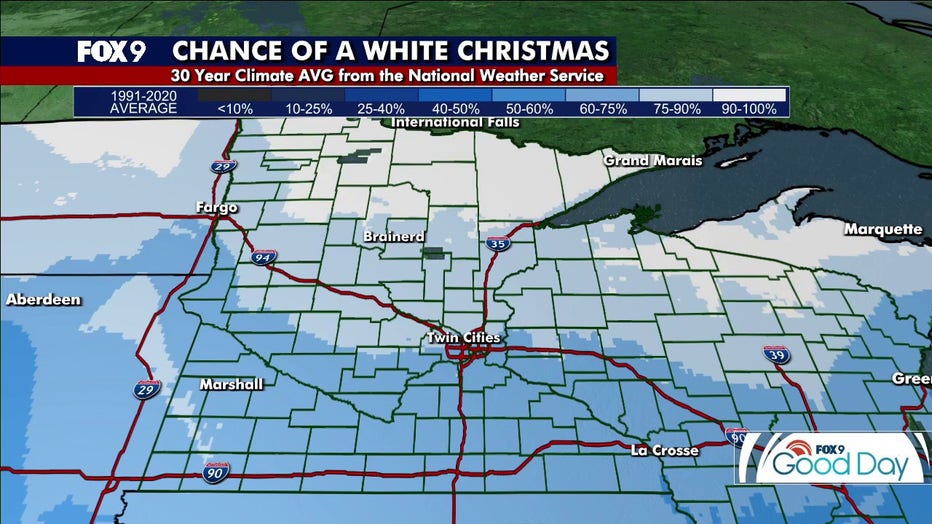
(FOX 9)
By the numbers:
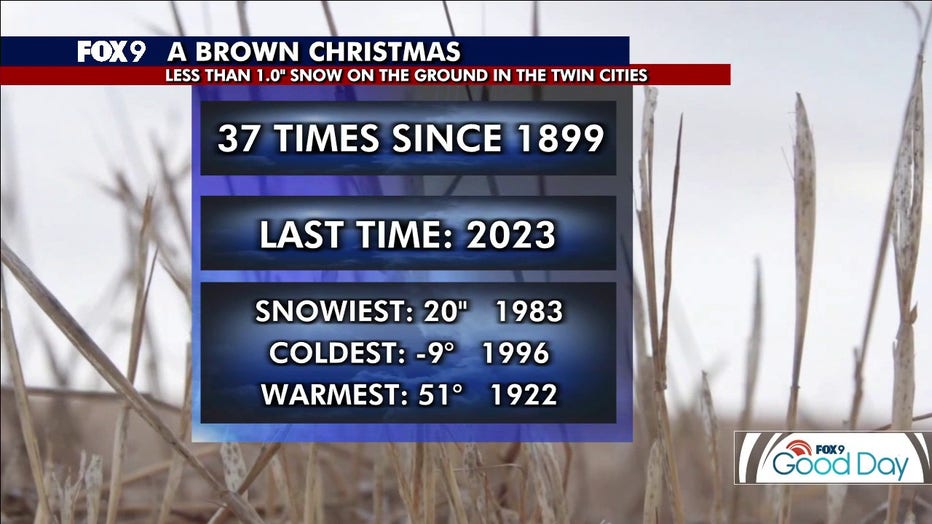
Since 1899, the Twin Cities have had 37 brown Christmases, which works out to roughly a quarter of the time. The last officially brown Christmas was in 2023.
The most snow ever on the ground for Christmas in the Twin Cities came in 1983 after one of the largest snowstorms on record. Snow cover reached 20 inches that year.
(FOX 9)
Why this year’s Christmas call stays murky
Local perspective:
The Old Farmer’s Almanac released its winter weather predictions last week and is predicting Minnesota will not have snow for Christmas.
But a no-snow Christmas is always possible because brown Christmases are part of the long-term record.
The backstory:
The Old Farmer’s Almanac says it makes long-range weather predictions using solar science, climatology and meteorology. It also says it looks at historical weather patterns and climate data.
A 1981 study found the Old Farmer’s Almanac was about 50% accurate—that’s essentially a coin toss.
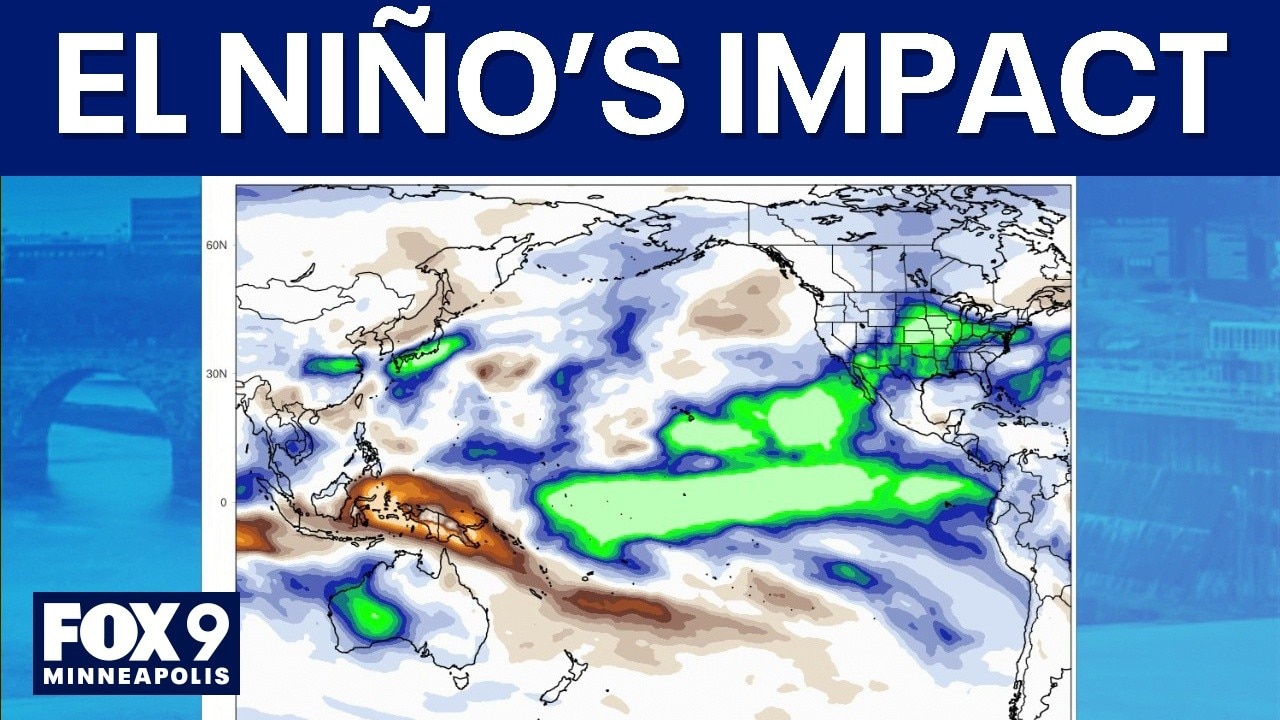
What El Niño and the polar vortex mean for Minnesota snow
Meteorologist Cody Matz speaks with Minnesota DNR senior climatologist Kenny Blumenfeld about how a powerful El Niño is affecting moisture levels across Minnesota and the Upper Midwest.
What we don't know:
The Super El Niño and widespread warmth make a brown Christmas more likely this year.
But a sudden stratospheric warming event during an El Niño could disrupt that. The last time that happened this early was in 2009, and the December through February stretch that followed was very cold and very snowy.
RELATED: What El Niño could mean for Minnesota's ice fishing season
The Source: FOX 9 Meteorologist Cody Matz and the National Weather Service.