

Minneapolis school board chair outlines next steps after closure pause
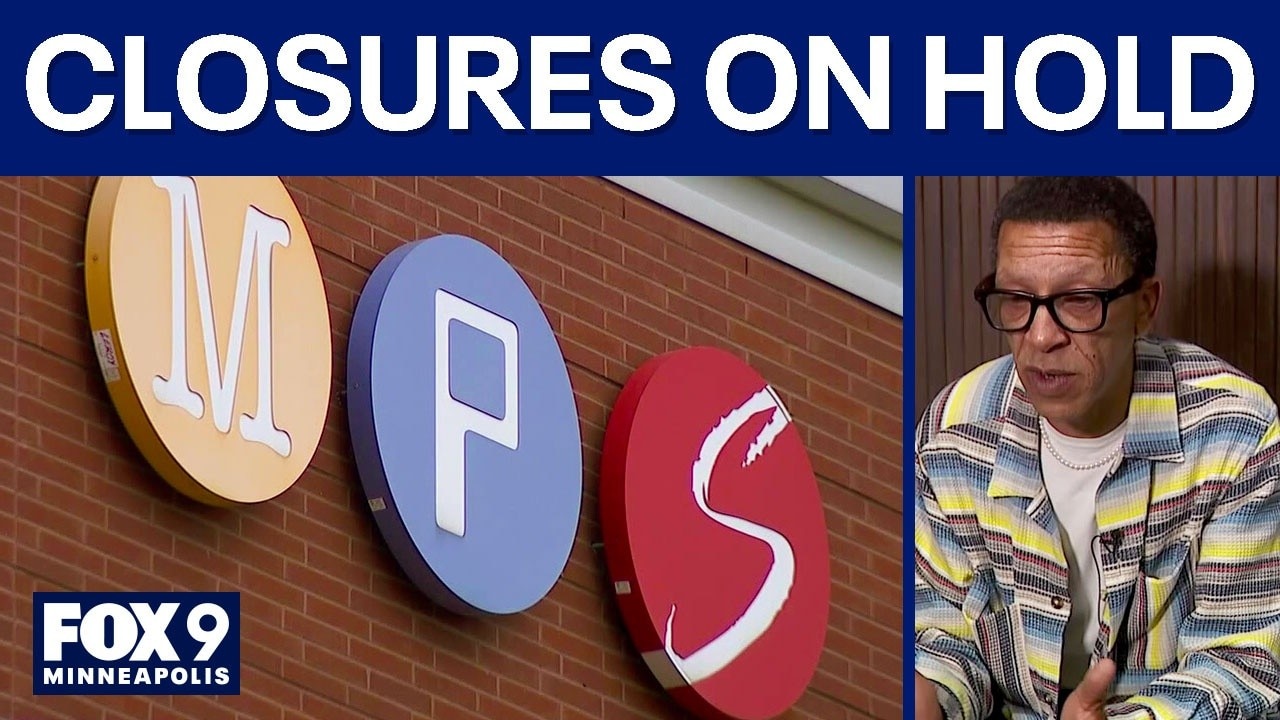
Minneapolis school closures paused: What happens now?
Minneapolis Public Schools has paused plans that could have closed or consolidated as many as 16 schools following widespread community concerns. School Board Chair Collin Beachy joins FOX 9's Rob Olson to explain why the district changed course, acknowledging that even he was surprised by the number of proposed closures.
MINNEAPOLIS (FOX 9) - Days after the Minneapolis Public Schools put a pause on a plan that would have closed or merged more than a dozen schools, School Board Chair Collin Beachy joined FOX 9 All Day to talk about where the district goes from here.
Closures put on pause
What we know:
At the school board meeting this week, Minneapolis Public Schools Superintendent Dr. Lisa Sayles-Adams withdrew her proposals for school closures.
Dr. Sayles-Adams presented the plans just about a month ago as part of a school board directive as the district looks at ways to improve its footprint.
The plan was met with fierce backlash from parents, teachers, and even political leaders.
Minneapolis school board chair responds
What they're saying:
Minneapolis School Board Chair Collin Beachy joined FOX 9 All Day to discuss the pause.
Beachy said that it became clear that while work has been underway for years on the transformation process, many families felt blindsided.
Beachy: "I think it was just really a matter mostly of people were feeling that we did not give them enough information as to why some of these schools were chosen, how that's going to fit into the larger plan, how much money is this going to save…. Sometimes when you sit here and do this work, you're like, yeah, I've got all the answers and I've been doing this for four years. But as I said, the public felt like they weren't part of the process for four years. And so they just needed to be like, this felt fast for them and it felt like a lot. It was a lot."
Beachy said the proposal also brought back painful memories of the district's Comprehensive District Design, which he said resulted in the loss of about 4,000 students.
Beachy: "Families felt like they were promised something that they didn't get. And they felt like what I'm hearing is that we're giving them a promise, but they're not sure if we're going to actually be able to deliver on that. And so we need to have more conversations because, listen, the transformation process was not about closing schools. We were trying to take the resources that we have and how can we better distribute them amongst our schools, so every child has the same experience, because that is not happening in Minneapolis right now."
Transformation process still moving forward
What's next:
While any closures are on hold, Beachy told FOX 9 other school transformation work will still go on.
"If not closing schools, then what? And so I think people have some creative ideas — I actually have been hearing some interesting ideas from people. And I think one thing that's really important that people also remember is that the transformation process is continuing. And so we are still working on, we've got a new strategy to increase enrollment. We're focusing on families. People know the numbers, 56% of Minneapolis students don't go to Minneapolis Public Schools. That we're going to be focusing on those kindergartners' families, see if we can get them in here early. We're going to try and expand our pre-K, and some of our buildings that are underutilized, we could perhaps get some pre-K programming going on in there. So, a lot to talk about, people have some interesting ideas, but this is still moving forward – not the closing schools."
But, at the end of the day, Beachy says the district faces a grim financial reality and something will need to be done.
"Even though that we're not going to move closing schools, we know we've got to do something. And so something that I'm going to be able to do is that I've been looking at some schools across the country who have been going through some similar things. Some of them have been more successful than others. So it's worthwhile to reach out and hear what some other people have done. Maybe we don't have to reinvent the wheel."
Beachy said scale of closures caught him off guard
Big picture view:
Beachy said while he knew closures would be part of the school transformation process, even he was surprised by the scale of the proposals.
"I knew that there were going to be some difficult decisions that were going to come out of the transformation plan. I didn't expect it to be of that magnitude, and so I think I was caught a little bit off guard. And I'm not faulting the superintendent or everything. They did what we asked them to do – what would we have to do if we want to change things by the next school year? And I just did not expect that that number of schools would be coming up to close. I expected that there would be some sort of proposal, but it just kind of caught us a little bit off guard as well. And the community was just saying, we need to talk about this before we go forward and make a decision in November."
The board now needs to determine how long the pause will last.
"First of all, I think we as a board need to decide what is the new timeline and what is a timeline that the families are comfortable with. I just feel like if we're back here at this time next year, now we're looking into the following school year. And then I think something that moving forward is that I've started to talk about some of the structural issues that are going on here and not just at 1250 West Broadway. And so we need help from our city and state partners. And so we're going to be trying to have an intergovernmental committee so that we're getting everybody at the table to talk about how everybody can help with this situation. And I know that we have families that are willing to go and help with that too."
‘We need help’
Local perspective:
Beachy they will keep making a push for more state funding for the district.
Beachy: "We need some help. I understand it's difficult for them as well, so I don't want people going out there pointing fingers and getting all riled up at legislators who are trying to do their best. But at some point, we do need to have people who are saying that, you know, I support public schools, but we need you to do more than support public schools. We kind of got to act."
"We need help. And it's not just from our state and local. We need help from our federal government as well. So we have a special education cross-subsidy, which I think is the biggest driver of some of our budget deficits. And so, you know, we need people to be stepping up and doing what is uncomfortable for people."