

Confirmed measles cases reach 15 in Wisconsin
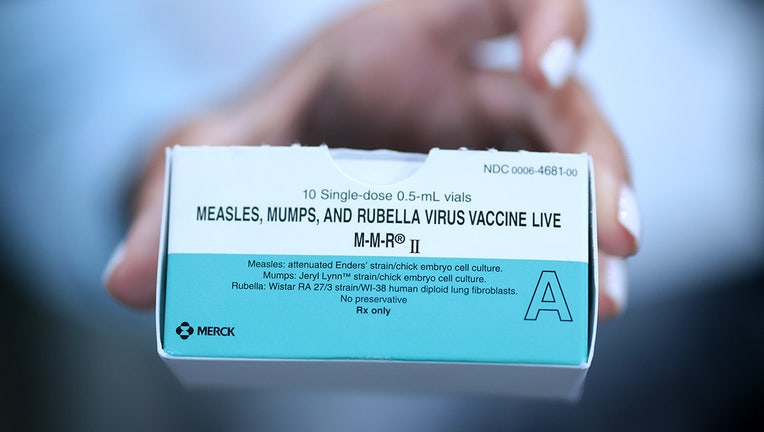
Box of measles mumps and rubella vaccines ( (Photo by Joe Raedle/Getty Images) / Getty Images)
MILWAUKEE, Wis. (FOX 6) - The Wisconsin Department of Health Services confirmed 15 cases of measles Thursday, with an additional 6 probable cases. This was a jump from 2 confirmed cases last Tuesday.
Measles outbreak in Lafayette and Iowa Counties
What we know:
According to Dr. Ryan Westergaard with the Wisconsin DHS, the department is working closely with local health officials in Lafayette and Iowa counties, as well as getting national support from the Centers of Disease Control and Prevention (CDC) to investigate the cases, trace exposure and contain further spread.
What we don't know:
At this time, the Wisconsin DHS states it has not identified any public exposure locations and is currently confidentially contacting those who have developed measles to trace the source of the disease.
The rapid emergence of cases among those who have not traveled outside Wisconsin suggests there is active local transmission, Westergaard explained. This makes additional cases within the community that have not yet been identified or reported to public health services likely.
Preventing measles
What you can do:
The best thing to do to prevent measles transmission is to receive the MMR vaccine. Two doses of the measles vaccine are 97% effective at preventing the disease, while one dose is 93% effective at preventing measles, according to the CDC.
You can check your vaccine status using the Wisconsin Immunization Registry, which is an online database that tracks vaccine records for Wisconsinites. You can also contact your healthcare provider.
Guidance on whether you should receive a measles vaccine booster is also provided by the Wisconsin DHS.
- If you were born before 1957, you do not need a measles booster because you were likely already exposed to the disease.
- If you were vaccinated between 1957-1989 you may benefit from a measles booster. Some vaccines used between 1963 and 1967 were inactive. You should contact your healthcare provider for more guidance.
- If you were vaccinated after 1989, you have likely received two doses of the measles vaccine and have effective protection against the disease.
DHS is also asking people to be familiar with the symptoms of measles. If you do go to a healthcare provider, it is important that you call them in advance to inform them of your potential measles status, so that they can take precautions to prevent further spread of the disease.
Measles symptoms
Dig deeper:
Measles is an extremely contagious disease. If one person has measles, up to 90% of people who come into close contact with that person will become infected if they are not protected, according to the CDC.
The disease spreads when an infected person coughs or sneezes, making it an airborne virus. A person can contract measles simply by being in a room where an infected person with measles has been up to two hours after the person has already left the room. You can also get measles by touching an infected surface and then touching your eyes, nose or mouth. This means that the disease can be contracted anywhere in public life.
Measles symptoms:
Symptoms of measles typically begin to develop 10 to 21 days after infection. Symptoms include:
- Runny nose
- High fever (could be above 104 degrees Fahrenheit)
- Fatigue
- Cough
- Red, watery eyes, known as conjunctivitis, or "pink eye"
- A red rash with raised bumps that starts at the hairline and moves to the arms and legs three to five days after symptoms begin
- Rash that spreads all over the body, usually beginning three to five days after initial symptoms
Measles complications:
One out of every four people who get measles in the U.S. will be hospitalized, and up to two out of every 1,000 children who contract measles in the U.S. will die, even with advanced healthcare. These are other groups of people at higher risk of experiencing severe measles complications:
- Children younger than 5 years old
- Adults older than 20 years old
- Pregnant women
- Those with weakened immune systems, such as from leukemia or HIV
Serious health complications that can come as a result of measles infection include pneumonia, brain damage caused by swelling, and deafness. While common complications include ear infections and diarrhea.
Measles cases on the rise
The backstory:
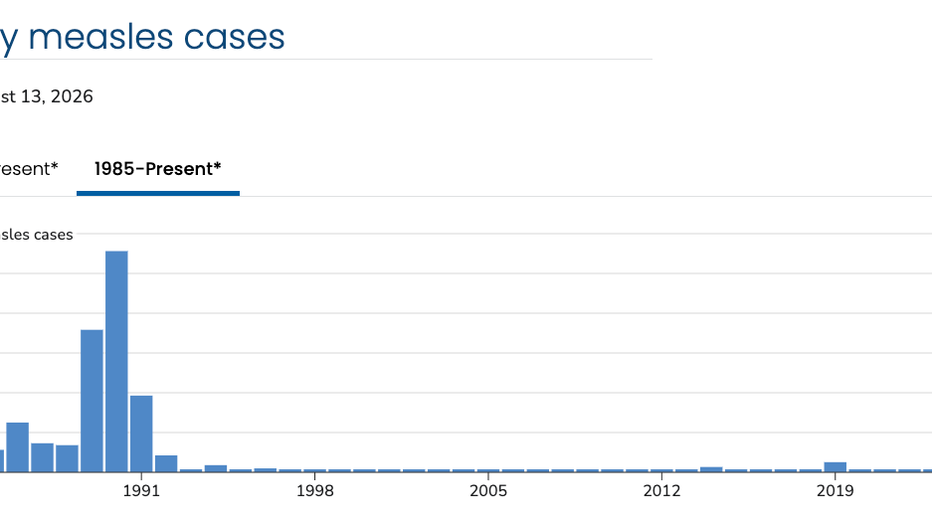
Measles outbreaks have been on the rise in recent years. In 2025, the U.S. had more reported measles cases, outbreaks, affected states, and deaths than in any year since 1992, according to a study by KFF, a nonpartisan health policy research organization.
Of the measles cases in the U.S. contracted between 2025-2026, over 90% of the cases were seen in unvaccinated people.
Centers for Disease Control and Prevention (Centers for Disease Control and Prevention)
National measles vaccination levels have also decreased over the past five years, with kindergarten and childhood measles coverage rates dipping to 92.5%, well below the 95% threshold needed to prevent transmission of measles virus.
In Wisconsin, the CDC cites during the 2024-2025 school year, only about 85% of kindergartners in the state were vaccinated against measles, ranking lower than the national average.
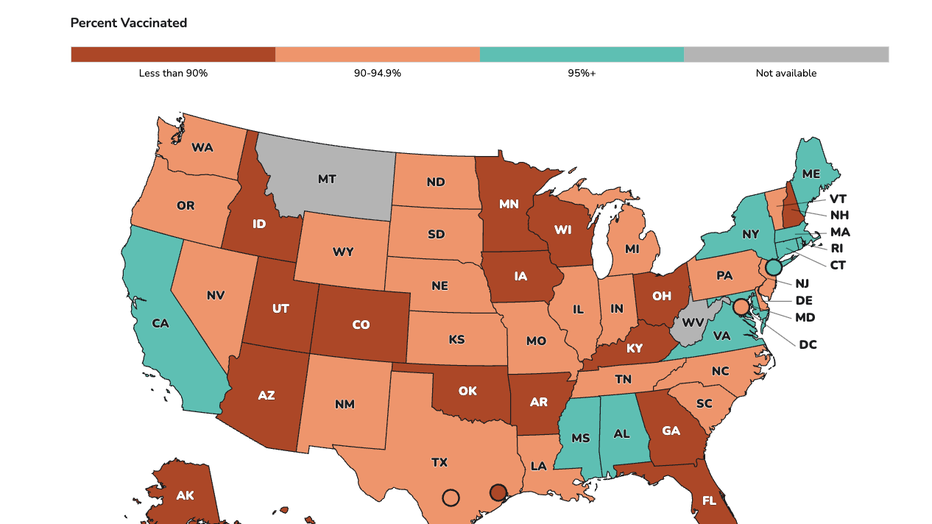
Map showing measles vaccination rates across the U.S. with data from the CDC. (Centers for Disease Control and Prevention)
Measles was declared eliminated from the United States in 2000, according to the CDC. This means there was no continuous spread of measles for longer than 12 months. The U.S. is on the verge of losing its measles elimination status, as Canada did in late 2025, according to The Associated Press.
Routine childhood vaccination schedules executive order
Big picture view:
President Donald Trump announced an executive order last week aimed at childhood vaccinations that would require separating combination shots, including the measles, mumps and rubella, or MMR, vaccine into separate injections. During the signing of his order, Trump repeated false claims about vaccinations, including their relationship to autism and that the MMR vaccine could be lethal, according to the AP.
Trump's executive order calls for federal officials to develop plans within 90 days for breaking up the MMR shot and spacing out other vaccines. However, pharmaceutical scientists and former regulators contend that those revisions would take years and require drug manufacturers to spend millions of dollars on new studies and manufacturing facilities.
Many public health experts were quick to condemn the president's executive order, according to the AP.
Dr. Paul Offit, a Children’s Hospital of Philadelphia vaccine researcher and former government adviser, said the recommendations by Trump and Health and Human Services Sec. Robert F. Kennedy Jr."are just not science based," and it’s irresponsible to cast doubt on a vaccine that protects against measles when the nation is facing its biggest epidemic in more than 30 years, according to the AP.
Right now, there are no individual vaccines in the U.S. for measles, mumps or rubella. Every vaccine approved for those viruses by the Food and Drug Administration is combination shots.
Local perspective:
The Wisconsin DHS Secretary put out a statement on Thursday regarding the president's executive order, continuing to back previous guidance from public health officials that supports the current recommended MMR vaccine.
"There is no new scientific evidence that justifies changing recommendations that have, and continue to, protect children across the United States," wrote DHS Secretary Kirsten Johnson.
In February, Wisconsin was among states that sued the Trump administration over previous changes to federal childhood vaccine recommendations.
The Source: Information from this article was sourced from the Wisconsin Department of Health Services, the Centers for Disease Control and Prevention, KFF, and the Associated Press. This story was reported from Eden Prairie, Minnesota.