

Map: These cities are getting more intense downpours since 1970

Record rainfall in California
San Francisco floodwaters have receded after a brief flash flood warning went into effect. LiveNOW's Andrew Craft spoke about the latest round of storms with FOX 2 Bay Area reporter Tom Vacar.
A new analysis reveals that heavier, more intense downpours are becoming the norm across much of the United States – a shift scientists say is closely tied to climate change and one that is raising concerns about flooding, infrastructure and public safety.
Researchers at Climate Central calculated a "simple hourly rainfall intensity index" for 144 U.S. weather stations using National Oceanic and Atmospheric Administration (NOAA) data collected between 1970-2025.
The organization found that the vast majority of major U.S. cities have experienced a measurable rise in hourly rainfall intensity over the past five decades, signaling a growing risk of flash flooding and related hazards.
Majority of cities are getting more intense downpours
By the numbers:
According to the analysis, 129 out of the 144 cities (90%) have seen an increase in hourly rainfall intensity since 1970.
On average, rainfall rates in these cities are also 15% more intense per hour than they were decades ago. More than half of the cities studied (63%) experienced increases of at least 10%.
The data found that the hourly rainfall intensity increased in every U.S. region, with the most significant average increases occurring in the Upper Midwest (+18% on average), followed by the Northern Rockies and Plains (+16%) and the Ohio Valley (+15%).
Notably, the rise in rainfall intensity is not limited to traditionally wet areas, drier regions are also seeing sharper bursts of rain.
Heavier downpours mean higher flood risk
Dig deeper:
The research scientists pointed to a warming climate as the driving force. As temperatures rise, the atmosphere can hold more moisture – about 4% more for every 1°F increase. That extra moisture can be released in short, intense bursts, increasing the likelihood of heavy downpours.
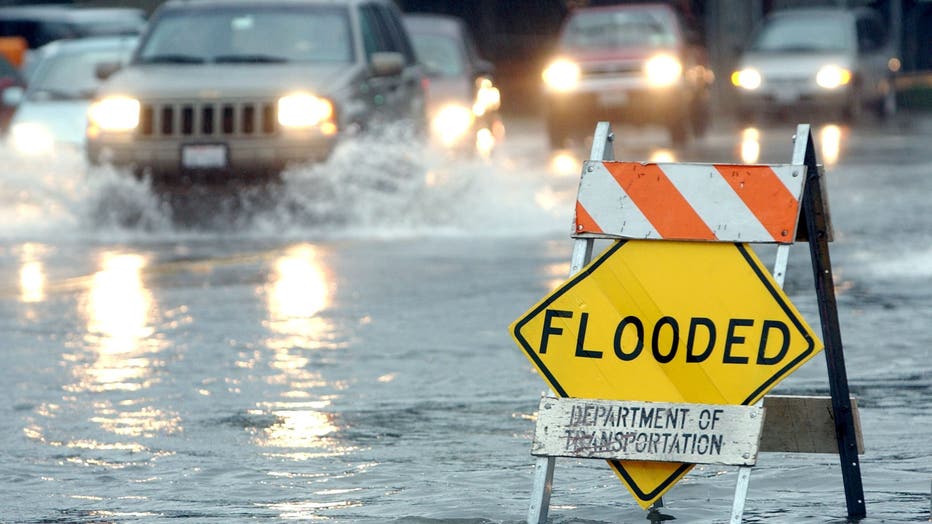
Cars pass through a flooded section of road December 19, 2002 in Mill Valley, California. (Credit: Justin Sullivan/Getty Images)
Heavier rainfall in shorter periods can overwhelm drainage systems and lead to flash flooding with little warning. These events can wash away roads, damage homes, destroy crops, and expose communities to contaminated water and debris.
Looking ahead
What's next:
Climate projections suggest the trend will continue – and likely intensify – with continued warming. If global temperatures rise by 2°C (3.6°F), most of the United States is expected to see even greater increases in extreme precipitation. The planet has already warmed about 1.2°C (2.1°F).
Scientists estimate that 85% of U.S. counties could experience at least a 10% rise in rainfall during the heaviest storms.
RELATED: Map: The fastest-warming US states revealed
If this happens, counties likely to experience at least a 30% increase in extreme precipitation are concentrated in: Tennessee, Alabama, Georgia, Mississippi, Maine, North Carolina and Kentucky.
Alaska and Hawaii are also likely to experience some of the highest levels of extreme precipitation intensification (43% and 30%, respectively) at 2°C (3.6°F) of global warming.
The Source: The information for this story was provided by Climate Central, which calculated a simple hourly rainfall intensity index for 144 U.S. weather stations with sufficient data quality over the period of analysis (1970-2025) using hourly rainfall data obtained from two different NOAA sources: the National Centers for Environmental Information (NCEI) Hourly Precipitation Data and the Applied Climate Information System (ACIS). This story was reported from Los Angeles.