

Election recounts in Minnesota: How do they work and who pays for them?
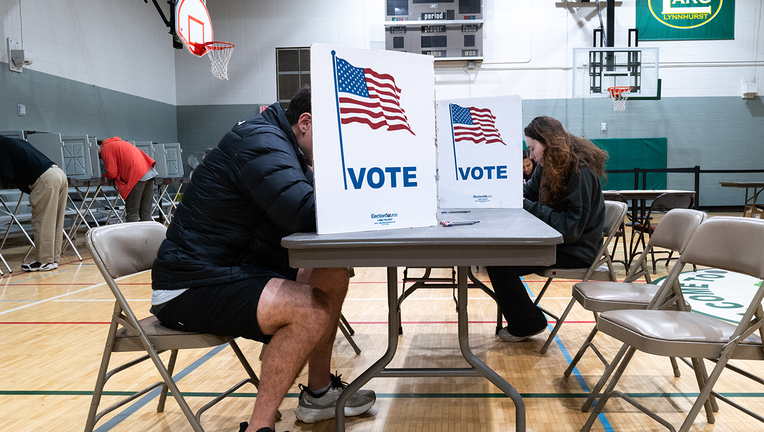
Voters fill out their ballots at an early voting polling place at Lynnhurst Recreation Center on October 28, 2026 in Minneapolis, Minnesota. Minnesota residents are voting for successors to Gov. Tim Walz and Sen. Tina Smith (D-MN) among other races.
EDEN PRAIRIE, Minn. - When the results of the 2026 midterm elections roll in, some candidates may not be satisfied with the outcome of their races – especially if they’re extremely close.
Under certain circumstances, they can request a recount.
What is a recount?
How it works :
During a recount in Minnesota, election officials are required to check every single ballot by hand to verify the accuracy of the results.
While election experts have criticized hand counting, Minnesota’s secretary of state says it’s especially necessary when a voting machine can’t read a ballot due to human error – though this happens rarely. For instance, a voter may circle a candidate’s name instead of filling out the bubble.
Candidates, their representatives and members of the public can watch the recount and raise questions about the process, but they can’t touch the ballots.
By the numbers:
A margin measures how much one candidate wins over another in a specific race. In Minnesota, the losing candidate can request a publicly funded recount when that gap is very small.
- Federal, congressional and judicial races: Margin must be less than 0.25%
- State legislative races: Margin must be less than 0.5%
- Low turn-out: Margin must be 10 votes or fewer in races that have no more than 400 votes
Who pays for it?
The rules:
Depending on how close the race is, the government or candidate will pay for the recount. To qualify for public funding, margins must meet the requirements listed above.
If the margin is larger than the state’s threshold, a candidate can request a discretionary recount. In that case, they’ll have to pay for it out of their own pocket. But there's an upside for the candidate: If the recount changes the result of the election, the jurisdiction responsible for the recount must take on the costs.
Since recounts can get expensive, candidates can do a test run first. They can pick up to three precincts to recount. After looking at those results, they can choose to put a stop to the rest of the recount, according to the Minnesota Secretary of State’s Office.
Timeline:
Timeline: Election results aren’t official until a canvassing board reviews them first. Boards in counties across the state are scheduled to conduct reviews between Nov. 6 and Nov. 13.
Candidates must request a recount in a tight window right after their board meets: Within 48 hours for a publicly funded recount, or five days for a discretionary recount.
The cost:
The cost of a recount depends on the nature of the race and the final vote margin. During the historic 2008 Senate race between Republican incumbent Norm Coleman and Democratic challenger Al Franken, a state-funded recount cost $460,000, according to FairVote.
On the other hand, Mike Lindell faced an $825,000 bill when he asked for a discretionary statewide recount of this year’s Minnesota governor primary election.
A successful recount in Minnesota
Dig deeper:
Since 2000, there have been 34 recounts in Minnesota. The 2008 U.S. Senate race between Norm Coleman and Al Franken was the last time a recount flipped the results, according to a FairVote analysis.
Franken entered the recount trailing Coleman by just 215 votes. After a grueling, months-long legal battle over rejected ballots, Franken ultimately won the seat by 225 votes.
The Source: Information for this article was provided by the Minnesota Secretary of State’s Office, The National Conference of State Legislatures, FairVote and previous FOX6 coverage. This article was reported in Eden Prairie, Minnesota.