

Minnesota court rules Swimply rentals can be consider public pools and need licenses
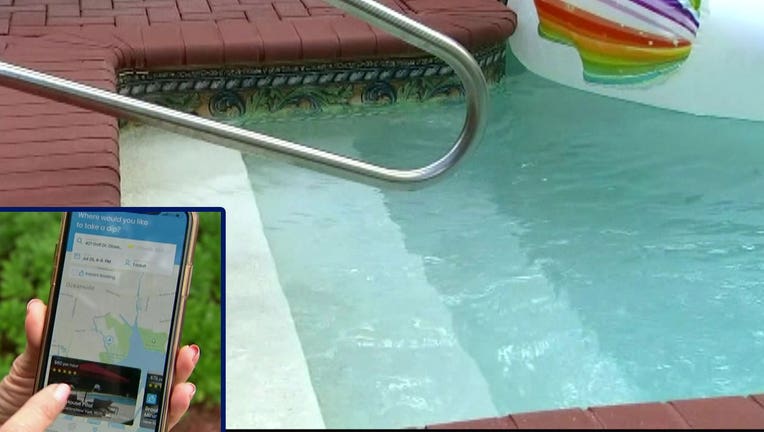
(FOX 9)
MINNEAPOLIS (FOX 9) - The Minnesota Court of Appeals has sided with the state, agreeing that pool rentals through popular app Swimply are considered "public pools" and, as such, can be required to hold a license.
Court ruling
The backstory:
The ruling comes as a result of a challenge by Minnesota homeowners who used the Swimply app to rent out their pool.
Swimply began operating in the Minneapolis area in 2020. Its concept is simple: it allows pool and hot tub owners to rent out their facilities.
Local perspective:
As the lawsuit explains, Swimply operated without issue until the state contacted them about licensing issues in May 2021. Then, in August 2021, the Minnesota Department of Health (MDH) issued guidance on Swimply that told users that by renting out their pool, they had effectively turned their pool into a public pool and, under state law, a public pool needed to be licensed.
Minnesota Swimply lawsuit
Timeline:
The people involved in the lawsuit, Keith and Sheila Hittner and Brandy Logan, joined Swimply in 2022, and began listing their pool for rentals. In 2023, the Minnesota Department of Health sent the Hittners a letter informing them of the public pool requirement. In 2024, the City of Maple Grove informed Logan that her pool wasn't permitted to be rented in the city.
Hennepin County Public Health later issued a cease-and-desist letter for Logan's pool rental.
The other side:
The Upper Midwest Law Center represented the homeowners in the lawsuit challenging the crackdown.
In its petition, the center used the state's own assessment against them, pulling a 2009 estimate when the Minnesota Department of Health identified about 3,439 public pools in Minnesota at hotels, apartments, fitness centers, and schools – but none at single-family homes.
The ruling
What they're saying:
The state statute says a public pool is one that is "open to the public generally, whether for a fee or free of charge." The statute also specifically carves out an exception for private residential pools.
But, by listing their pool on an app, MDH argued that the homeowners' pools now fell under that definition. The Upper Midwest Law Center argued that no reasonable interpretation would put a private homeowner's pool under that definition.
In their ruling, the justices sided with MDH, saying the use of the word "generally" in the statute swings the interpretation in favor of MDH. The court argued the homeowners may need to seek legislative change.
In response to the decision, Doug Seaton with the Upper Midwest Law Center wrote: "We respectfully disagree with the Court’s decision. This case is about whether a state agency can create and enforce new rules without going through the process the law requires. That process exists for a reason and that is to ensure transparency, accountability, and public input."