

Raúl Castro indicted: US charges former Cuba president
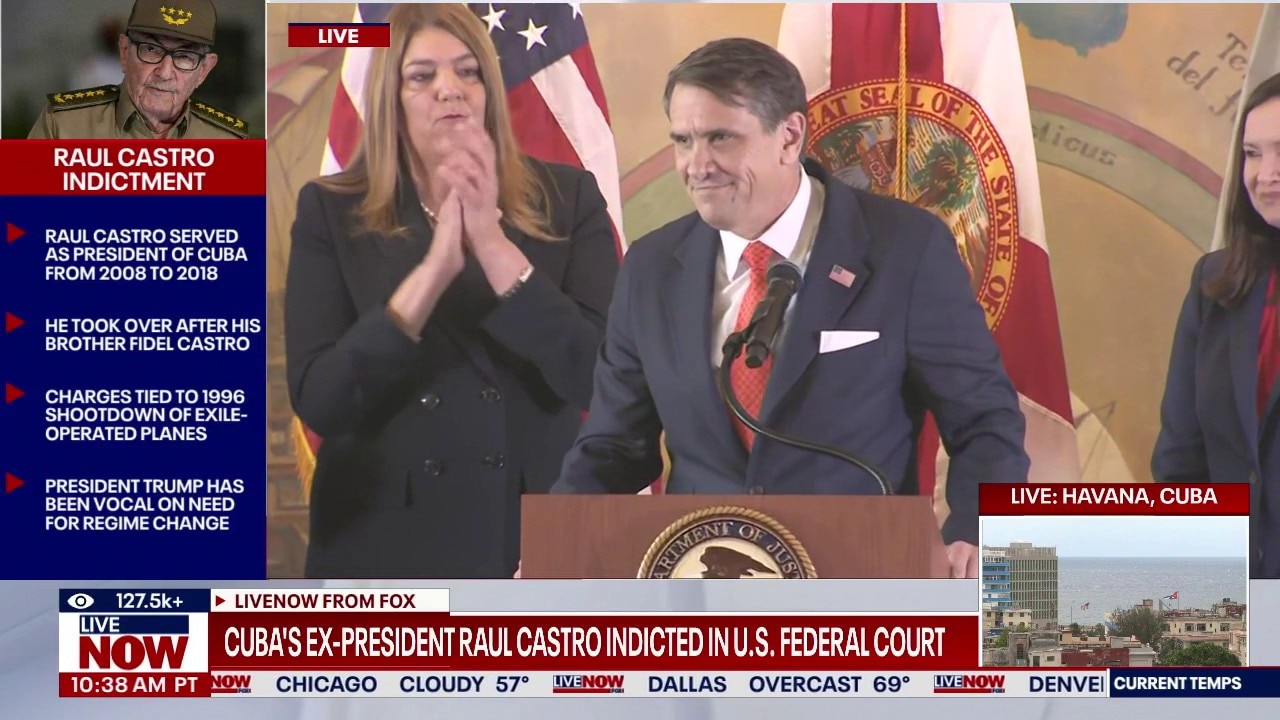
Charges against Raul Castro announced
Acting Attorney General Todd Blanche announced the charges against former Cuban President Raul Castro and five co-defendants over a 1996 incident in which Cuban jets shot down planes operated by a group of Cuban exiles. The announcement came during a ceremony held in memory of the four victims.
Former Cuban President Raúl Castro was indicted Wednesday, U.S. Acting Attorney General Todd Blanche announced at a press conference in Miami.
The indictment comes on the day recognized as Cuba's independence day, and is in connection with the deaths of four people killed in 1996 when two planes were shot down off the coast of the island nation.
Raúl Castro indicted
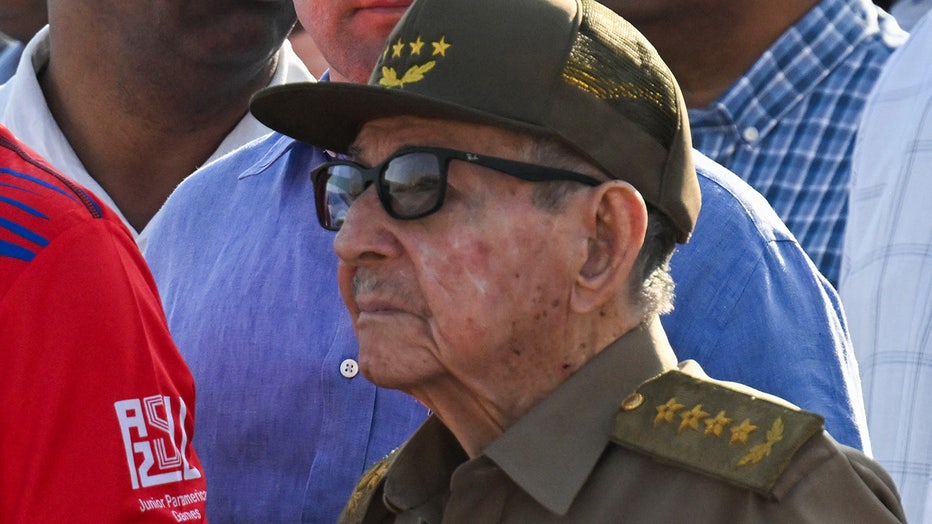
Cuba's former President Raul Castro attends a May Day rally marking International Workers' Day in Havana on May 1, 2026. (Photo by YAMIL LAGE / AFP via Getty Images)
Big picture view:
Blanche said Castro and several others have been charged with conspiracy to kill U.S. nationals, destruction of aircraft and four individual counts of murder.
Read the full indictment at the end of the article
Why you should care:
The indictment is expected to elevate tensions between the U.S. and the communist-led nation that sits just 93 miles off the Florida coast. It also raises questions about whether the U.S. may take military action to detain Castro as it did earlier this year to capture Venezuelan President Nicolás Maduro, who is accused of drug trafficking.
Soon after Maduro was seized, the Trump administration set its sights on Cuba and ordered an economic blockade that resulted in blackouts, food shortages, and crippled economic activity before its attention was diverted to Iran and the war there. With the U.S. looking to wind down that conflict, some speculation has arisen that the administration could be considering resuming actions against Cuba.
What they're saying:
Last week, CIA Director John Ratcliffe visited the island where he met with Cuban leaders, including Castro’s grandson. The next day, Trump was asked about a potential indictment. While he deferred the question to the Justice Department, he described Cuba as "a declining country."
"But they need help, as you know, and you talk about a declining country — they are really a nation or a country in decline, so we’re going to see," Trump told reporters aboard Air Force One. "We have a lot to talk about on Cuba, but not maybe for today."
The other side:
Cuban President Miguel Diaz-Canel decried the indictment early Wednesday afternoon in a post on social media, calling it politically-motivated and based on a dossier that includes false information.
"It knows full well—given the abundance of documentary evidence—that no imprudent action was taken nor was international law violated, as U.S. military forces have indeed been doing with their coldly calculated and openly publicized extrajudicial executions against civilian vessels in the Caribbean and the Pacific," Castro wrote.
Diaz-Canel argued that the downing of the Brothers to the Rescue planes was in self-defense and happened within Cuba's jurisdiction.
Brothers to the Rescue shootdown
The backstory:
The indictment traces back to February 1996 when two Cessna aircraft that were part of the Brothers to the Rescue organization were attacked. Russian-made MiG fighter jets shot down the unarmed planes outside of Cuban airspace using missiles, an investigation by the International Civil Aviation Organization determined. A third plane, which was carrying the organization’s leader, escaped the attack.
Prior to the attack, President Bill Clinton had been trying to find ways to reduce tensions with its Cold War-era foe but was opposed by Cuban exiles. Trying to gain publicity, they conducted flyovers of Havana, dropping anti-Castro leaflets and helping rafters escape the country.
Only one person has been convicted of conspiracy to commit murder in connection with the shootdown. Gerardo Hernández was sentenced to life in prison but was later released by President Barack Obama during a prisoner swap that happened during an attempt to normalize relations between the two nations.
Raúl Castro leadership
Timeline:
Raúl Castro was a key part of the group of Cuban revolutionaries who seized control of the country in 1959, and he has played a major role in the country’s politics ever since. Castro assumed the role of defense minister soon after the revolution and assumed the vice presidential role as well in 1976.
He became acting president in 2006 as part of a temporary transfer of power from his brother Fidel and officially succeeded him as president two years later when the elder Castro opted not to stand for election. In 2011, Raúl Castro was appointed to be first secretary of the Communist Party of Cuba.
He handed off the role as president to a handpicked successor, Miguel Díaz-Canel, in 2018 and stepped down as first secretary in favor of Díaz-Canel three years later.
While he has not been in the spotlight often since then, Castro is believed to still hold power behind the scenes.
The Source: Information for this article was taken from the Associated Press. This story was reported from Orlando.