

Medicaid fraudster wants to shield bank account from prosecutors
Convicted fraudster fights Minnesota over seized money
Ahmed Nur pleaded guilty last year to two counts of aiding and abetting theft by swindle in a nearly $10 million Medicaid fraud scheme. He was sentenced to 180 days in the Hennepin County Workhouse and, along with nearly a dozen co-defendants, ordered to pay back more than $2.3 million in restitution.
ST. PAUL, Minn. (FOX 9) - A convicted fraudster is fighting to keep more than half-a-million dollars in a business account off limits as Minnesota tries to recover stolen Medicaid funds.
Recovering stolen Medicaid funds
What we know:
Ahmed Nur pleaded guilty last year to two counts of aiding and abetting theft by swindle in a nearly $10 million Medicaid fraud scheme. He was sentenced to 180 days in the Hennepin County Workhouse and, along with nearly a dozen co-defendants, ordered to pay back more than $2.3 million in restitution.
By the numbers:
Prosecutors targeted two of Nur’s bank accounts to pay off the debts.
They successfully argued to seize more than $1.2 million from Nur’s personal account, leaving more than $1 million in restitution left to be paid by either Nur or the other defendants.
READ MORE: Medicaid in Minnesota: Fraudsters owe millions but pay back little
The other side:
But during a court hearing last month, Nur argued a second corporate account containing more than $650,000 should be off limits.
The account belongs to AAA A-Z Friendly Languages, Inc. a company Nur owned and operated out of an office on East Franklin Avenue in Minneapolis.
A-Z was reimbursed by Medicaid for providing interpreter services to patients who struggled with the English language during their medical appointments.
"The corporation is the owner of that account," said Eric Nelson, Nur’s attorney.
Nelson argues the assets in the company account cannot be used to pay down Nur’s court-imposed restitution because "the corporation A-Z Interpreting Services was not convicted of a felony."
According to state statute, assets can be seized for victim restitution only "if the account holder is convicted of a felony or a lesser offense."
"For all intents and purposes, it was a clean corporation," Nelson said in court.
Dig deeper:
While not charged, Nur’s company was repeatedly named in separate Medicaid fraud schemes, according to court records reviewed by the FOX 9 Investigators.
Several of A-Z’s contracted interpreters were eventually charged with billing Medicaid for fraudulent or "phantom" services, including Nasro Takhal, who is currently awaiting sentencing.
RELATED: A Medicaid provider was banned for fraud. She kept billing.
In one filing, Nur allegedly told investigators the company only verified interpreter logs about 10% of the time despite claiming tens of thousands of dollars in reimbursements.
Assistant Attorney General Kristi Nielsen insisted Nur is the sole account holder for A-Z and therefore it can be seized to pay back the Medicaid money he was convicted of stealing.
"Every dollar in the Medicaid program is intended to support real care for real people, and every dollar that is stolen through fraud is one less dollar that can be used to provide legitimate care," Nielsen said during the recent court hearing.
Big picture view:
Seizing money in bank accounts is one of the few tools the state has to claw back stolen Medicaid funds, according to the Medicaid Fraud Control Unit at the Minnesota Attorney General’s Office.
Most defendants pay back little in court-ordered restitution because the money is already gone by the time they are convicted.
Related: Medicaid fraudsters owe millions in restitution but pay back little.
In one court filing, Nelson wrote that others involved in the scheme, "actively moved or worked to hide their assets when they became aware of the State’s investigation."
In cases involving multiple defendants, judges often order what’s known as joint-restitution.
It is essentially a group tab that does not need to be evenly split. Any payment — regardless of who pays —reduces the overall debt.
It means some defendants can end up paying back more than others if they have more cash on hand or a greater ability to pay.
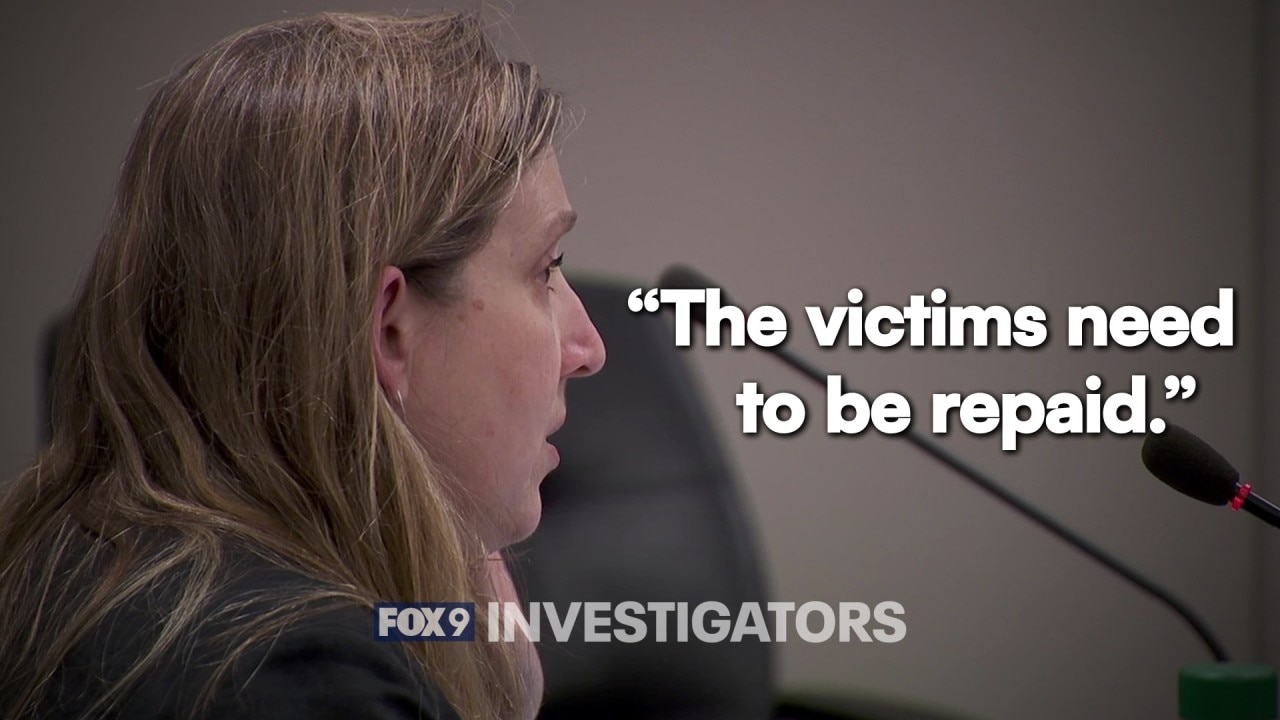
"The restitution is joint and several. So, if one person can afford to pay 100% of it, the victims need to be repaid," Nielsen said.
What they're saying:
But Nur’s attorney maintains it "smacks of unfairness" to make Nur pay the overwhelming majority of the restitution.
"In the interest of justice, it is patently unfair to just right out of the gate make Mr. Nur pay 81% of the restitution, relieving the others of substantial burdens," Nelson said.
But knowing large restitution debts are often "mathematically impossible" to pay off, prosecutors will go after any money they can find.
"The victims deserve to be made whole," Nielsen said. "And if Mr. Nur wants this court to have sympathy for him compared to his co-defendants, that's not the right place to be looking at the sympathy. If the court wants to be sympathetic to anyone, it needs to be sympathetic to the Medicaid recipients."
What's next:
Judge Mark Kappelhoff said he needs to see more evidence and hear from Nur’s bank before deciding whether the state can drain the A-Z account to pay back the money Nur helped steal from Medicaid.
"There certainly seems to be a nexus between Mr. Nur and the corporation," said Kappelhoff. "He is the sole shareholder. So, there may be inferences that I could draw, depending on what the bank has to say."
Kappelhoff has scheduled another hearing on the issue on May 20.