

Absentee voting in Minnesota: What voters need to know
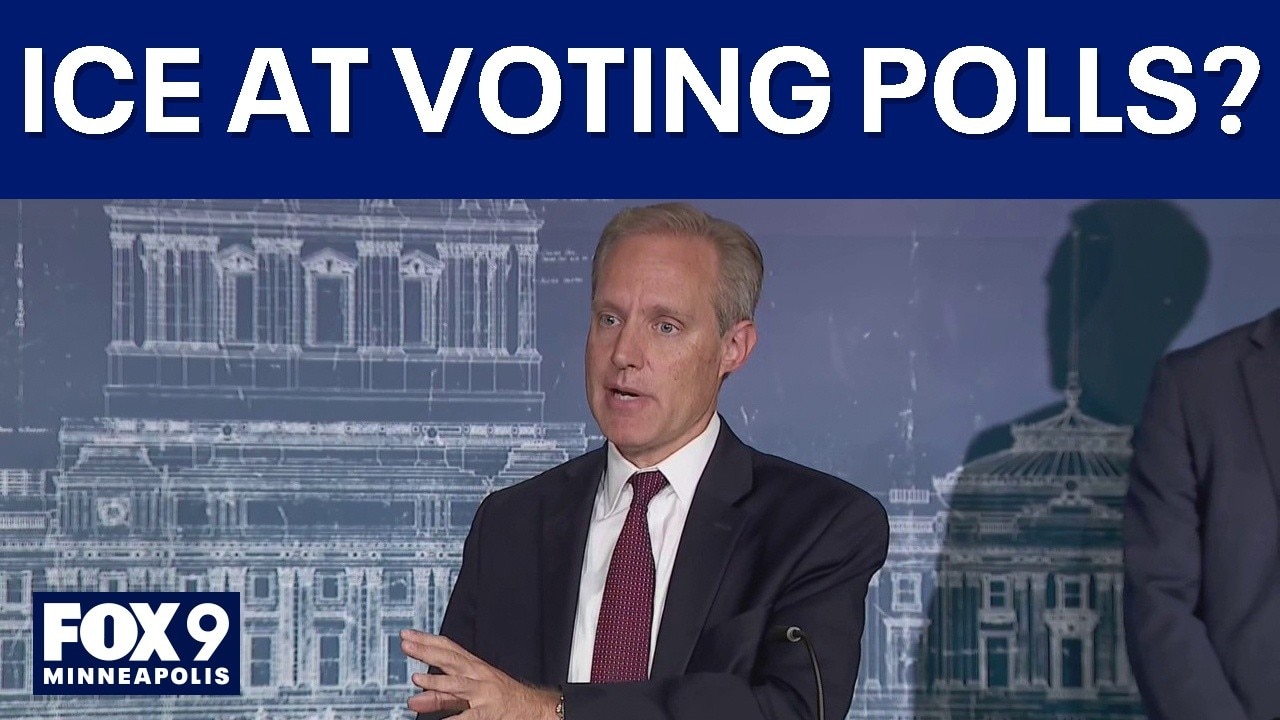
What if ICE agents are at voting polls?
Minnesota Secretary of State Steve Simon spelled out the laws on voter poll security and spoke on the legality of ICE agents being at or near polling places.
(FOX 9) - Minnesota voters can begin casting absentee ballots for the 2026 election on Friday, Sept. 18, marking the start of the state's absentee voting period ahead of Election Day on Nov. 3.
Absentee voting: What you need to know
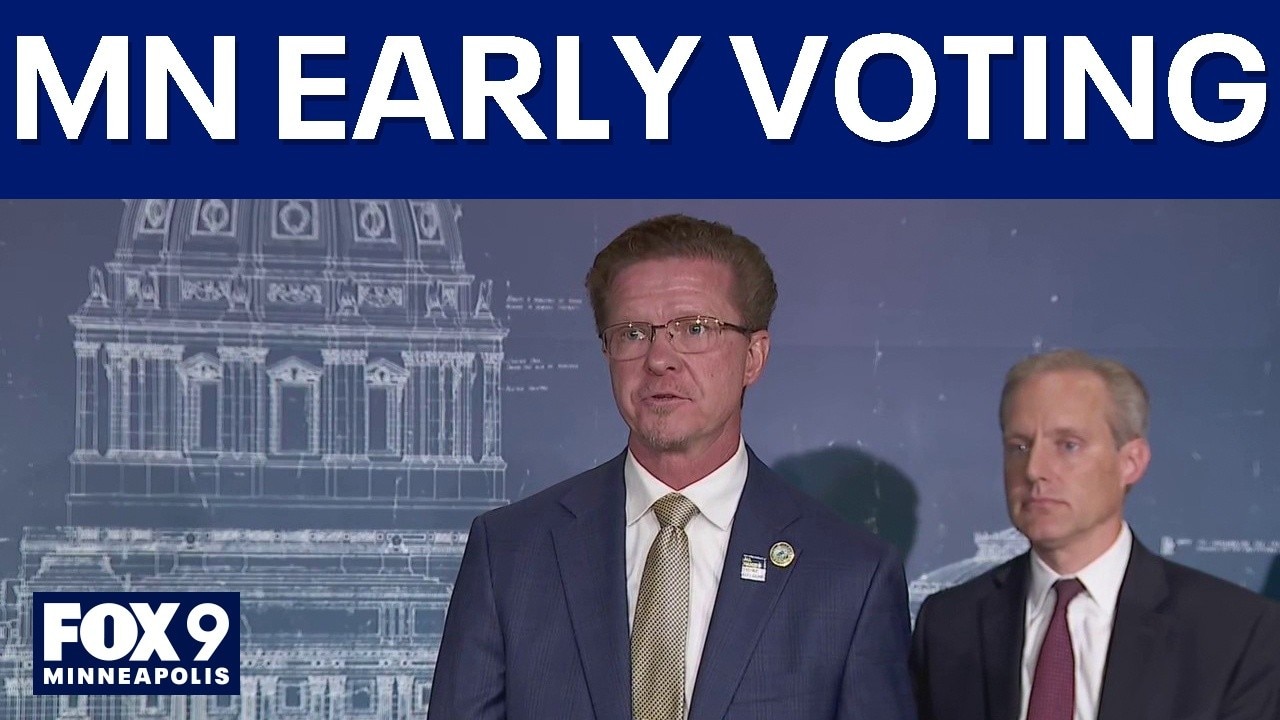
MN early voting: What to know for 2026 midterms
Minnesota Secretary of State Steve Simon held a news conference on early voting ahead of the 2026 midterms and answered questions on the potential presence of ICE agents near polling places.
What we know:
Absentee ballots can be mailed or submitted in person starting this Friday, Sept. 18. Ballots must be returned no later than 5 p.m. on Election Day and must be returned to the office that sent the ballot during office hours. However, some jurisdictions do have ballot drop boxes that can be used 24 hours a day.
You cannot submit your absentee ballot at a polling place on Election Day.
To request an absentee ballot, you can request it online.
Early voting in October
What's next:
Early voting begins Oct. 16 in Minnesota. The difference with early voting versus absentee voting in person is that your ballot now gets processed through a tabulator.
Early voting runs through Monday, Nov. 2. Then Election Day 2026 will be on Tuesday, Nov. 3.
Supreme Court blocks Trump mail rules
Big picture view:
In recent months, there were concerns over how the United States Postal Service would handle mail ballots.
The Postal Service vowed to institute new rules issued by the Trump administration, restricting who could receive mail-in ballots. Under the rules, states would have been required to submit lists of eligible voters who could receive mail ballots and the USPS would have only delivered mail ballots to voters on those lists. The executive order by President Trump also would have required states to use uniform ballot styles.
Those rules faced court challenges, including a lawsuit that Minnesota was part of. Just this week, lower courts blocked the rules from going into effect. Then on Monday, the Supreme Court rejected an emergency application from the Trump administration to block the lower court rulings.
That decision blocks the new rules from going into effect for the midterms. However, it's possible the Supreme Court could take up the matter at a later date and issue a decision on the rules for future elections.
The other side:
Last month, Minnesota joined a lawsuit challenging the Postal Service's plan. In recent days, two federal judges have issued rulings blocking the order from going into effect, including an order issued just this past weekend.
The matter now seems poised to be headed to the Supreme Court.
How to register to vote in Minnesota
What you can do:
To register in advance online, head to the Minnesota Secretary of State's website, and click the "Register to Vote" tab. There you can register to vote online.
The online application will ask you for the following:
- Minnesota driver's license, identification card number, or the last four numbers of your Social Security number.
- Full address
- Full name
- An email address
- Birthdate
- Confirmation of your eligibility to vote
Once you submit your registration, the Office of the Minnesota Secretary of State will review and process your application, which could take up to 14 days.
The deadline to pre-register to vote online and by mail in Minnesota is Oct. 13.
Another way to register in advance is on paper, then mailing it in or bringing it to your county election office or the Secretary of State. You can download the voter registration paper by clicking here.
Election Day:
Minnesotans can also register to vote on election day at their polling place. You will just need a current Minnesota ID with your name and address or a photo ID and a document that has your current name and address.
Approved photo IDs:
- Driver's license, state ID, or learner's permit issued by any state.
- U.S. Passport
- U.S. Military or Veteran ID
- Tribal ID with name, signature and photo
- Minnesota university, college or technical college ID
- Minnesota high school ID
Approved documents (these can be shown on an electronic device):
- Bill, account or start-of-service statement due or dated within 30 days of the election for: Phone, TV or internet, solid waste, sewer, electric, gas or water, banking or credit card, and rent or mortgage
- Residential lease or rent agreement that is valid through election day
- Current student fee statement
An already registered voter can "vouch" for you at the polling place. That means the registered voter from your precinct can go with you to the polling place and sign an oath confirming your address. A registered voter can vouch for up to eight people.
To learn more ways to register to vote, click here.
Major races in Minnesota
Local perspective:
Minnesotans will decide on some key races this election cycle, including the race for governor and a new U.S. senator.
Minnesota governor/lieutenant governor
- Amy Klobuchar and Ben Schierer (DFL)
- Lisa Demuth and Ryan Wilson (GOP)
- Steven Young and Jane Kirby (Green)
U.S. Senate
- Michele Tafoya (GOP)
- Peggy Flanagan (DFL)
- Rebecca Whiting (Libertarian)
- Marisa Simonetti (Independent)
Attorney General
- Keith Ellison (DFL)
- Ronald J. Schutz (GOP)
Secretary of State
- Steve Simon (DFL)
- Tad Jude (GOP)
- George "Chip" Tangen (Libertarian)
- Seth Kuhl-Stennes (Green)
Congressional District 2
- Eric Pratt (GOP)
- Matt Little (DFL)
The Source: This story uses information from the Minnesota Secretary of State's Office and previous FOX 9 reporting.