

Wisconsin bear attack: Woman severely injured, search for bear ongoing

Western Wisconsin woman attacked by bear
Wisconsin wildlife authorities are searching for a black bear that severely injured a 69-year-old woman.
COMSTOCK, Wis. (FOX 9) - Wisconsin wildlife authorities are searching for a black bear that severely injured a 69-year-old woman.
Bear attack in Barron County
The backstory:
The Wisconsin Department of Natural Resources (DNR) said the attack was reported around 2 p.m. on Saturday near the town of Comstock, in Barron County.
The woman was then taken to the hospital for treatment, but information on her condition was not readily available.
Several law enforcement agencies, including local DNR wardens and staff from the U.S. Department of Agriculture, (USDA) responded to the incident. While searching for the bear, they reportedly found a cub in a tree, indicating the incident could have involved a sow and cub.
What we don't know:
The circumstances surrounded the attack we're not released.
Efforts to find and capture the bear have not yet been successful, but bear traps have been set in the area.
Authorities say they intend to euthanize the bear "and assess its condition."
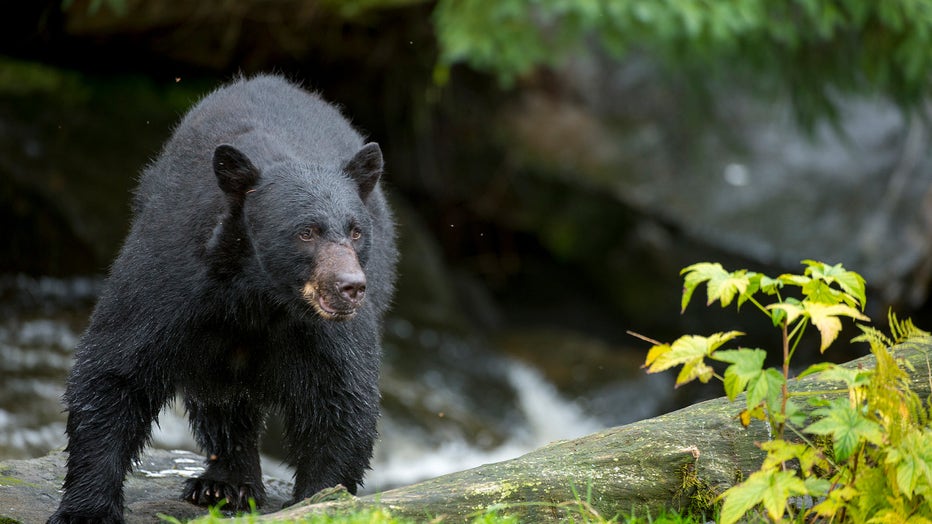
An American black bear at a creek at Neets Bay fish hatchery, Behm Canal in Southeast Alaska near Ketchikan, USA. (Photo by Wolfgang Kaehler/LightRocket via Getty Images) (Getty Images)
Bear safety tips
What you can do:
After the attack, Wisconsin authorities shared tips to avoid bear encounters.
Minimize food attractants around your residence or camps:
- Bird feeders should be only used in the wintertime or brought in at night and made inaccessible to bears. Deter bears by hanging feeders 10 feet from the ground and five feet out from any surface. If a bear does find the feeder, remove it immediately.
- Keep garbage cans secured, clean and inside sheds if possible. Do not leave loose garbage around.
- Do not leave pet food outside.
- Keep grills clean and secure.
If a bear is encountered in a yard or around a home:
- Place yourself in a secure area, so the bear has a clear escape path. Make a lot of noise by yelling, honking a car horn or banging pots and pans.
- Consider installing motion-activated water sprinklers, lights or alarms.
If a bear is encountered while hiking, hunting or camping:
- Never approach a bear.
- Do not run.
- Do not lie down or play dead.
- Talk to the bear or start shouting if it doesn’t leave.
- Raise your arms above your head and wave them to appear larger than you are.
- Slowly back away and don’t turn your back on the bear.
- Always leave an escape route for the bear.
- Fight back if attacked.
More information on living in bear country can be found here.
Dig deeper:
The USDA said it responds to about 500 to 600 nuisance bear complaints per year, and that 70-80% of complaints are resolved through recommendations made to the complainant, usually by removing an attractant. When direct control is needed, authorities trap and relocate the bear to abate the issue.
No human deaths have come from bear encounters in Wisconsin history, and black bear attacks are considered very rare across the country.
The Wisconsin DNR said there are an estimated 24,000 bears in the state. Black bears are known to avoid humans as much as possible, but can become aggressive if a cub is around or if they feel threatened.
Bears, which are mostly concentrated in the northern two-thirds of the state, are omnivores that eat both plants and animals. They are described as opportunistic feeders that feed on natural foods and anthropogenic, or human-caused, foods.
The Source: This story uses information shared in a news release from the Wisconsin Department of Natural Resources.