

Minnesota wildfires: More BWCA entry points reopen, peacetime emergency not extended
![Minnesota wildfire briefing with Walz, officials [FULL]](https://static-media.fox.com/fmcv3/prod/fts/rljqy44anvyln2zh/650roc6wuompzfmb.jpg)
Minnesota wildfire briefing with Walz, officials [FULL]
Gov. Tim Walz and state public safety leaders provided an update Wednesday on Minnesota's wildfire conditions and ongoing response efforts.
ELY, Minn. (FOX 9) - More Boundary Waters Canoe Area Wilderness entry points reopened for overnight use on Wednesday as firefighters increase containment of the wildfires burning in northern Minnesota and southern Canada.
More Boundary Waters entry points reopen
Local perspective:
Phase 5 of the BWCAW entry point reopening plan went into effect on Wednesday, restoring overnight access to additional entry points across the Kawishiwi and LaCroix Ranger Districts. The BWCAW has been slowly reopening for overnight camping since a full closure of the wilderness went into effect on July 14, over three weeks ago.
Below are the following BWCAW entry points open for overnight use as of Aug. 5:
Kawishiwi Ranger District:
- 6 Slim Lake
- 25 Moose Lake (No paddle travel beyond Lewis Narrows and Upper Basswood Falls)
- 26 Wood Lake
- 27 Snowbank Lake
- 28 Snowbank Lake Only
- 29 North Kawishiwi River
- 30 Lake One
- 31 Farm Lake
- 32 South Kawishiwi River
- 33 Little Gabbro Lake
LaCroix Ranger District:
- 1 Trout Lake
- 4 Crab Lake and Cummings Lake
- Day use motor only: A Trout Lake
Gunflint Ranger District: All entry points are open except Kekekabic Trail (East) and NCT-East (thru-hike), which remain closed through Aug. 10.
Tofte Ranger District: All entry points are open except the Pow Wow Trail, which remains closed through Aug. 10.
The U.S. Forest Service says anyone visiting the recently reopened BWCAW areas should be self-sufficient, ensure a travel plan is in place, know whether forecasts and fire conditions and travel with multiple means of communication. Fires are currently not allowed at any campsites in the wilderness area.
Peacetime emergency won't be extended
Big picture view:
Speaking at a news conference Wednesday, Minnesota Department of Public Safety Commissioner Bob Jacobson said that after consulting with the Minnesota Department of Natural Resources and other partners on the ground, officials have determined they do not need to request an extension of the peacetime emergency.
Gov. Tim Walz declared a peacetime emergency on July 12 due to the wildfires and mobilized the Minnesota National Guard to support fire crews working to combat the fires. The peacetime emergency is set to expire next Tuesday, Aug. 11.
"Conditions have improved and we are confident that the response can continue under existing authorities while firefighting operations continue," said Jacobson.
The commissioner added that although several fires are still burning, the focus has now shifted towards recovery and officials are working with impacted counties to conduct damage assessments and identify recovery needs.
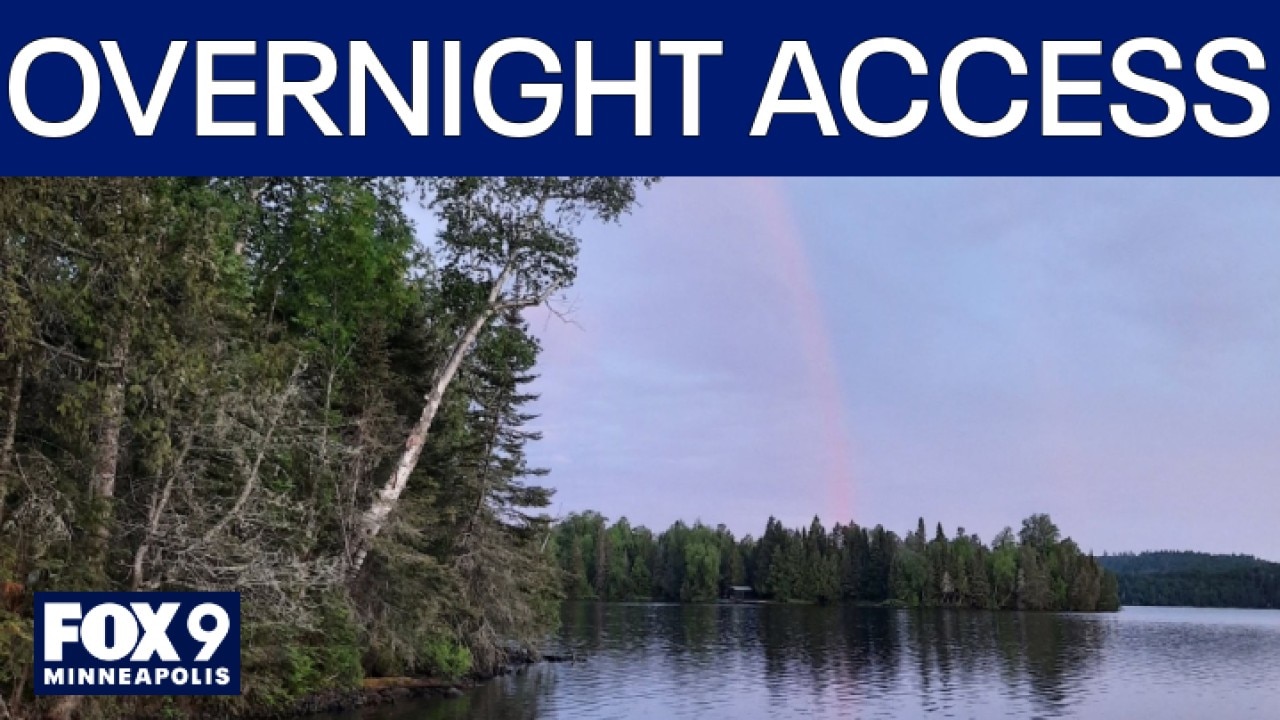
Newly reopened BWCAW entry points start allowing overnight trips as wildfire conditions improve
More than two weeks after closing all public access as wildfires grew, the Boundary Waters Canoe Area Wilderness is now welcoming back visitors with day-use and overnights in select areas where the wildfire conditions have improved.
Since July 12, there have been more than 110 Minnesota National Guard soldiers and airmen supporting the wildfire response in northeastern Minnesota. Major General Shawn Manke, the senior leader of the Minnesota National Guard, said crews have flown over 62 hours and delivered over 170,000 galloons of water onto active fire lines since the wildfires began.
Latest wildfire containment numbers
By the numbers:
The wildfires in northeastern Minnesota and southern Canada were started by lightning strikes when strong storms moved through the area on the evening of July 6. The fires have burned 65,150 acres in the U.S. so far.
Here are the latest wildfire containment numbers, as of Wednesday morning:
BWCAW wildfires:
- Bear Trap (combined with Dark Fire): 37,885 total acres (29,778 acres in the United States); 40% contained.
- Thumb: 18,191 total acres (17,691 acres in the United States); 50% contained.
Non-BWCAW wildfires:
- Camp: 4,359 acres; 65% contained.
- Finstad: 1/10th acre; 0% contained.
- Sioux: 7,094 acres; 21% contained.
- Wolfpack: 6,228 acres; 23% contained.
Several evacuation orders remain in place in northeastern Minnesota for communities near the fires. Residents along Echo Trail in Ely who had to be evacuated due to the wildfires were allowed back onto their properties for 24 hours, beginning at 9:30 a.m. Wednesday.
The Source: Information in this story comes from U.S. Forest Service Superior National Forest officials and a news conference with Gov. Tim Walz and other state and federal officials.