

Minnesota fraud: House Republicans issue fraud report as committee wrap
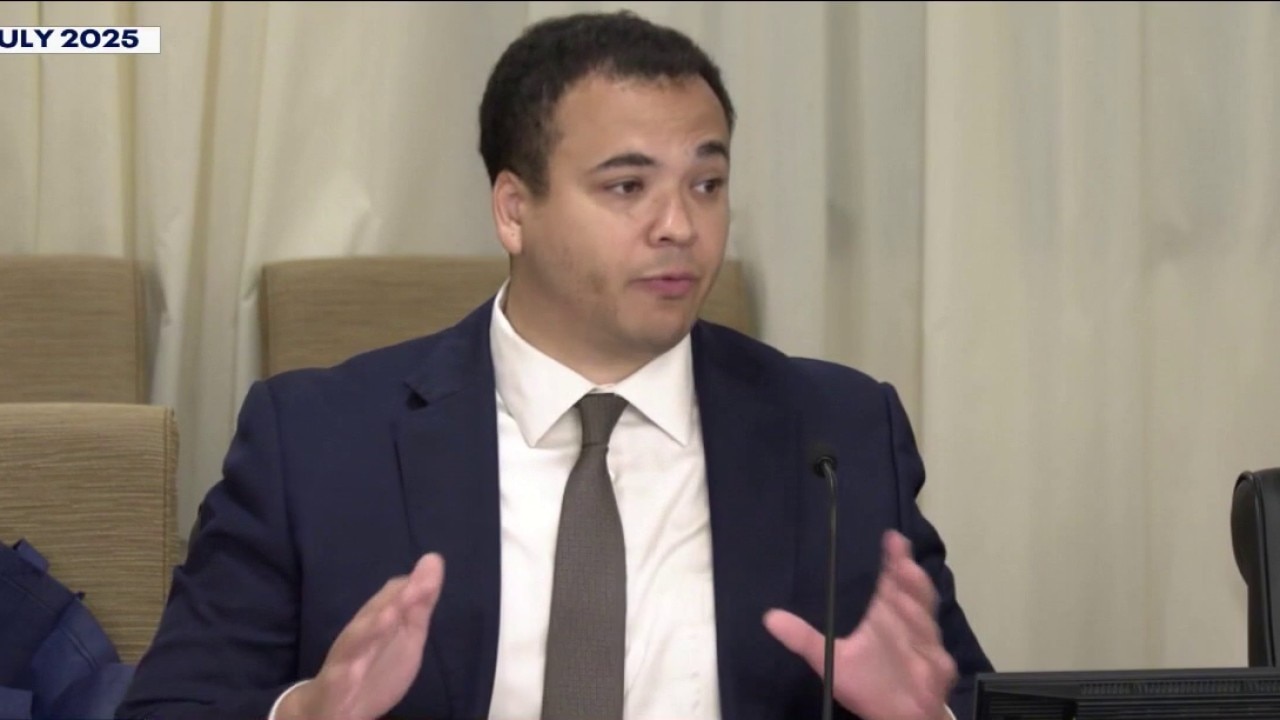
House Republicans issue fraud report as committee wrap
After weeks of hearings, Republicans on the House fraud committee have issued their report on Minnesota fraud.
ST. PAUL, Minn. (FOX 9) - After weeks of hearings, Republicans on the House fraud committee have issued their report on Minnesota fraud.
Minnesota fraud report
What we know:
The majority report issued by the Republicans on the fraud committee details what the committee learned from weeks of hearings and contains a list of recommendations.
![Waste, Fraud and Abuse in Minnesota report [FULL]](https://static-media.fox.com/fmcv3/prod/fts/it2vd5v07yi7fsmb/21id585msq41uc7p.jpg)
Waste, Fraud and Abuse in Minnesota report [FULL]
Established in January 2025, the Minnesota House Fraud Prevention and State Agency Oversight Policy Committee reviews its Waste, Fraud and Abuse in Minnesota 2025-26 report on Wednesday as part of a final meeting held to "understand the scope and depth of fraud in public programs" in Minnesota.
The report also contains some explosive partisan jabs, with Republicans calling out Gov. Walz, his administration, and Democrats at large for failures in responding to the fraud.
What they're saying:
"This complicit acceptance of fraud by the Democrat leaders allowed a culture of fraud to take root in Minnesota," the report reads. "Additionally, as has been widely reported, the vast majority of those indicted and convicted in the fraud schemes to date are from the Somali community. Of course, not all Somalis are involved in fraud, and we are always quick to point out that some of our best whistleblowers have come from the Somali community."
"Nevertheless, many of the fraudsters, who have demonstrated ties to Democrat politicians, came to believe that fraud was tolerated and paid in a big way," the report continues. "They saw friends and neighbors with political connections get rich by scamming Minnesota taxpayers, and very few have suffered significant consequences."
Democrats push back at report
The other side:
Democrats on the committee abstained from voting to adopt the report. They raised issue with the fact that Republicans only published the report hours before the hearing, giving Democrats little time to review it or give input.
"Instead," said Rep. Dave Pinto. "This is an 80-page report posted less than 24 hours ago. Full of partisan nonsense. Speculation, some good information as well. But a lot, a lot of errors."
Pinto added: "This committee has been so committed to winning political points that it achieved nothing, and having this document as the conclusion is sort of the final confirmation."
One such error that Rep. Pinto pointed out is that the report states the Minnesota Attorney General's Office has prosecuted very few Medicaid fraud cases. However, Rep. Pinto said the committee had heard testimony that the AG's office is one of the most effective Medicaid fraud units of its size.
By the numbers:
Chair Kristin Robbins countered Pinto by stating Ellison's office had only been able to recover $80 million in Medicaid fraud in Minnesota that could range in the billions of dollars.
Dig deeper:
This session, Attorney General Keith Ellison has pushed for funding to increase the size of his Medicaid Fraud Unit. He also asked lawmakers to change Minnesota statute to make it easier for his prosecutors to go after fraudsters and give his unit new powers to investigate fraud.
Current Minnesota law only allows prosecutors to go after fraudsters under narrow circumstances, which is why most Medicaid fraud cases are pursued by federal prosecutors in the U.S. Attorney's Office.
The recommendations
What's next:
In the report, Republicans issued a list of recommendations on moving forward in combatting fraud. Here's what they are recommending:
- Independent oversight: Create an Independent Office of Inspector General in the Executive Branch.
- Enhanced fraud detection technology: Implement Technology Modernization and the use of AI to detect patterns of irregularity in billing and grants to "flag interconnected providers or providers in multiple program areas, and track increases in payments or enrollment that exceeds projections for further investigation."
- Stricter provider enrollment: "The state of Minnesota cannot rely on attestation when enrolling providers [in] Medicaid programs." Instead, "We must have documentation and in-person site visits, not attestation, before providers can start billing state programs."
- Automatic stop-payments: "The Legislature should create agency 'stop-payment' mechanisms that automatically kick in when a program budget increases by 50% over the previous year."
- Electronic attendance verification: "Require electronic attendance records for childcare, adult day care, sober homes, autism centers, NEMT, ICS, and other billable services. Records must be submitted and approved biweekly, before payments can be made."
- Extended statutes of limitations: Expand the statute of limitations on fraud crimes to ten years and extend the statute of limitations for prosecution of fraud in public programs by ten years.
The Democrats on the fraud committee also have an opportunity to submit their own report and Republicans invited them to do so. However, it's not clear whether that will happen.