

How to avoid a Social Security cut? Lawmakers float plans to protect benefits
United States capitol in Washington DC with Social Security cards
With the few months they have left as senators, Democrat Dick Durbin and Republican Bill Cassidy have embarked on a mission to save tens of millions of Social Security beneficiaries from a projected 22% cut in their benefits, starting in just six years.
What they're saying:
"We’ve been at this six years, eight years. It’s incredible how long I’ve been at it," Cassidy said. "But Durbin came up to me and he goes, ’Bill, I’m leaving the Senate soon. We need to take a ride at it.'"
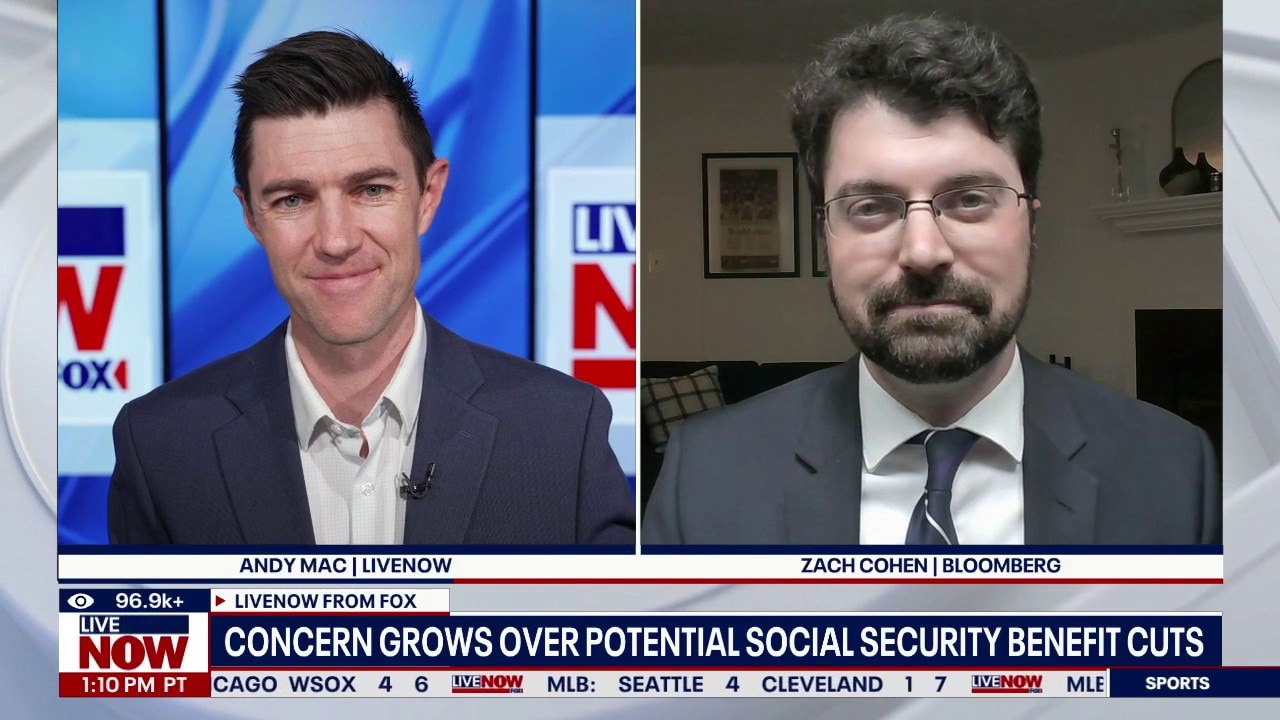
Concern over potential Social Security benefit cuts
LiveNOW’s Andy Mac is speaking with Zach Cohen, Bloomberg Government's senior budget reporter, as the clock continues to tick for American workers and seniors who are worried about cuts to their Social Security.
Dig deeper:
The measure that Durbin, D-Ill., and Cassidy, R-La., are pushing would not dictate an outcome, but instead set up a process for Congress to take action. It calls for the bipartisan Social Security Advisory Board to collect public input and submit draft legislation to Congress that would keep the program's retirement trust fund solvent for at least 50 years.
RELATED: Here's when Social Security COLA update is expected to be announced
The resulting bill would then be introduced by the majority leaders of the Senate and House. If they do not want to go along, any member could sponsor the bill. It would then be referred to the two committees with jurisdiction over Social Security — the Senate Finance Committee and the House Ways and Means Committee.
Both committees would have the chance to debate the bill and amend it if they wish. If not, the original bill drafted by the advisory board would be placed on the Senate and House calendars for consideration. Lawmakers could offer substitute proposals, with final votes after 100 hours of debate. Passage would require a three-fifths vote in the 100-member Senate and a simple majority in the 435-member House.
Separately, Cassidy has a proposal with Sen. Tim Kaine, D-Va., that calls for the creation of a $1.5 trillion fund that would be invested in stocks and other higher-risk assets over 75 years.
The seed money would be financed by the Treasury Department through additional borrowing. At the end of the 75 years, the fund's assets would be used to repay the Treasury for the seed money as well as the borrowing that would occur over those years to keep Social Security payments going out — now projected at about $26.6 trillion.
Cassidy projects such an investment fund would earn enough to cover about two-thirds of that $26.6 trillion in borrowing, meaning other actions such as raising payroll taxes or cutting benefits would still be required to completely close the gap. But those tax increases or benefit cuts would be smaller than otherwise necessary without the investment fund.
The other side:
The Committee for a Responsible Federal Budget said "this is a dangerous, debt-funded gamble that would come with huge risks and costs."
Sens. Elizabeth Warren, D-Mass., and Bernie Moreno, R-Ohio, do not agree on much, but they have joined forces in calling for lifting the cap on the Social Security payroll tax.
RELATED: US credit card debt hits $1.26 trillion as delinquencies rise: What you can do
Currently, the payroll tax that funds Social Security applies to a maximum of $184,500 in income. That means most people pay Social Security taxes on all of their income, but the wealthier do not.
Eliminating the cap would generate more than $3.2 trillion for the trust fund over the course of a decade, according to the Peter G. Peterson Foundation, a nonpartisan debt watchdog.
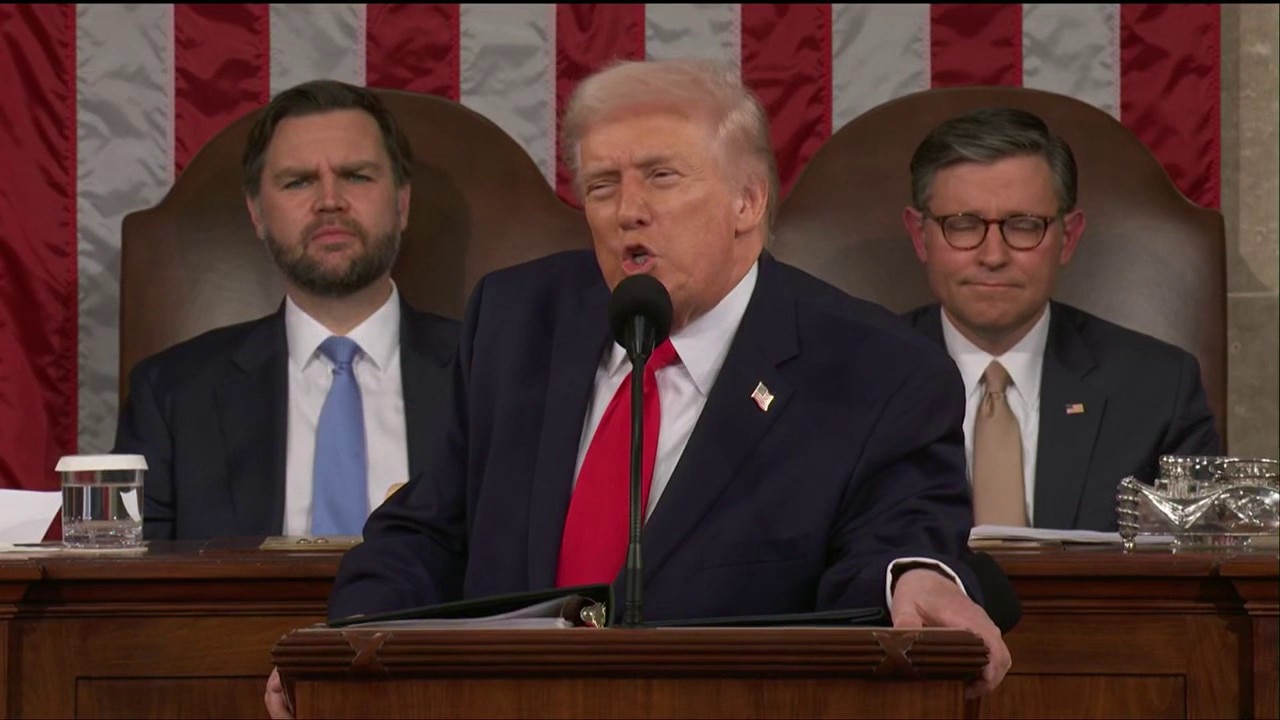
Trump on Social Security, 401k during State of the Union
Trump announced a plan to give workers without employer retirement plans a 401k match up to $1,000.
Others have called for lifting the cap, but only above a certain income threshold. For example, a bill from Sen. Sheldon Whitehouse, D-R.I., and Rep. Brendan Boyle, D-Pa., would apply the payroll tax to income above $400,000. The bill would require those making more than $400,000 to contribute more to Medicare.
Progressives in the House and Senate have sponsored a bill that would lift the payroll tax cap to cover all earnings above $250,000, including capital gains and dividends, and increase the tax that high earners must pay on investment gains.
The bill would boost payments to Social Security beneficiaries by roughly $2,400 a year and increase the annual cost-of-living adjustment. The effort is being led by Sen. Bernie Sanders, a Vermont independent, and Rep. Val Hoyle, D-Ore. The House version has 39 cosponsors, all Democrats.
In a recent letter to colleagues, Sanders said expanding benefits and requiring the wealthiest in the United States to pay the same percentage of their income into Social Security as tens of millions of working people is "how we extend Social Security's solvency for generations to come. That is how the Democratic Party begins to regain the trust of the American people."
The Source: The Associated Press contributed to this report. This story is based on comments and legislative proposals from U.S. senators, including Dick Durbin, Bill Cassidy, Elizabeth Warren and Bernie Sanders, as well as analysis from the Committee for a Responsible Federal Budget and the Peter G. Peterson Foundation. This story was reported from Los Angeles.